

Woodland Garden Retreat in Urban Backyard
Project Overview
This urban backyard was transformed from an invasive-plant-dominated space with patches of struggling lawn into a dense, woodland-edge garden designed to restore habitat, suppress weeds, and bring wildlife back to the city. By planting intensively and choosing shade-tolerant native species, we proved that shade is not a problem — poor ecological design is.
The Challenge
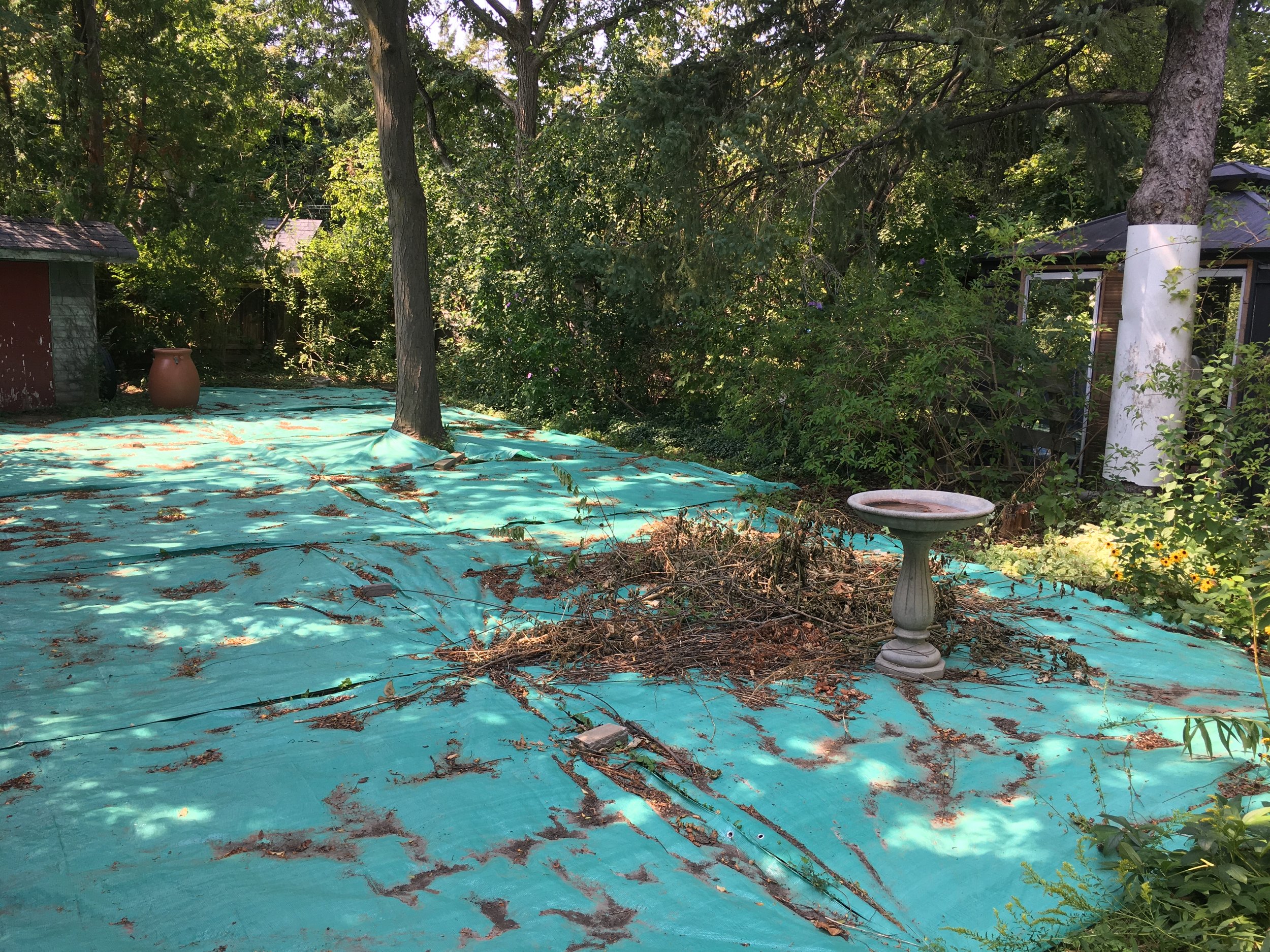
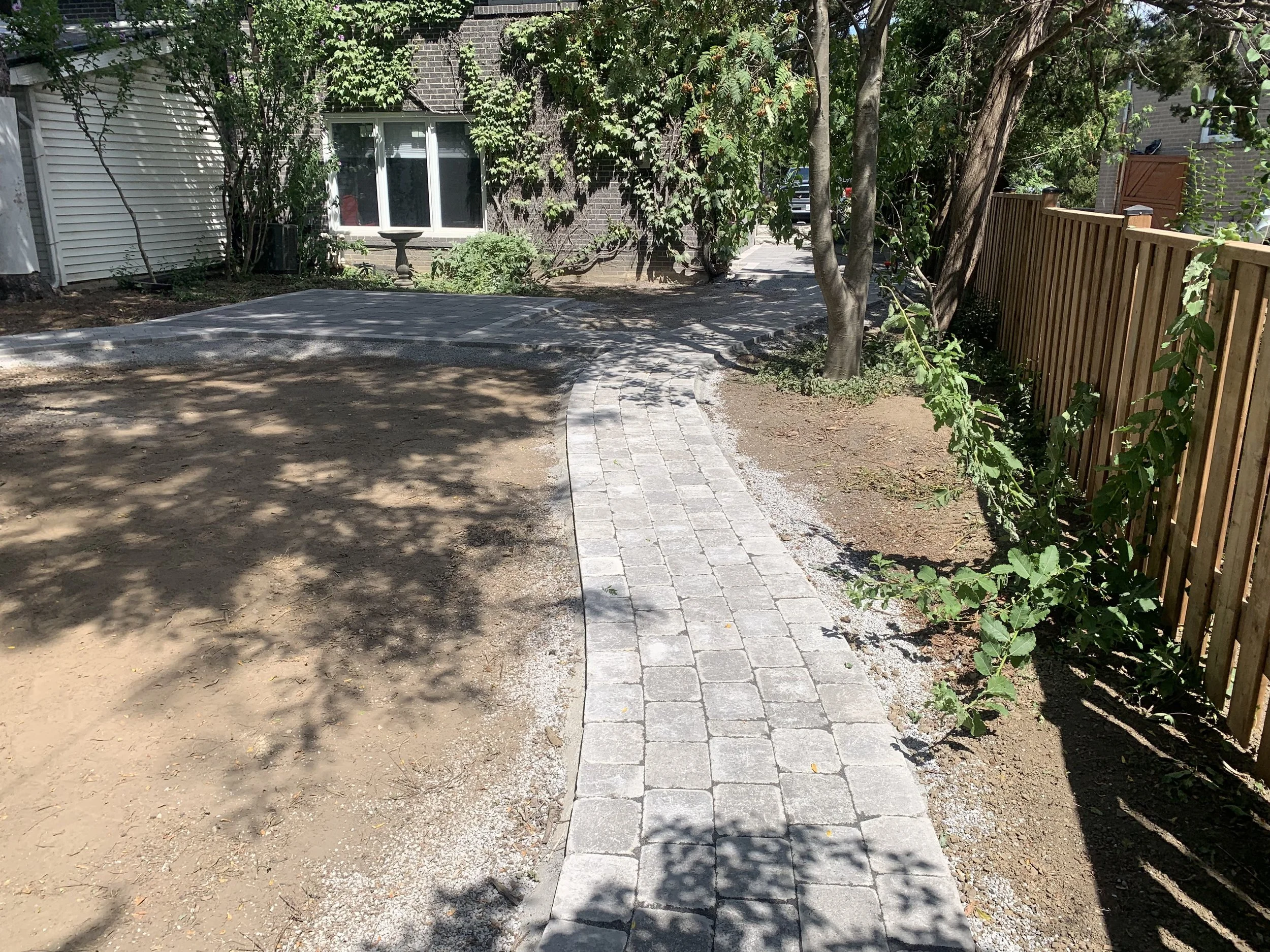
When we first visited the client’s backyard, it was overrun with invasive species including buckthorn, periwinkle, and goutweed. They had spread a tarp over the site to stop the invasive plants from spreading while they tackled the buckthorn growing along the fenceline. The space felt lifeless, aesthetically unappealing, difficult to maintain, and disconnected from nature.
Living in the middle of the city, the clients wanted their backyard to feel like a slice of wilderness that supported birds, native bees, and seasonal beauty rather than constant weeding.
Design Approach
Invasive plants are a symptom of something bigger at play in the landscape: bare, disturbed ground and missing ecological niches.
Our guiding principles for this project were:
Shade is an opportunity, not a limitation
Dense planting is the most effective long-term weed control
Healthy ecosystems are built by occupying every ecological niche
Choosing Plants With A Plant Community Approach
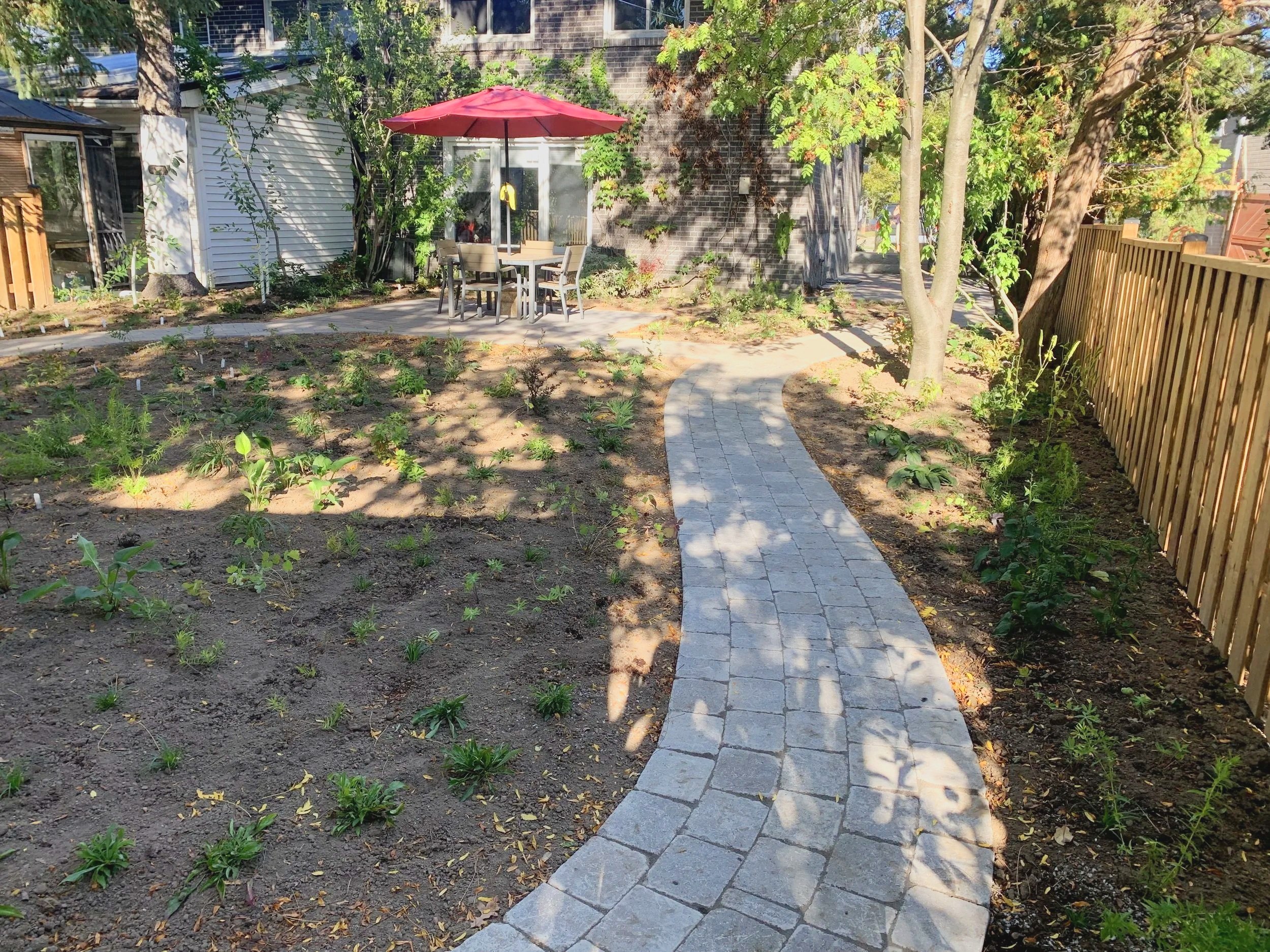
The backyard sits beneath a mature honey locust, creating shifting, dappled shade with occasional sun pockets. Honey locusts allow enough light to support a broad range of woodland edge and glade species, with forest floor plants in the shadier zones. This allowed us to design a diverse plant palette that would feel layered, natural, and resilient.
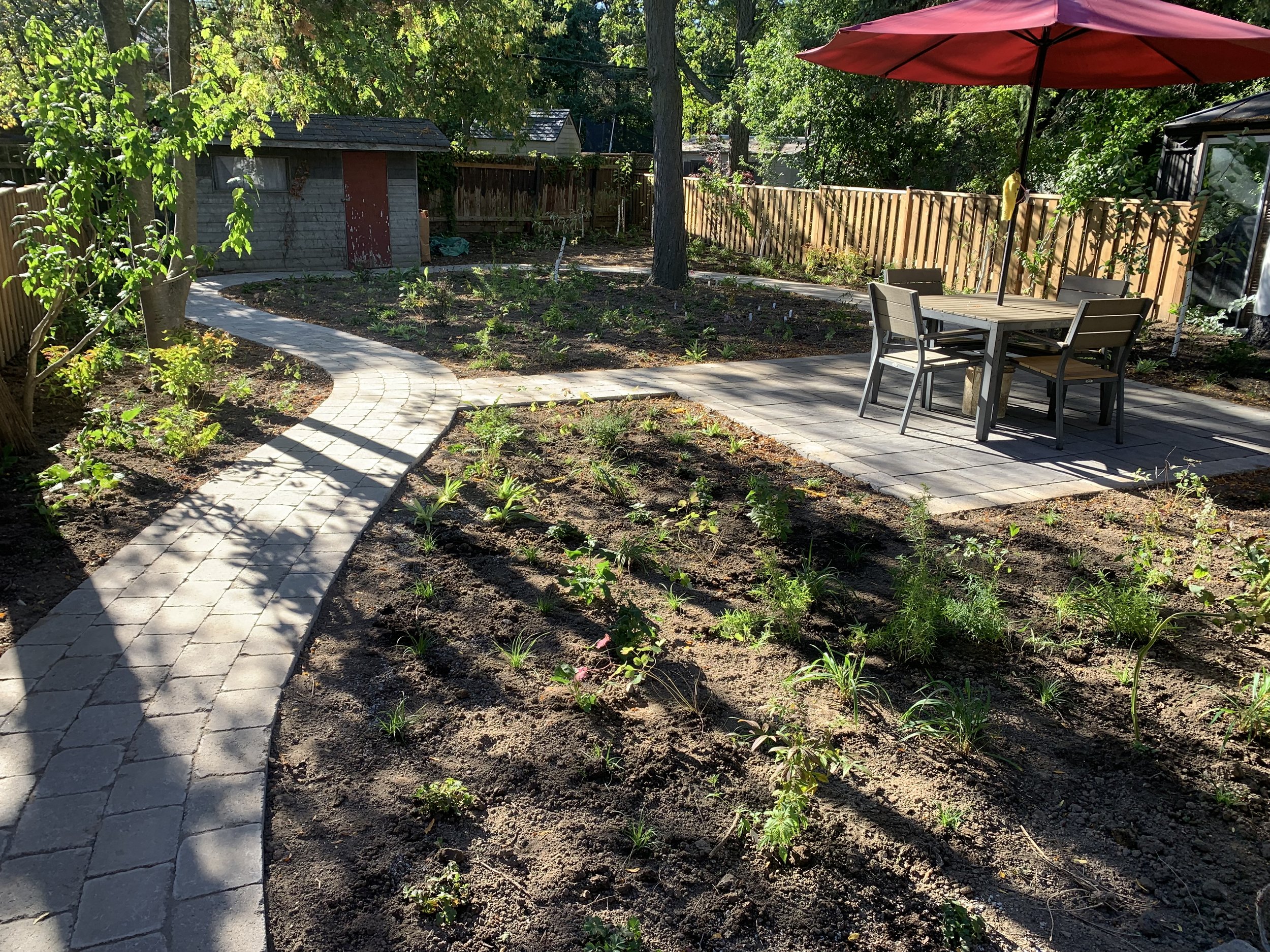
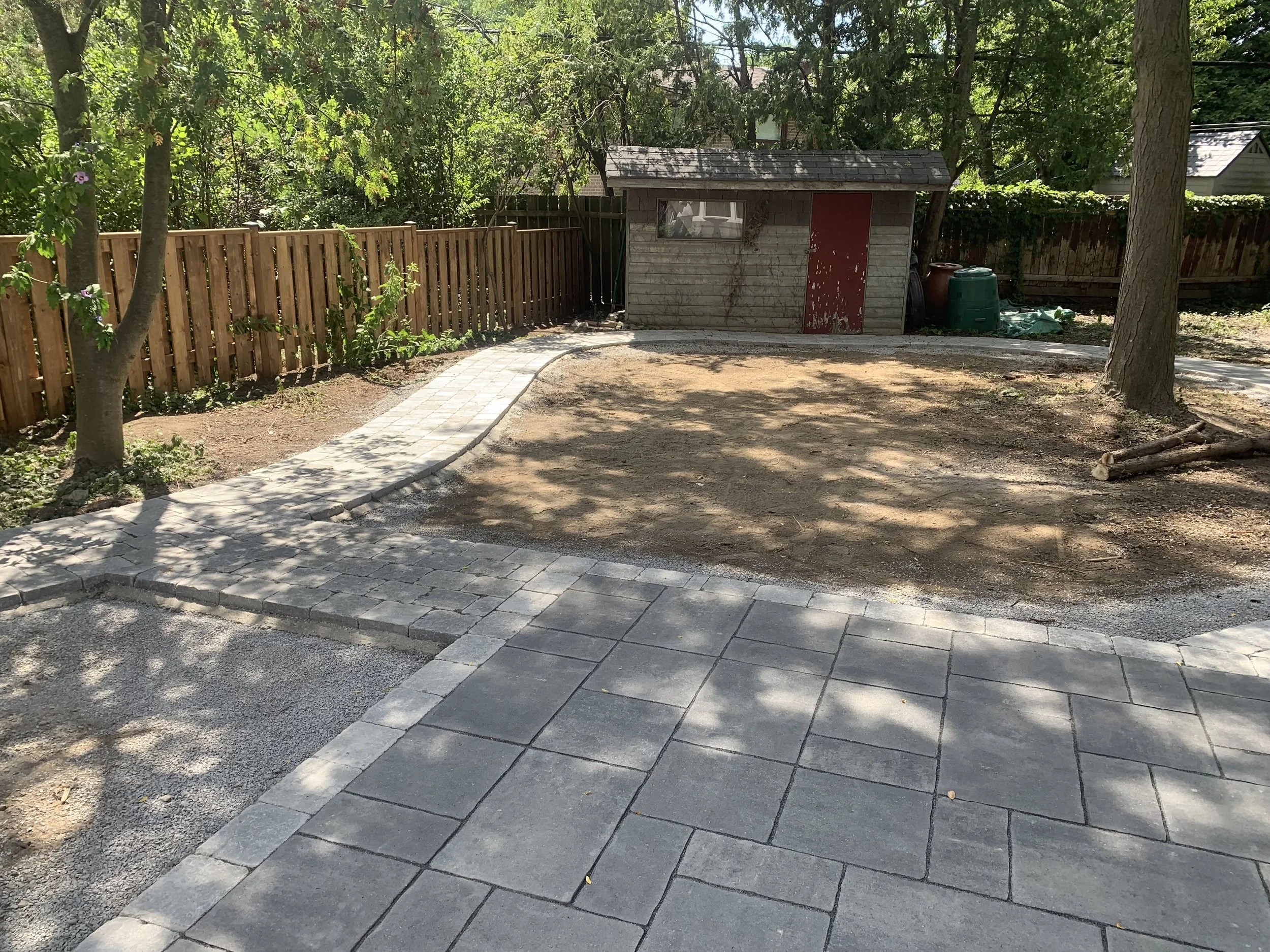
A newly installed stone pathway, installed by another contractor, had disturbed the soil and reset the site into an early successional state. Ecologically, this meant the garden needed fast-spreading stabilizing species to quickly reclaim ground and protect the soil otherwise invasive plants would quickly re-colonize.
Rather than resisting ecological succession, we designed with it. Early successional native species were intentionally included to knit the garden together quickly, while longer-lived woodland species were layered in to define the garden’s future structure.
Due to the landscape contractor digging up the site while creating the pathway, we needed little site preparation.
Dense Planting For A Resilient Garden
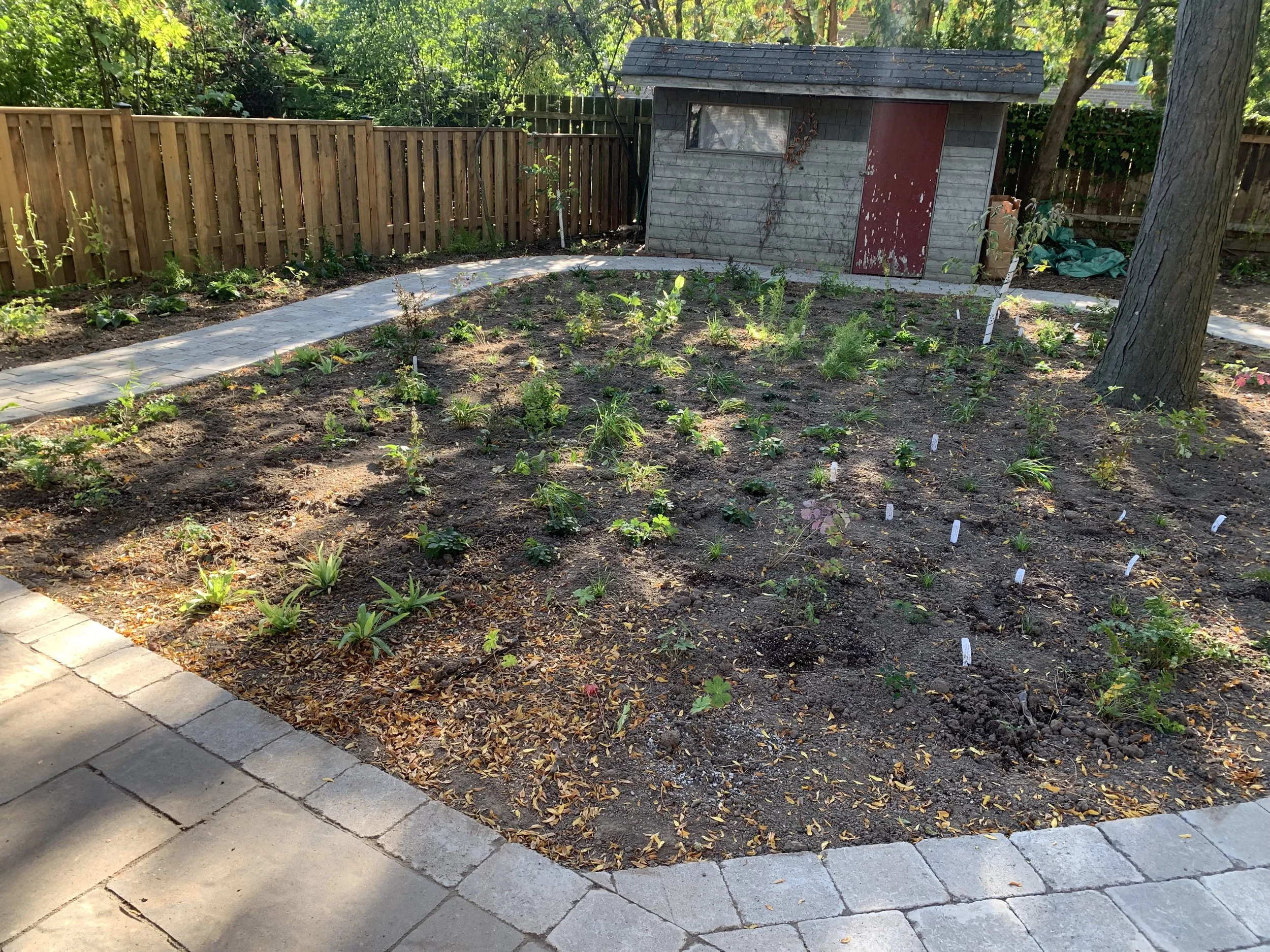
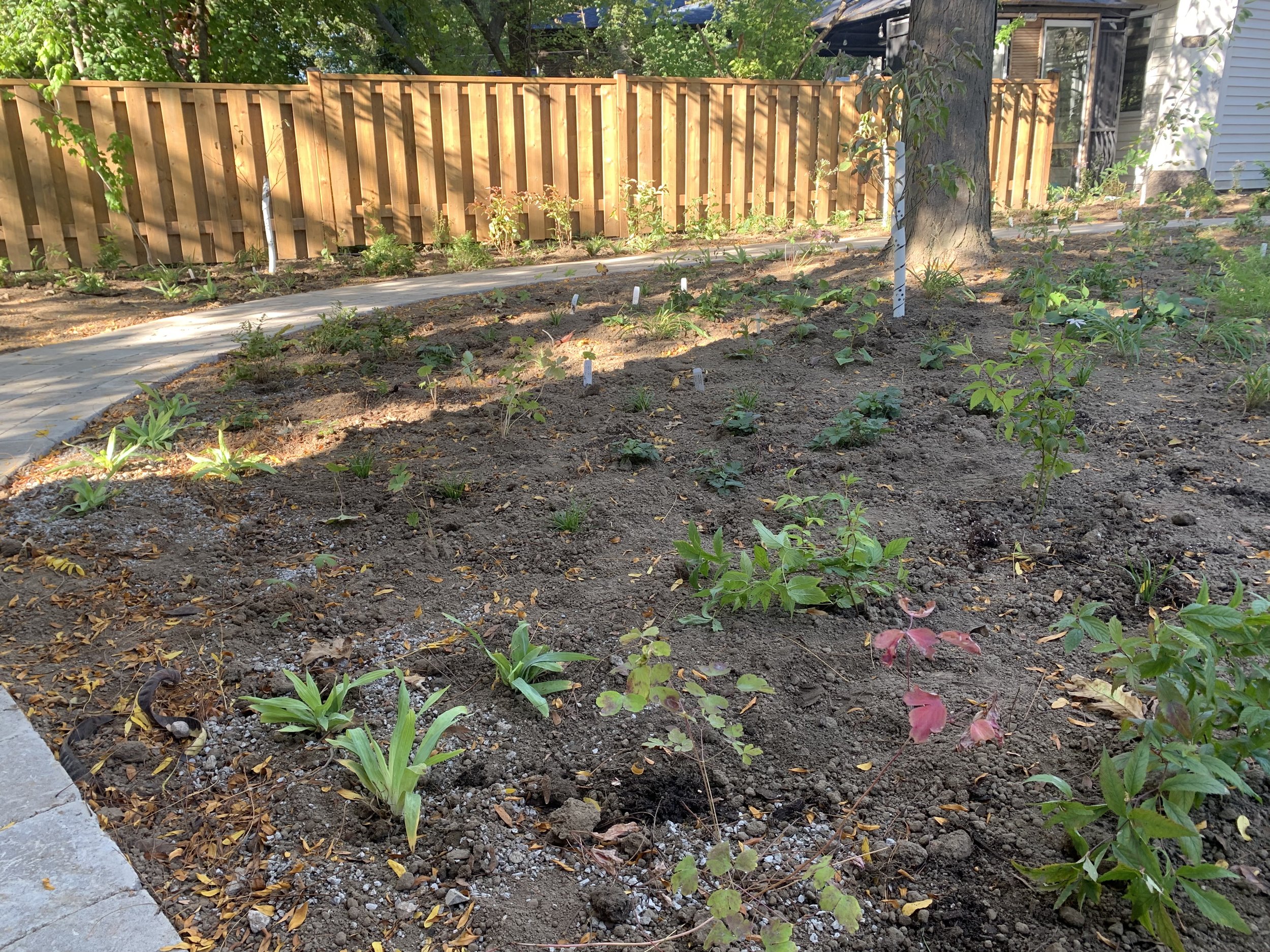
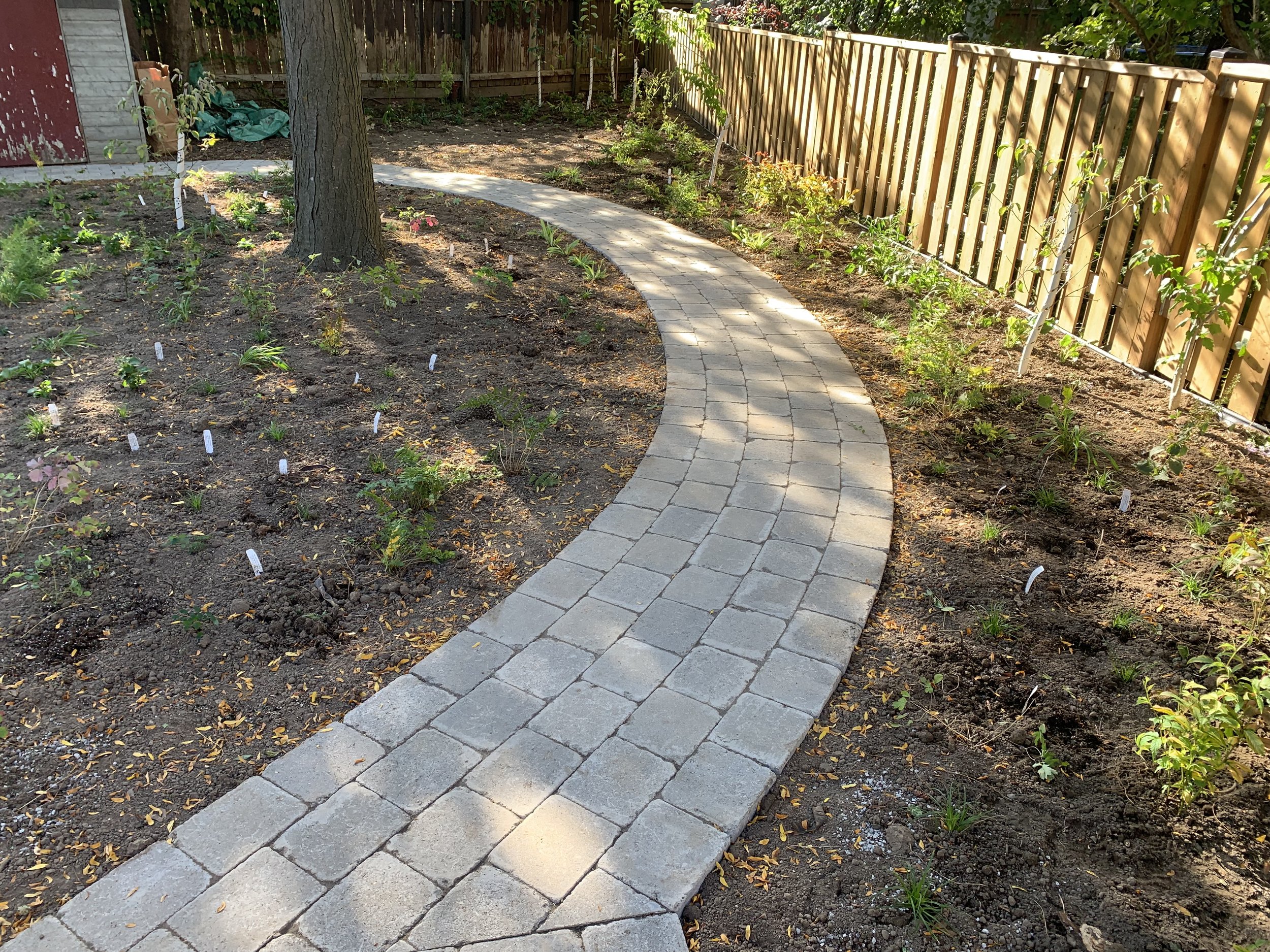
To suppress invasive return and accelerate establishment, we planted at a density of approximately one and a half plants per square foot — nearly two thousand native plants in total. A continuous groundcover layer of oak sedge formed the foundation, while mid- and upper-layer species created structure and seasonal interest.
Native plugs were chosen for efficiency, cost effectiveness, and faster planting. Using a drill, we installed the plants quickly while maintaining precise spacing and minimal soil disruption.
This method allowed us to rebuild the site as a functioning plant community rather than a decorative planting, ensuring faster closure of bare ground, reduced weeding pressure, and long-term ecological stability.
The Result: A Garden Set Up for Recovery
Because of the dense planting strategy, the site is already on a fast track toward ecological stability. Within two to three years, the garden will mature into a fully layered woodland-edge landscape where plants knit together to form continuous ground cover, natural weed suppression, and rich seasonal texture.
The first year will require the most attention, as invasive species attempt to re-establish from remaining seed in the soil. This is a normal and expected part of ecological restoration. With consistent early weeding, pressure will decline each year as plant density increases and the soil becomes biologically occupied.
As the garden matures, maintenance shifts from constant correction to gentle guidance filling occasional gaps, observing which species thrive best, and adding diversity where conditions allow. Birds, native bees, and beneficial insects will continue to increase as the plant community stabilizes and expands.
What was once a disturbed, invasive-dominated backyard is now a living system in recovery — proof that dense planting and ecological design can restore even the most challenging urban spaces.
Thinking About Restoring Your Backyard?
If your garden is dominated by invasive species, shade, or patchy lawn, the solution isn’t more effort — it’s better ecological design.