

Commercial Boulevard Garden
Project Overview
For this local business, we transformed a mulch-dominated boulevard in a harsh parking lot environment into a dense, naturalistic garden using compact, drought- and salt-tolerant native species. The result is a low-maintenance, heat-resilient garden that brings seasonal beauty, ecological value, and a strong sense of place to an otherwise overlooked commercial space.
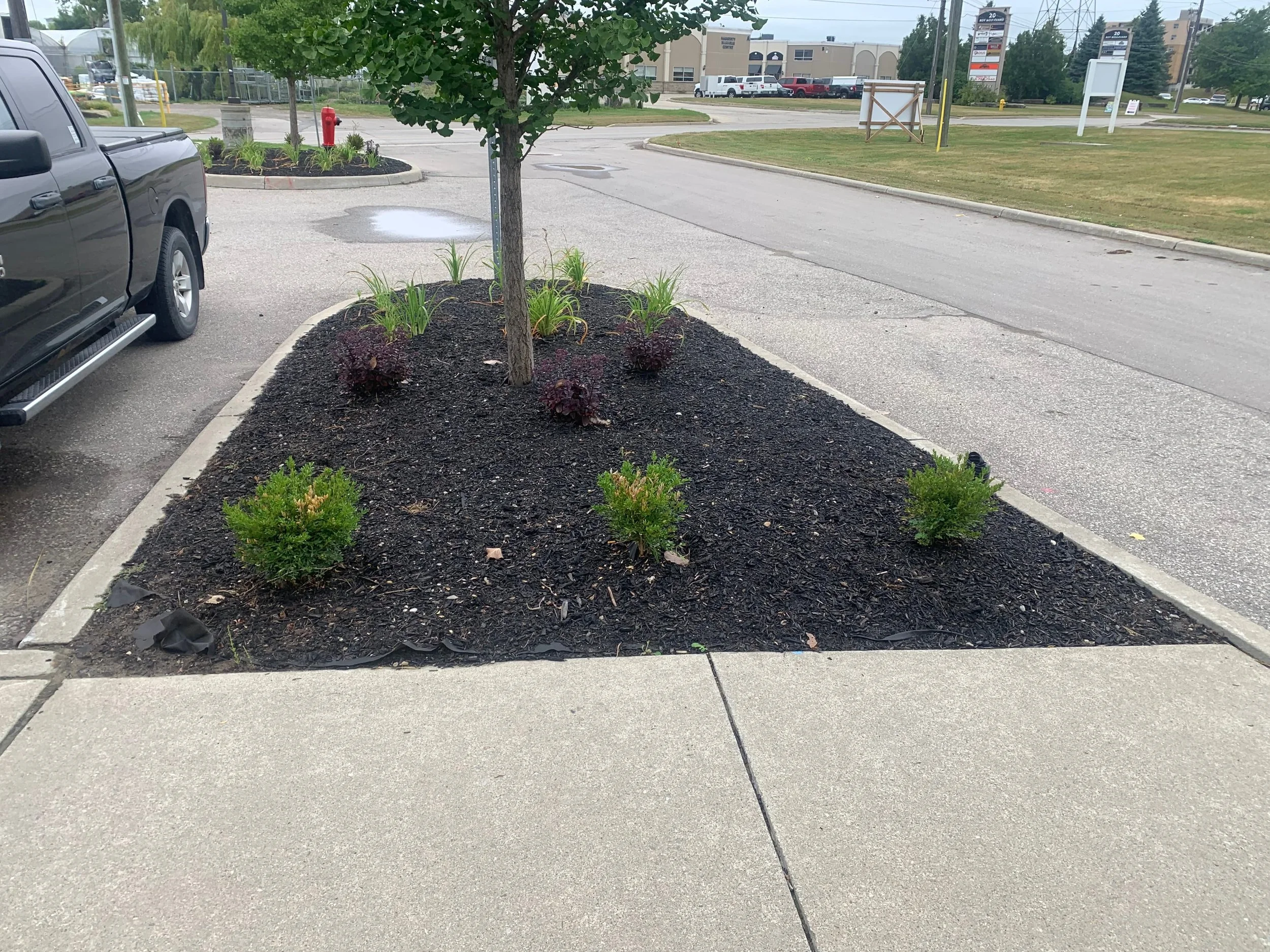
Before
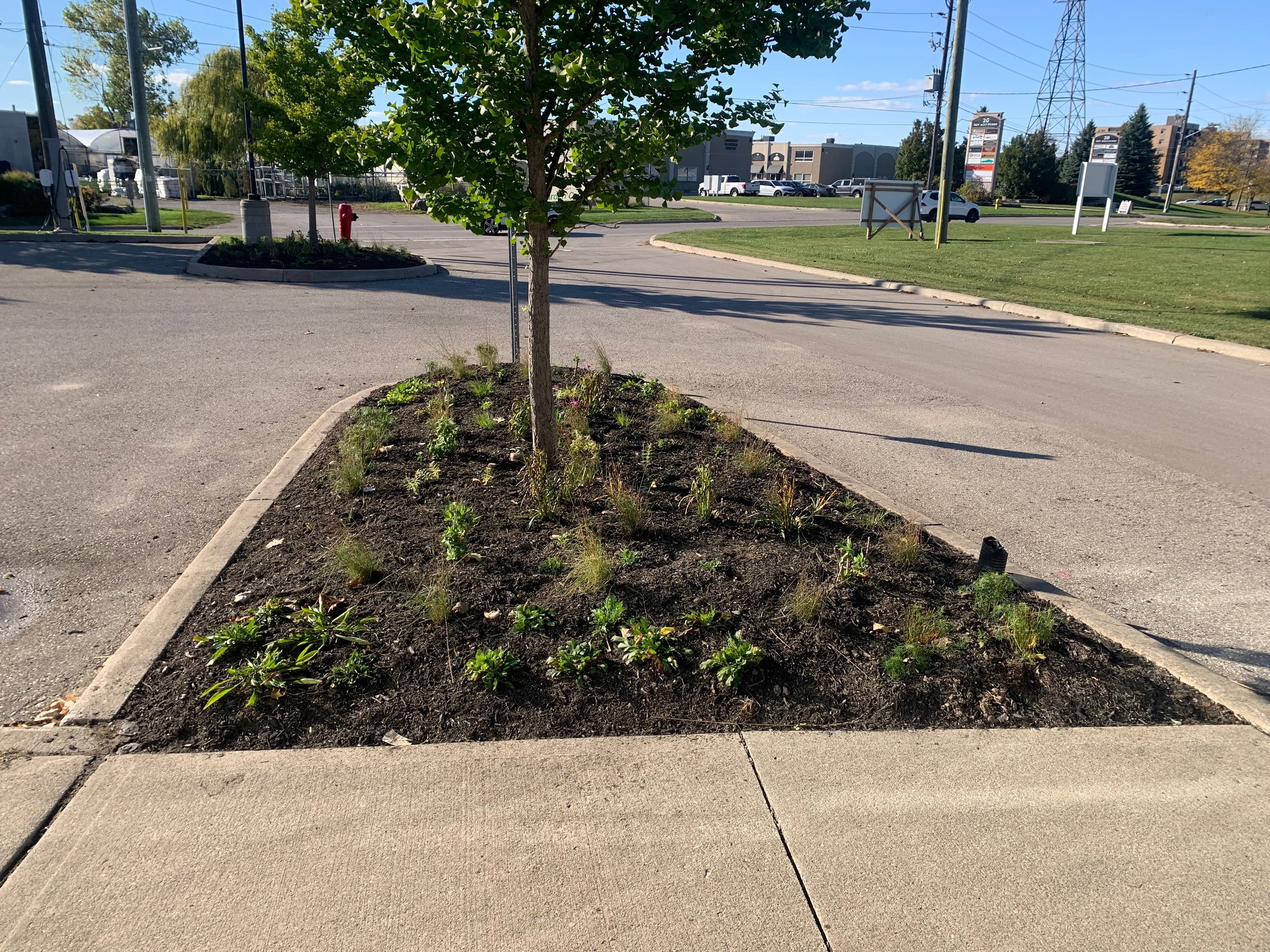
After
The Challenge
A local business approached us to redesign their boulevard planting beds within a parking lot environment. The existing landscape was dominated by mulch with a few widely spaced, non-native plants such as boxwood and daylilies. The space felt lifeless, generic, and disconnected from its surroundings.
We believe a garden should be dominated by plants — not mulch — and this site offered an opportunity to prove that even harsh commercial spaces can support meaningful, place-based landscapes.
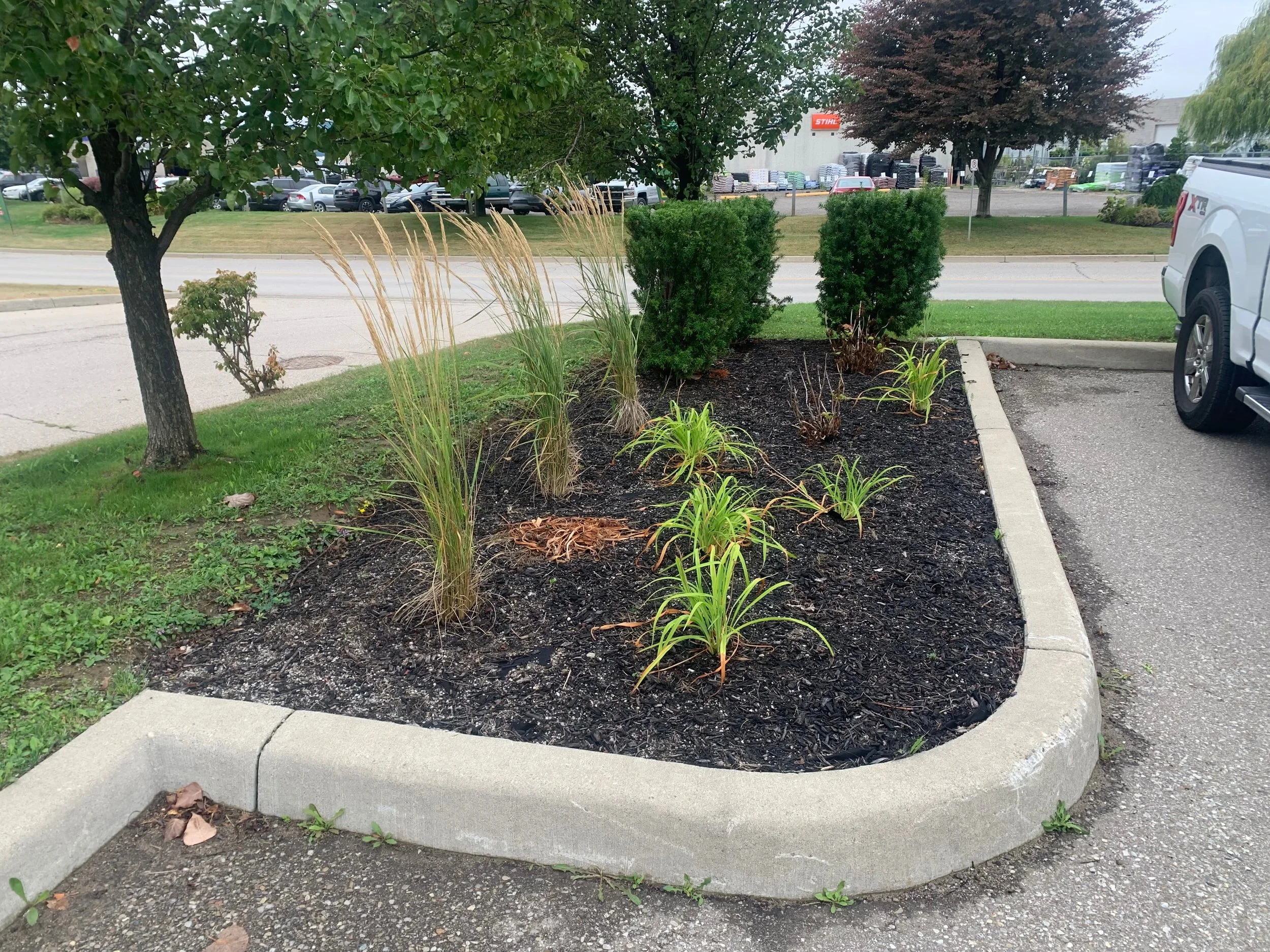
Before
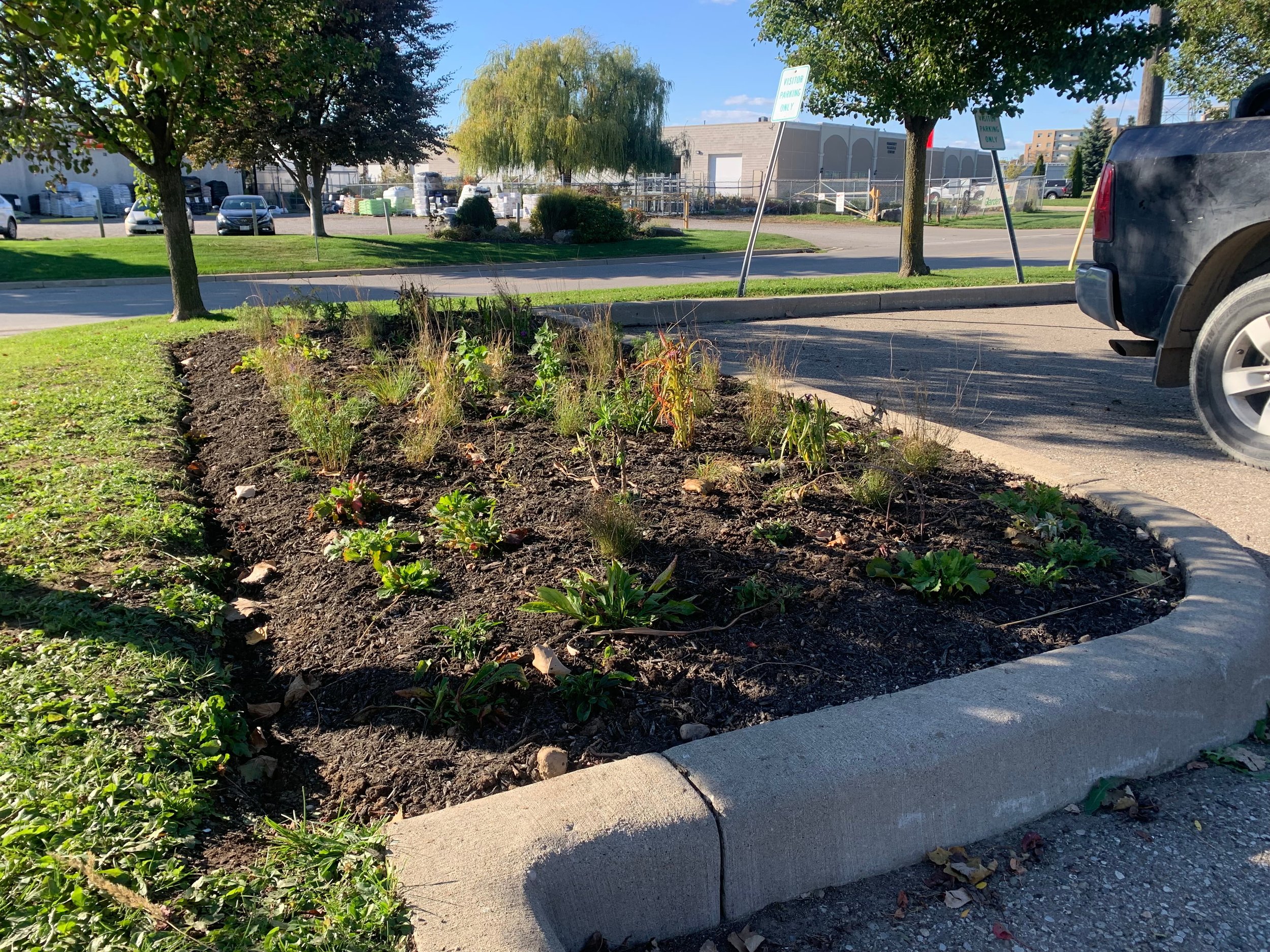
After
Design Approach
Boulevard and parking lot gardens are some of the harshest planting environments:
Full sun all day with reflected heat from pavement
Extremely dry conditions
Salt exposure from winter maintenance
Small planting areas
Height restrictions to maintain clear sightlines
Plants also needed to remain under three feet tall, stay visually tidy, and provide long-lasting interest in a very limited space.
Rather than treating this as a decorative planting, we approached it as a stress-adapted plant community.
We selected compact, drought- and salt-tolerant prairie species that could thrive under constant environmental pressure while still offering seasonal beauty:
Nodding Onion
Hairy Beardtongue
Prairie Smoke
Prairie Dropseed
Dense Blazing Star ‘Kobold’ (chosen for its shorter stature and strong performance in urban conditions)
Because space was limited, we prioritized long-blooming species and staggered bloom timing to maintain visual interest throughout the season.
Planting was done densely to reduce mulch exposure, suppress weeds, and create a stronger visual presence. A one-foot buffer strip was intentionally left unplanted along the edges to prevent accidental trampling when people exited their vehicles.
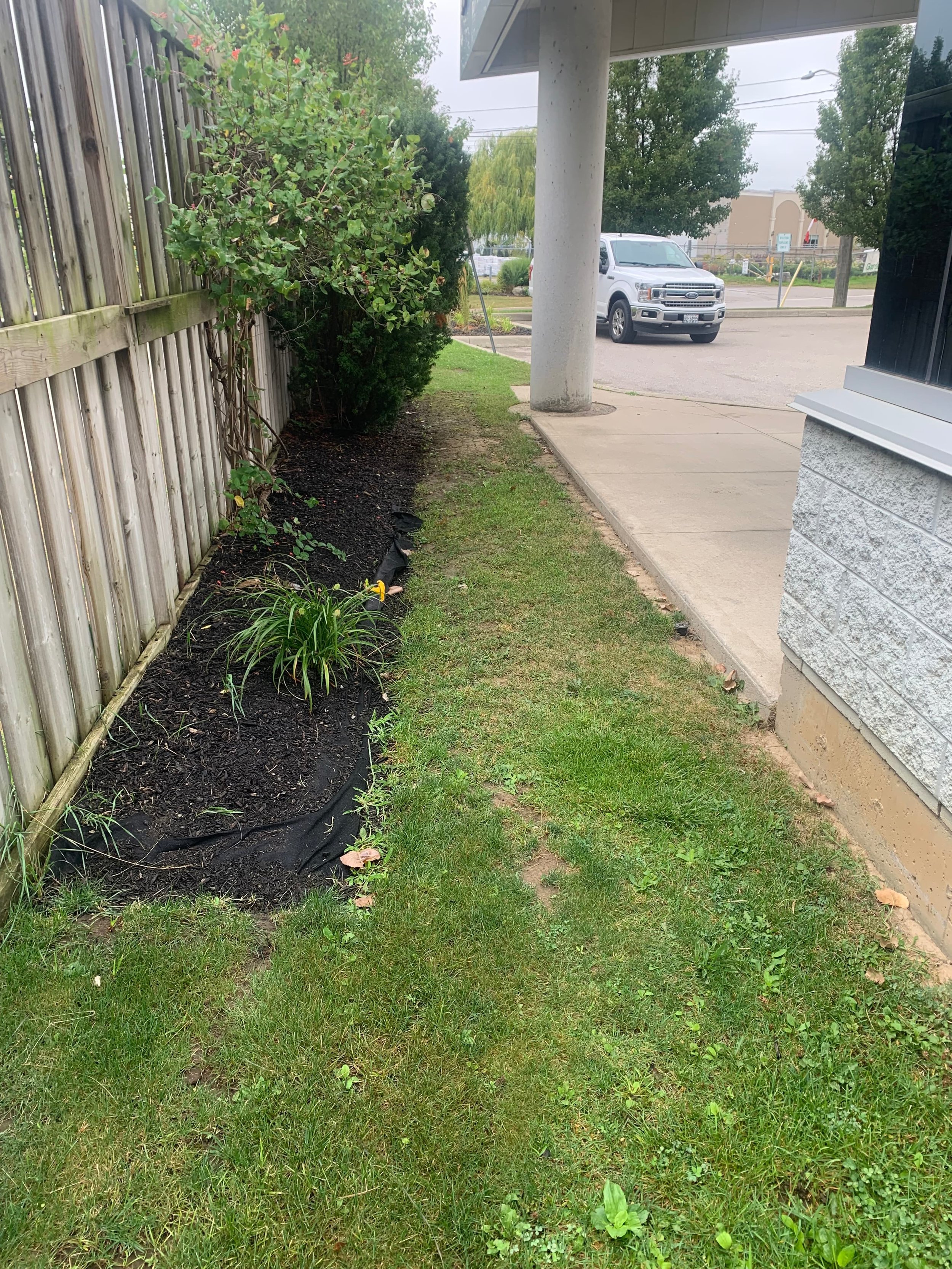
Before
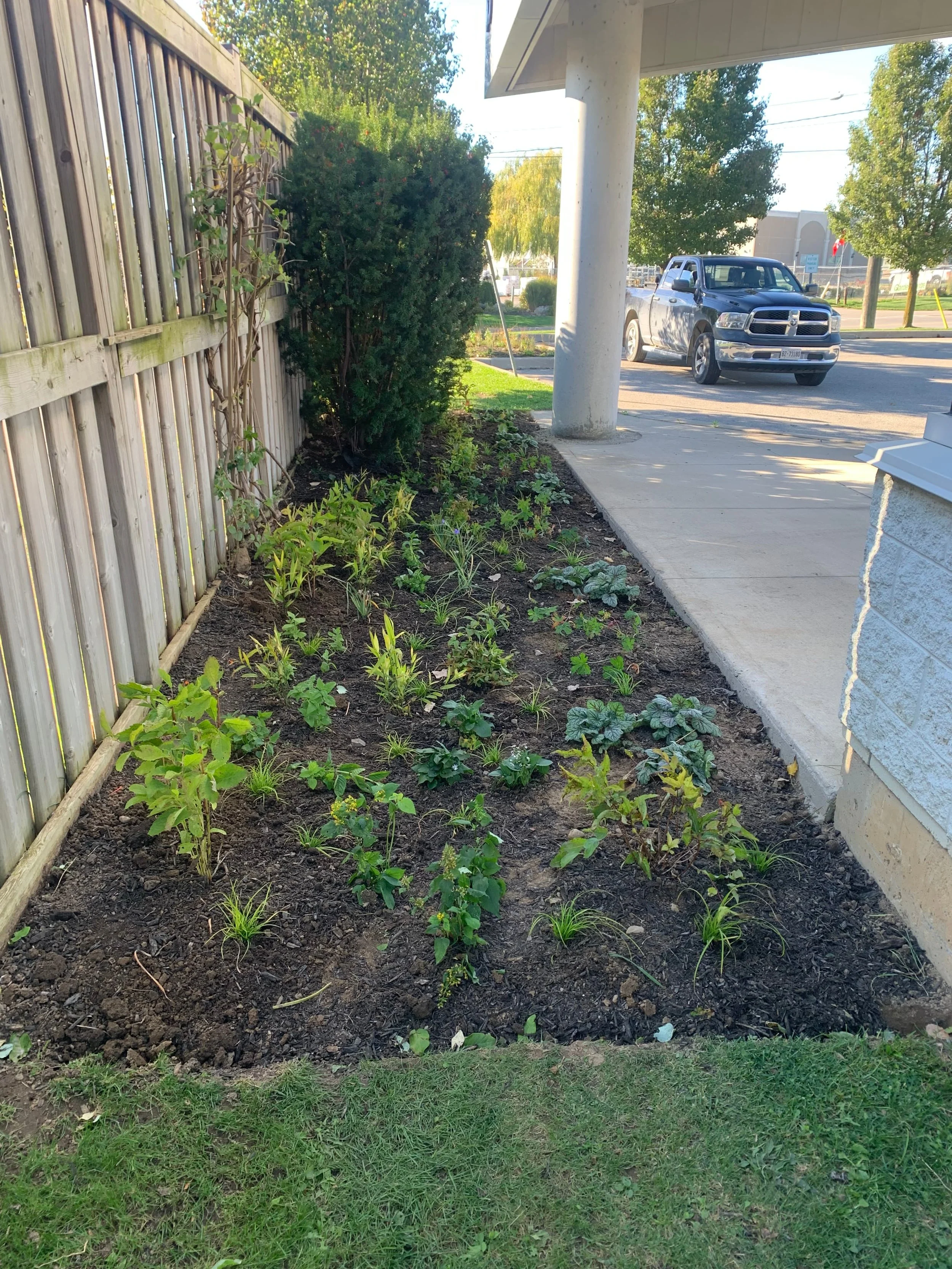
After
Looking Forward
The garden now feels alive, intentional, and rooted in place.
What was once a mulch-dominated strip is now a resilient prairie-inspired planting that:
Thrives in heat, drought, and salt
Requires minimal long-term maintenance
Provides continuous seasonal interest
Supports pollinators in a highly urban setting
Reflects a sense of regional identity rather than generic landscaping
Most importantly, it demonstrates that even the most utilitarian spaces can be ecologically functional and visually engaging when designed with the site — not against it.
Let’s Design a Landscape That Works for You
Commercial landscapes and boulevard gardens do not have to be sterile.
With the right plant choices and ecological thinking, parking lots and boulevards can become meaningful contributors to urban biodiversity and community character.