

Transforming a Weed-Infested Front Lawn
Project Overview
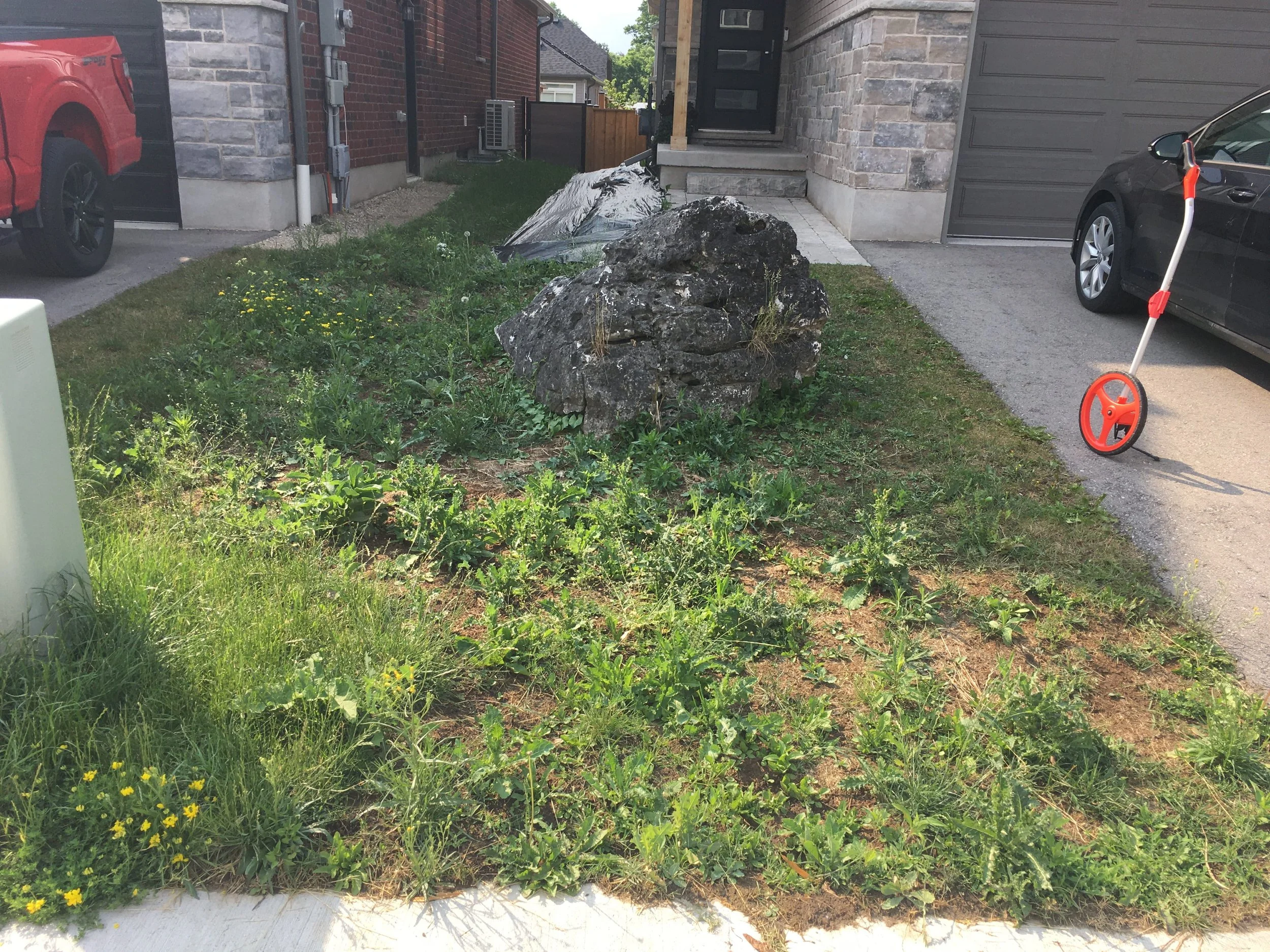
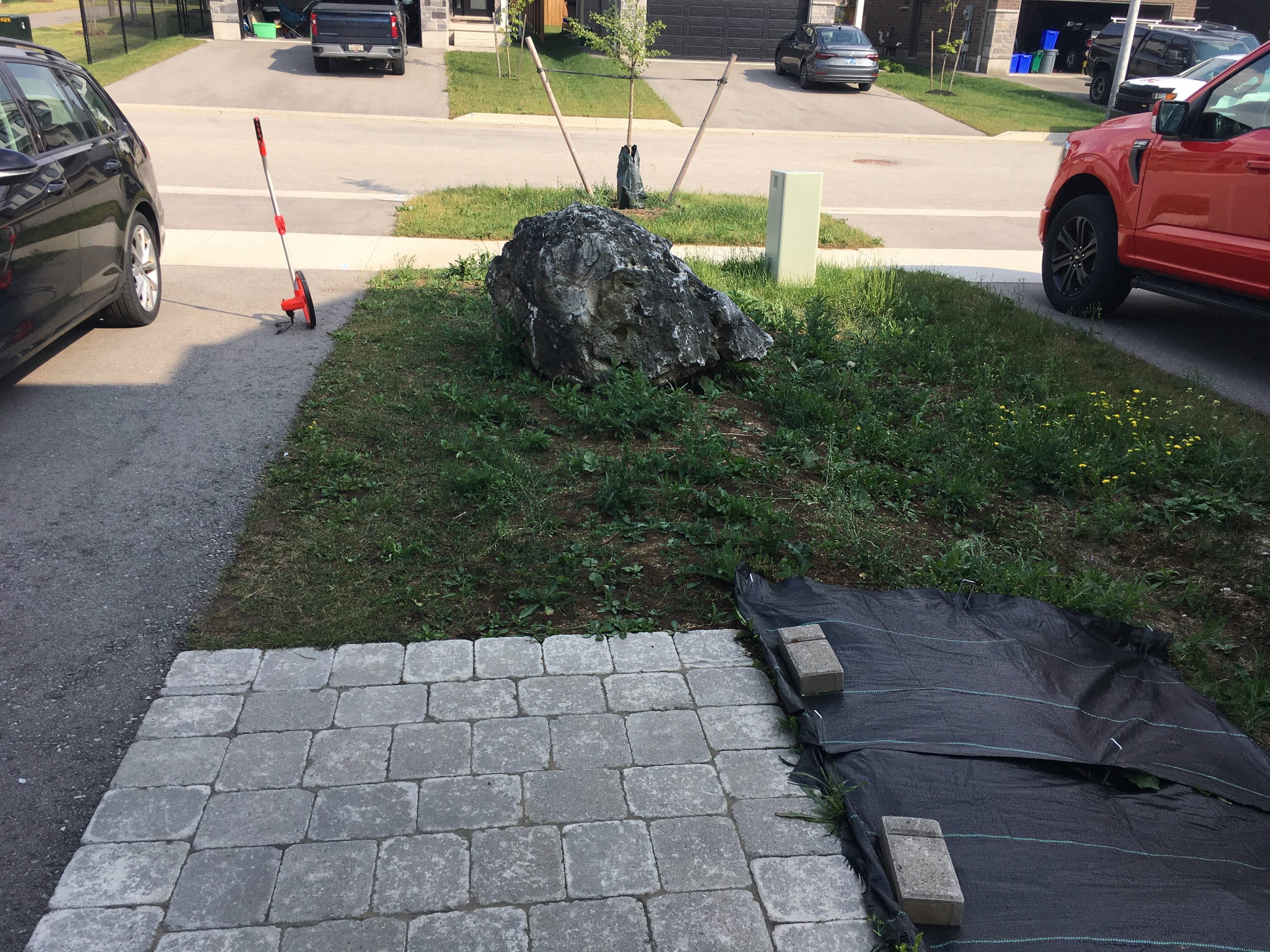
This project began with a struggling front lawn that had become dominated by aggressive weeds. The site was long and narrow, fully exposed to sun, and surrounded by hard surfaces that amplified heat. Like many new subdivision lots, the soil was heavily disturbed, rocky, and clay-based — conditions that made traditional turf grass nearly impossible to maintain.
Rather than continue fighting the site, the goal was to design a garden that worked with these conditions, not against them.
Site Conditions
The front yard presented several compounding challenges:
Narrow footprint with limited design flexibility
Full sun with intense reflected heat from pavement and buildings
Clay and rocky construction soil
A heavy weed seed bank typical of new developments
Turf grass that consistently failed despite maintenance
These constraints made the site an ideal candidate for a xeric, low-maintenance native plant garden.
Site Preparation Strategy
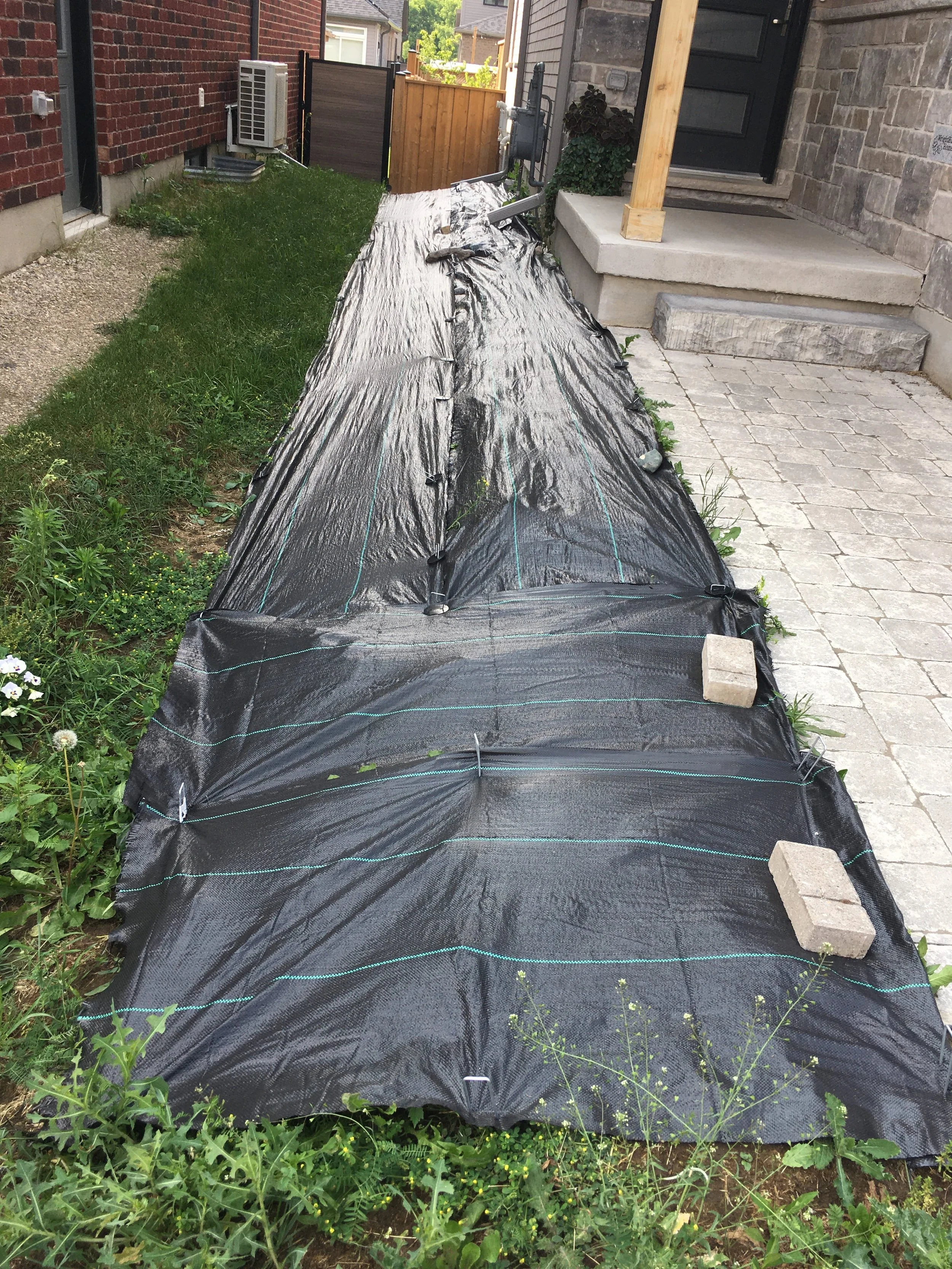
Because the garden was small, the existing lawn and weeds were carefully removed by hand, with special attention given to deep tap-rooted species. The client had already smothered part of the area with a tarp, which helped weaken established weeds.
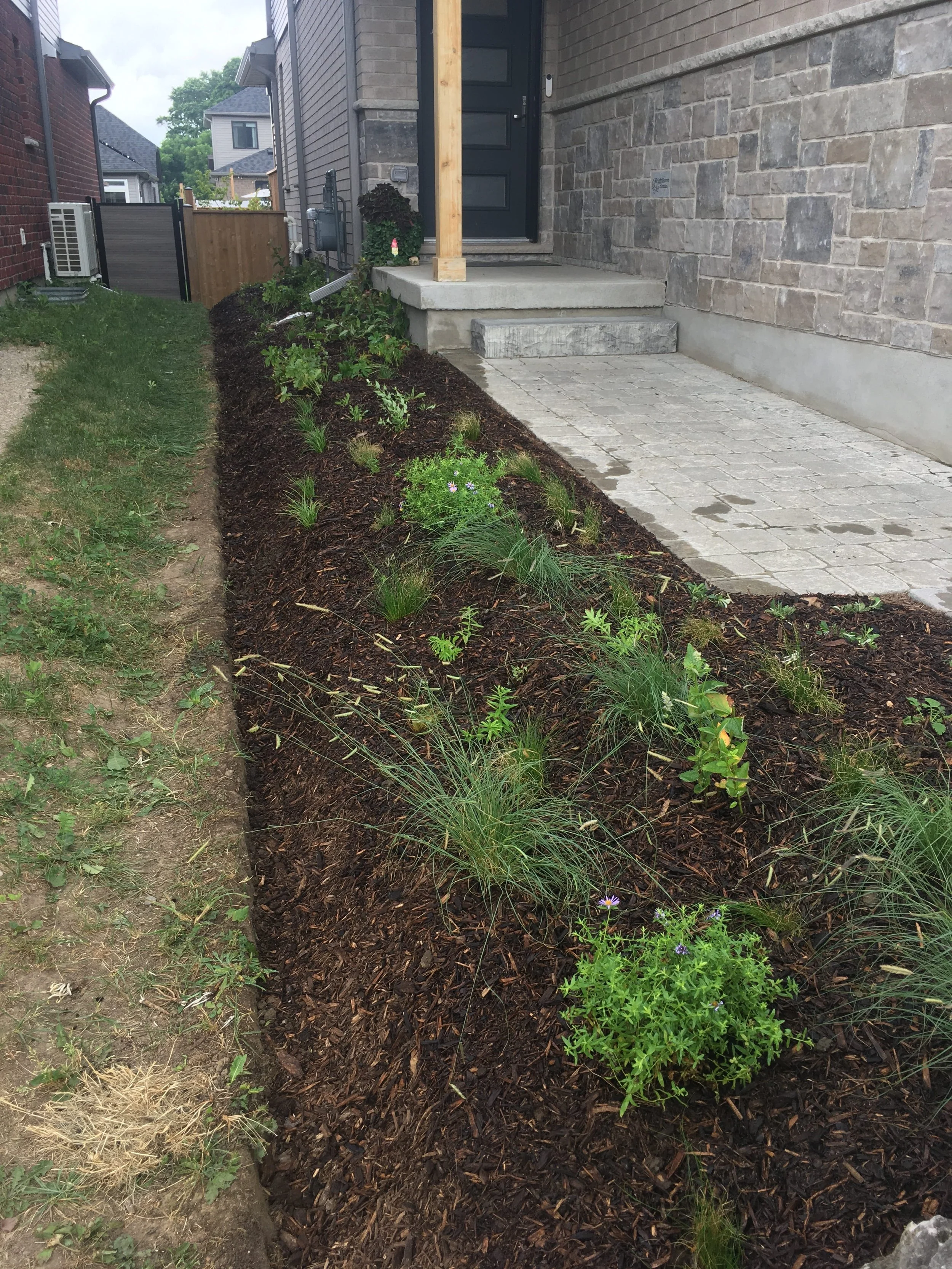
New subdivisions contain massive weed seed reserves. Disturbing the soil during garden installation often triggers a new wave of germination. To prevent this, the site was covered with cardboard and wood chips to smother weeds.
This process dramatically reduced weed pressure while improving soil structure and moisture retention — a critical step for long-term success.
Design Approach
Every design decision was driven by the physical reality of the site.
1. Plant Selection
The combination of heat, drought, and clay soil required xeric, drought-tolerant species adapted to harsh, compacted conditions. These plants thrive without irrigation once established and outperform traditional ornamentals in difficult urban sites.
2. Scale and Proportion
Because the garden is narrow and bordered by a driveway and sidewalk, plant height was carefully controlled. Low-growing species were selected to:
Maintain visual balance
Prevent plants from leaning into hard surfaces
Keep the space feeling open and intentional
3. Formal Structure for a Front Yard Setting
The garden is highly visible from the street, so it needed to look neat and designed — not wild or chaotic. To achieve this:
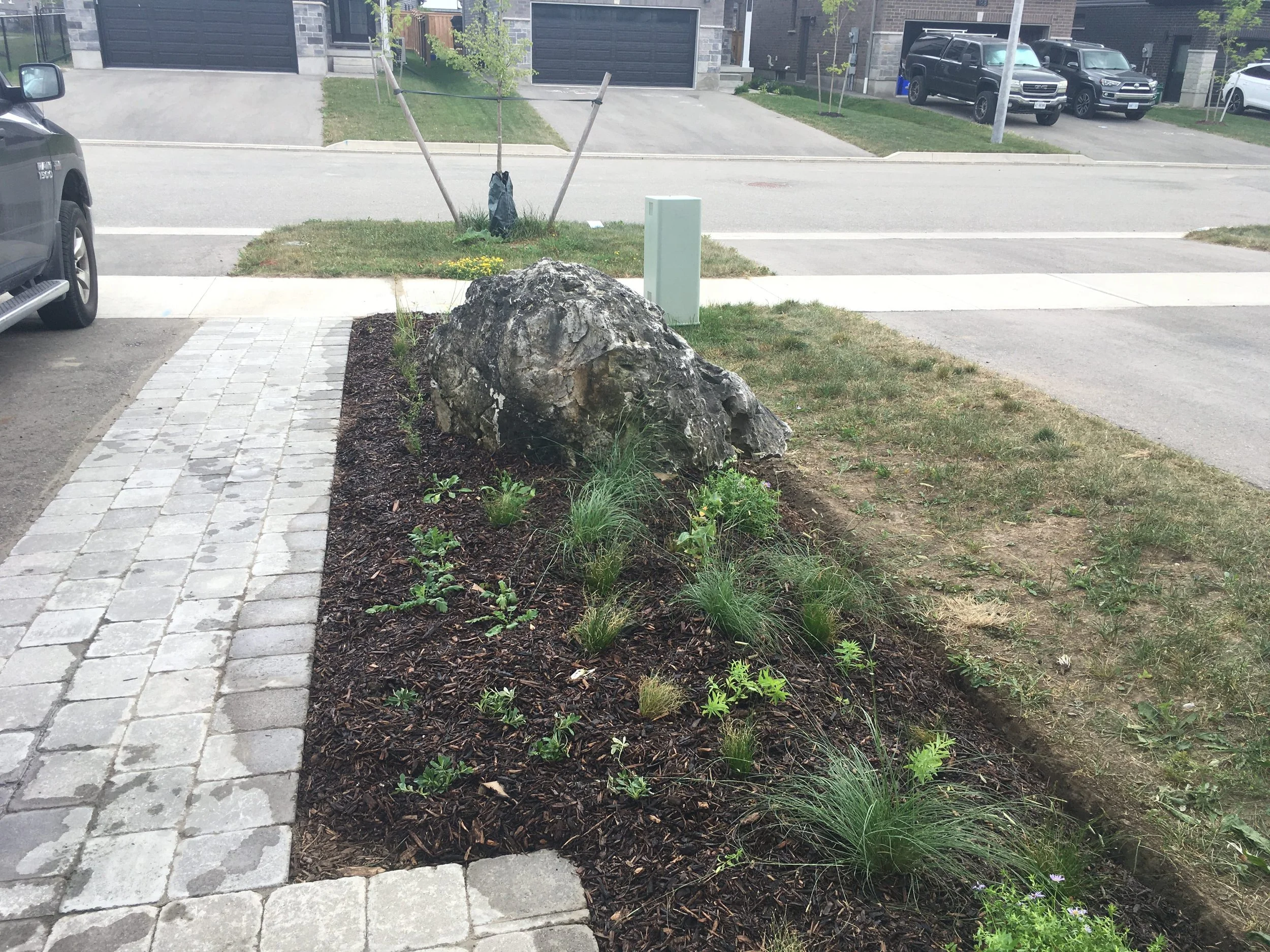
Clump-forming species were used instead of spreading plants
Plants were arranged in repeated, formal groupings of 3-7 plants
This approach makes native plants feel approachable and “designed,” even to homeowners unfamiliar with ecological landscaping.
4. Living Groundcover
Blue grama grass and ebony sedge were installed between flowering perennials to act as a living mulch. They:
Provide a consistent green backdrop
Fill gaps between plants
Suppress weeds naturally
Enhance visual cohesion
The Result
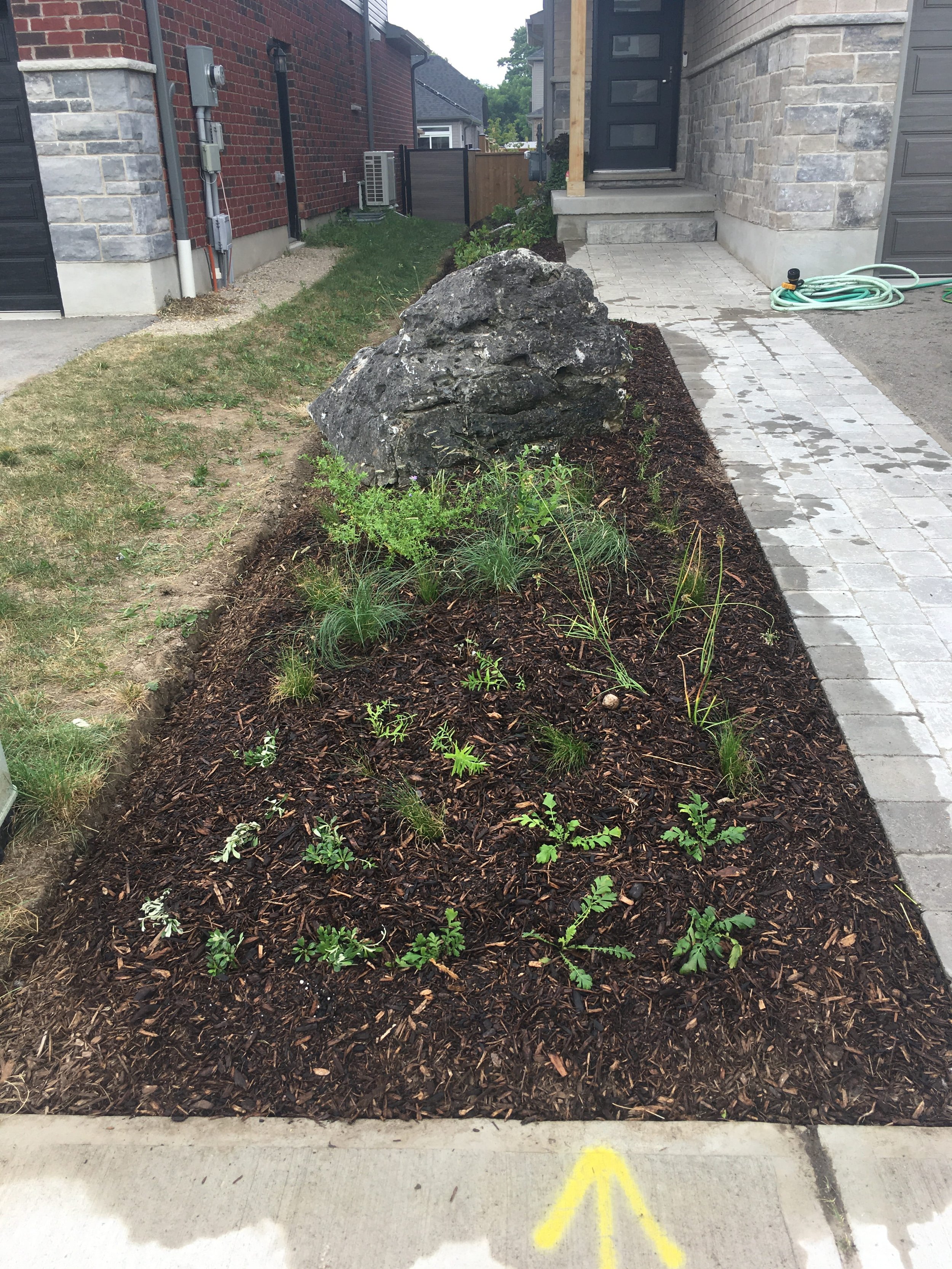
The former weed-infested lawn is now a clean, intentional, drought-tolerant native garden that:
Requires minimal maintenance
Thrives in extreme heat and poor soil
Looks structured and professional year-round
Eliminates the need for irrigation
Prevents weeds through dense, living plant cover
This project demonstrates that even the most difficult front yards — narrow, dry, rocky, and weed-ridden — can become beautiful, functional landscapes when designed ecologically.
Instead of forcing lawns and high-maintenance ornamentals into unsuitable conditions, we design plant communities that belong there.