

Prairie-Inspired Poolside Garden
Project Overview
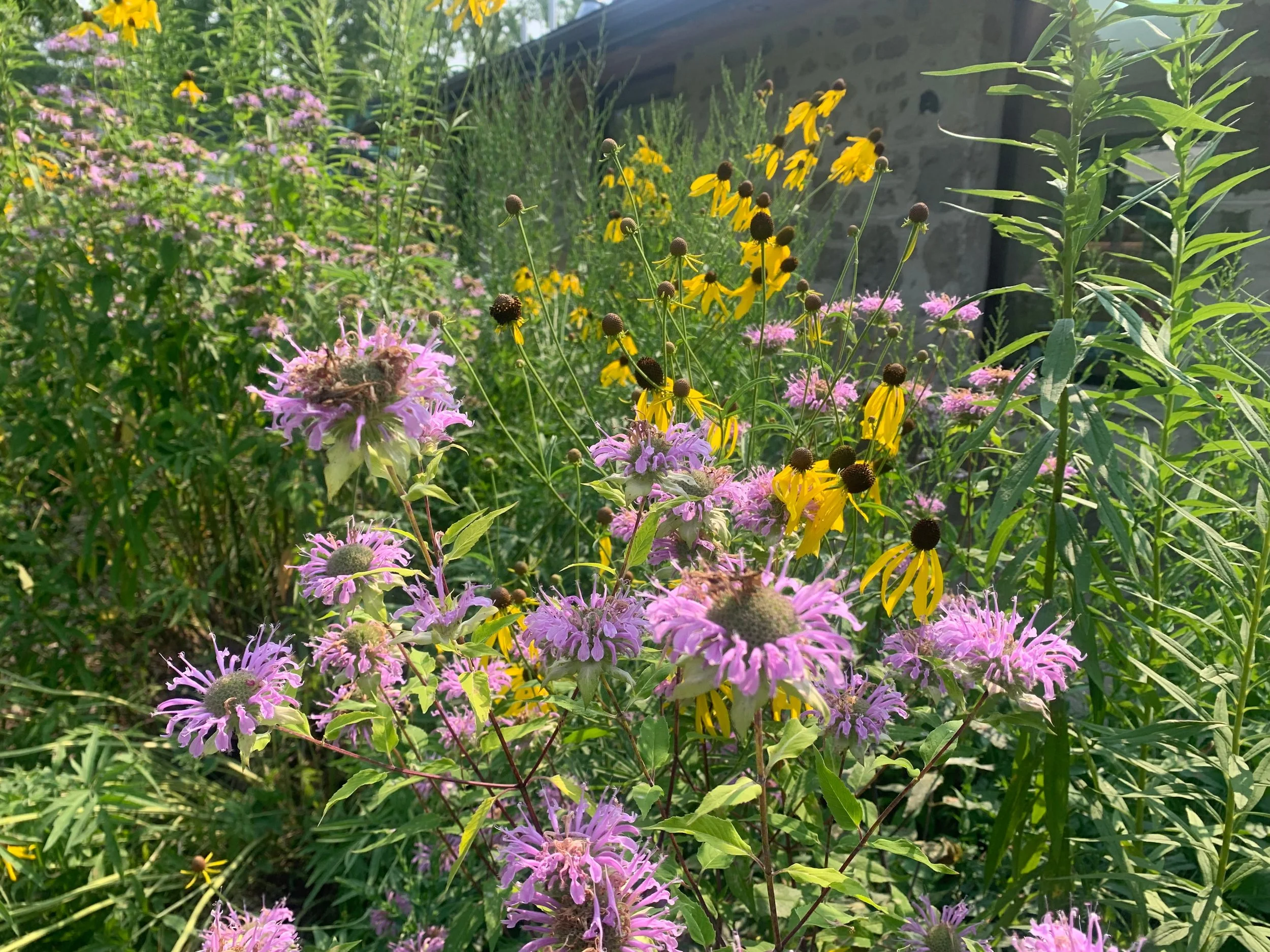
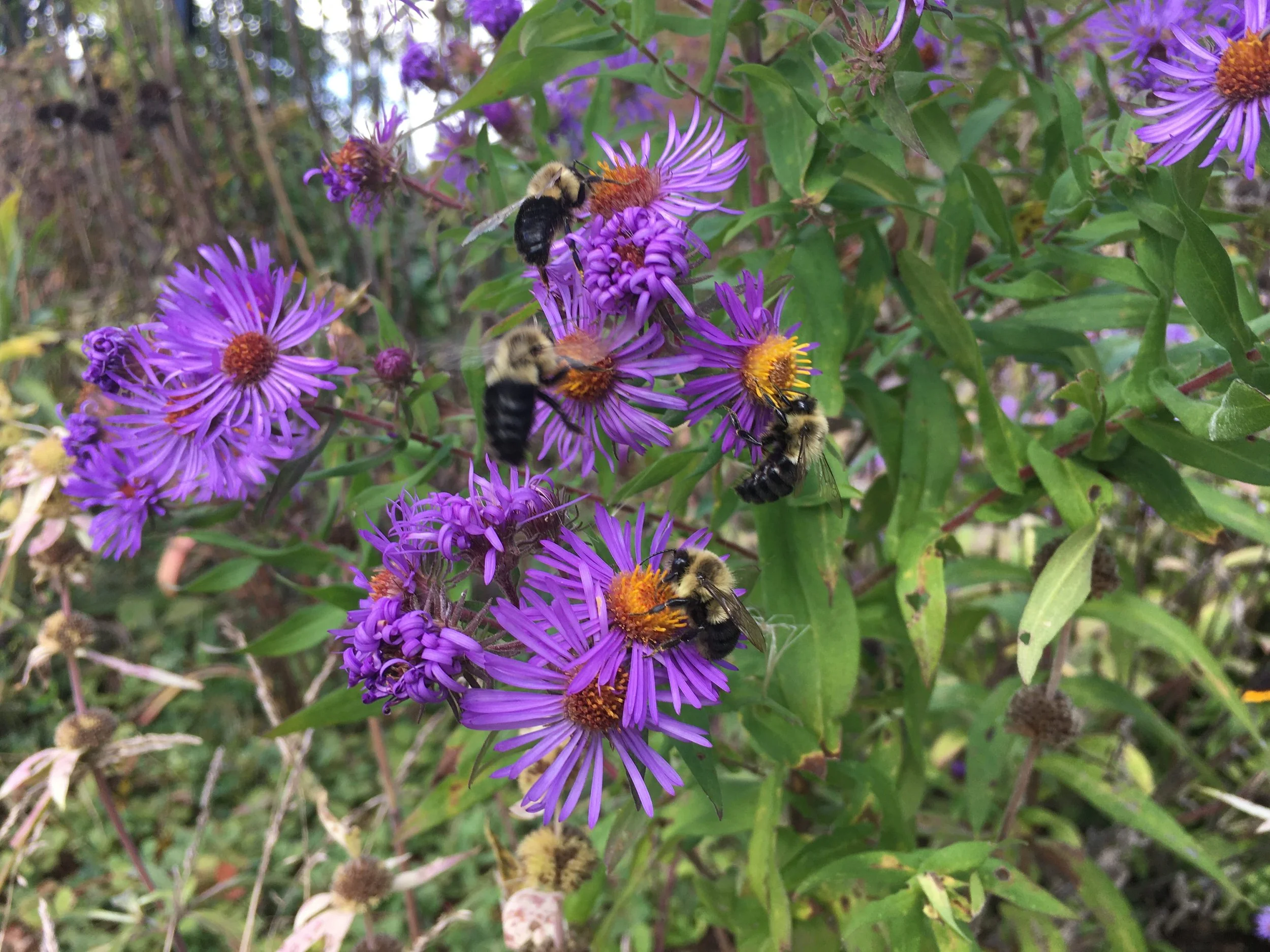
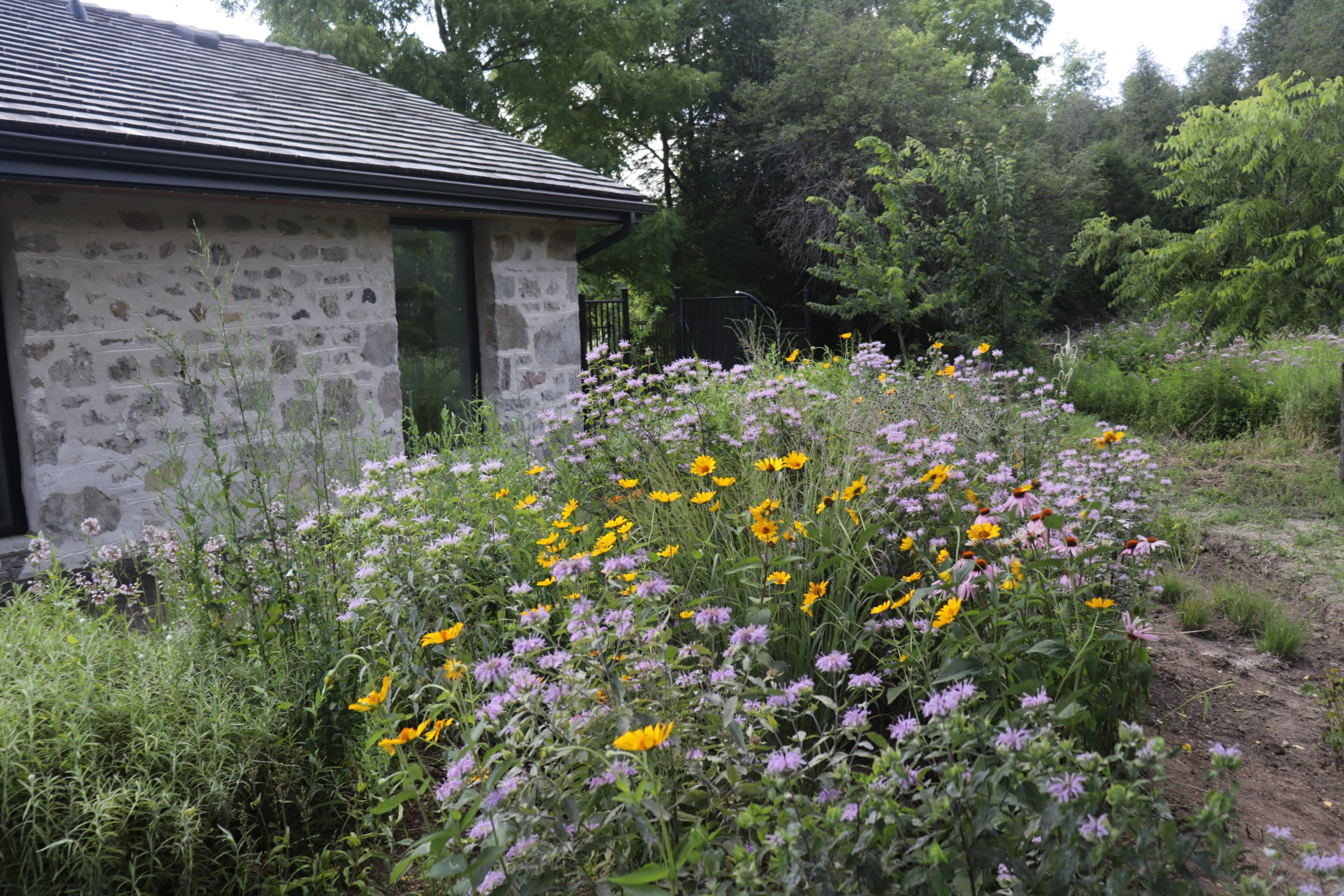
After a newly built pool house left compacted clay and debris behind, we transformed the space using a prairie-inspired planting palette suited to harsh, dry conditions. By smothering weeds, selectively removing aggressive species, and planting densely with hardy natives like milkweed, asters, and coneflowers, we created a resilient, low-maintenance garden that thrives in sun and supports pollinators. The result is a garden that is both ecologically functional and visually cohesive, evolving beautifully over time.
The Challenge
A newly constructed pool house left the surrounding landscape severely disturbed. The soil was compacted clay mixed with concrete fragments, gravel, and construction debris — an inhospitable environment for most conventional garden plants. Aggressive, mostly non-native weeds quickly colonized the area, creating a space that felt chaotic rather than restorative.
Behind the pool house, the client wanted a garden that was both aesthetically refined and ecologically beneficial, without relying on heavy soil replacement or constant maintenance.
Alongside the pool, an existing garden contained sparse plantings of traditional ornamentals such as sedum, Karl Foerster grass, lavender, and aster cultivars. While pleasant, the planting lacked cohesion, seasonal interest, and ecological function. The client wanted this area to feel more natural, unified, and resilient — while still remaining clean and intentional in appearance.
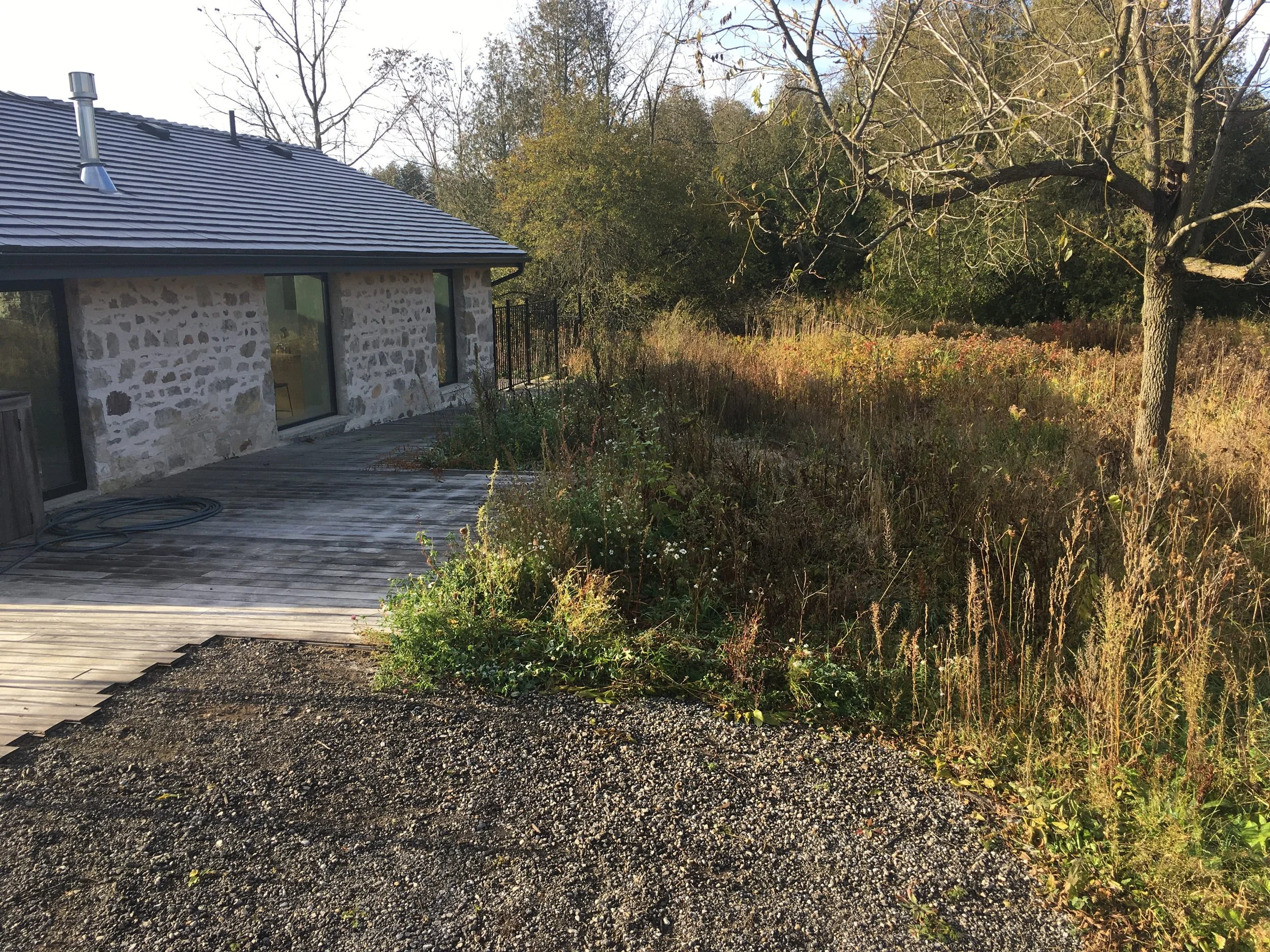
Before
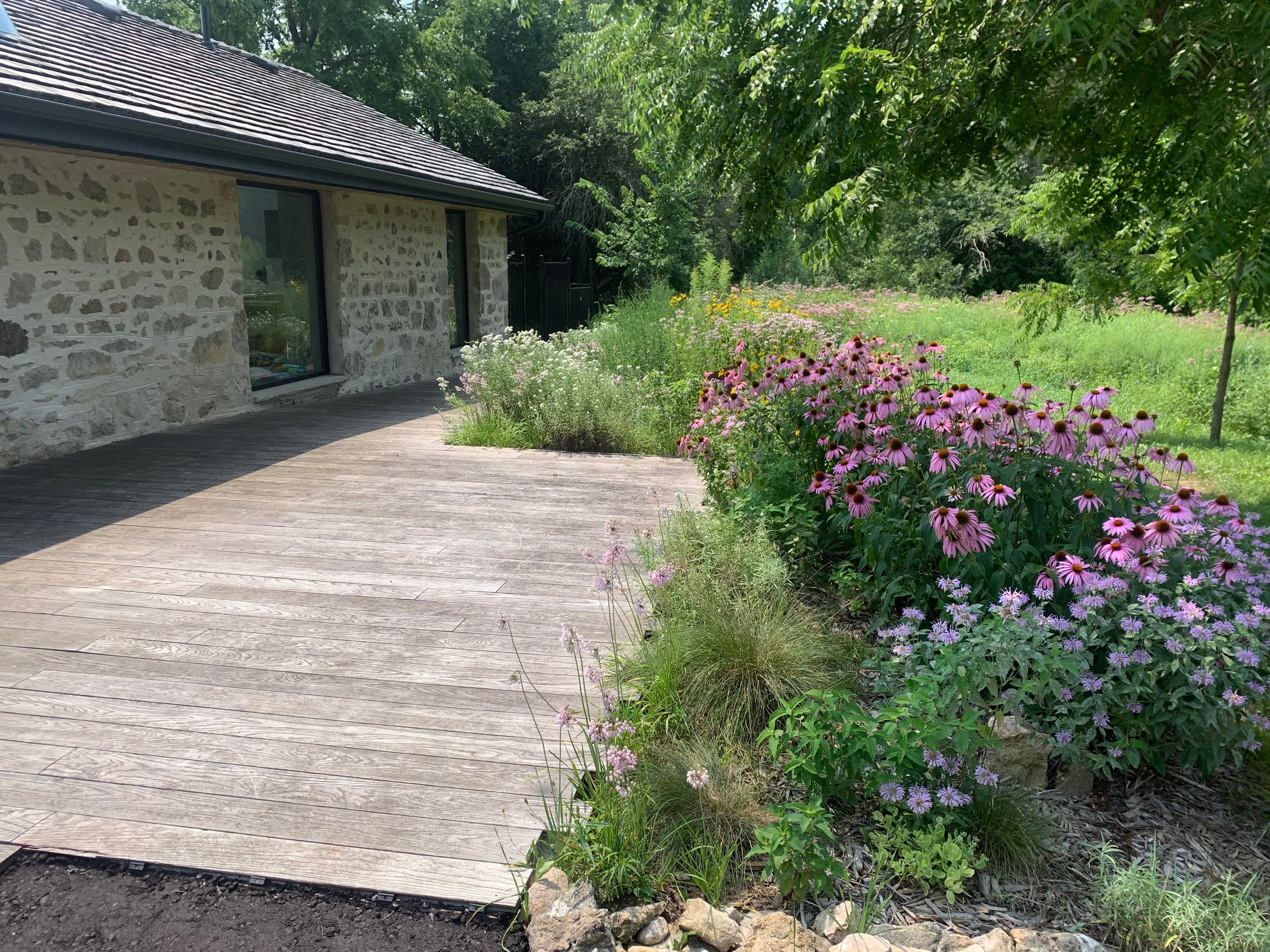
After
Design Philosophy
Rather than forcing the site to behave like a fertile garden bed filled with generalist plant species, we designed the garden to behave like an ecosystem that would naturally thrive in harsh conditions.
Both areas shared the same limiting conditions:
Full sun
Dry, heavy clay soil
Rocky, compacted substrate
Slope along the pool increasing drought stress
Amending soil across both sites would have required large financial and material inputs while still producing fragile results. Instead, we based the design on a prairie plant community, selecting species adapted to stress, disturbance, and long-term self-stabilization.
Prairie plants are not chosen because they are trendy — they are chosen because they are functionally appropriate.
Site Preparation Strategy
Behind the Pool House
Due to the rocky clay and construction debris, mechanical digging was impractical. We used a low-disturbance restoration method:
We weed-whacked existing vegetation and removed biomass.
Aggressive species such as vetch and Canada goldenrod were hand-dug to reduce regrowth pressure.
The site was sheet-mulched with cardboard and wood chips and left to smother vegetation over the summer.
In fall, we planted densely to outcompete future weeds and accelerate ecological stability.
Poolside Gardens
Minimal disturbance was needed. We selectively removed invasive or unsuitable species such as bugleweed while retaining some existing ornamentals where they fit the composition. This allowed us to reduce waste, preserve soil structure, and integrate the new planting seamlessly.
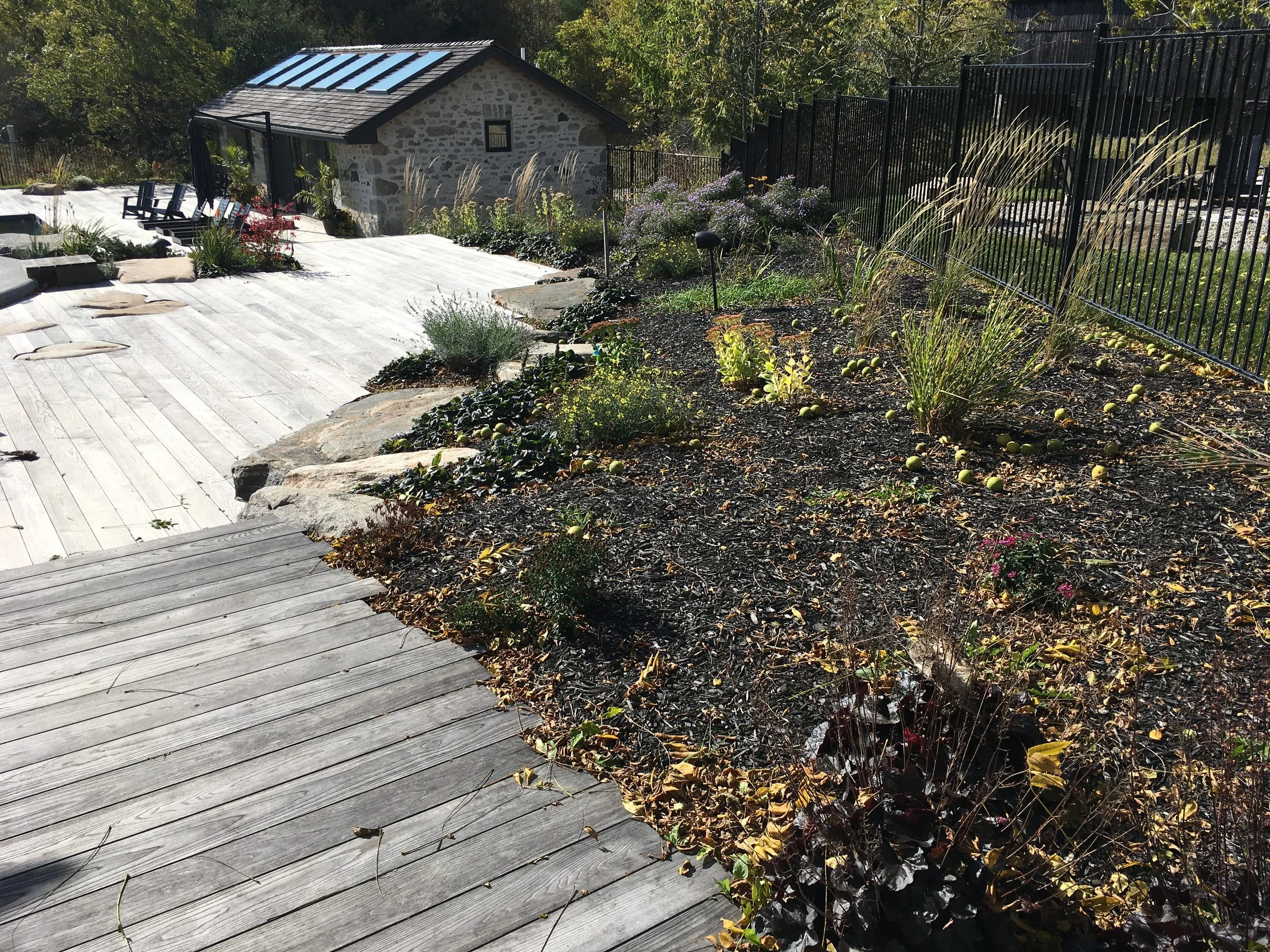
Before
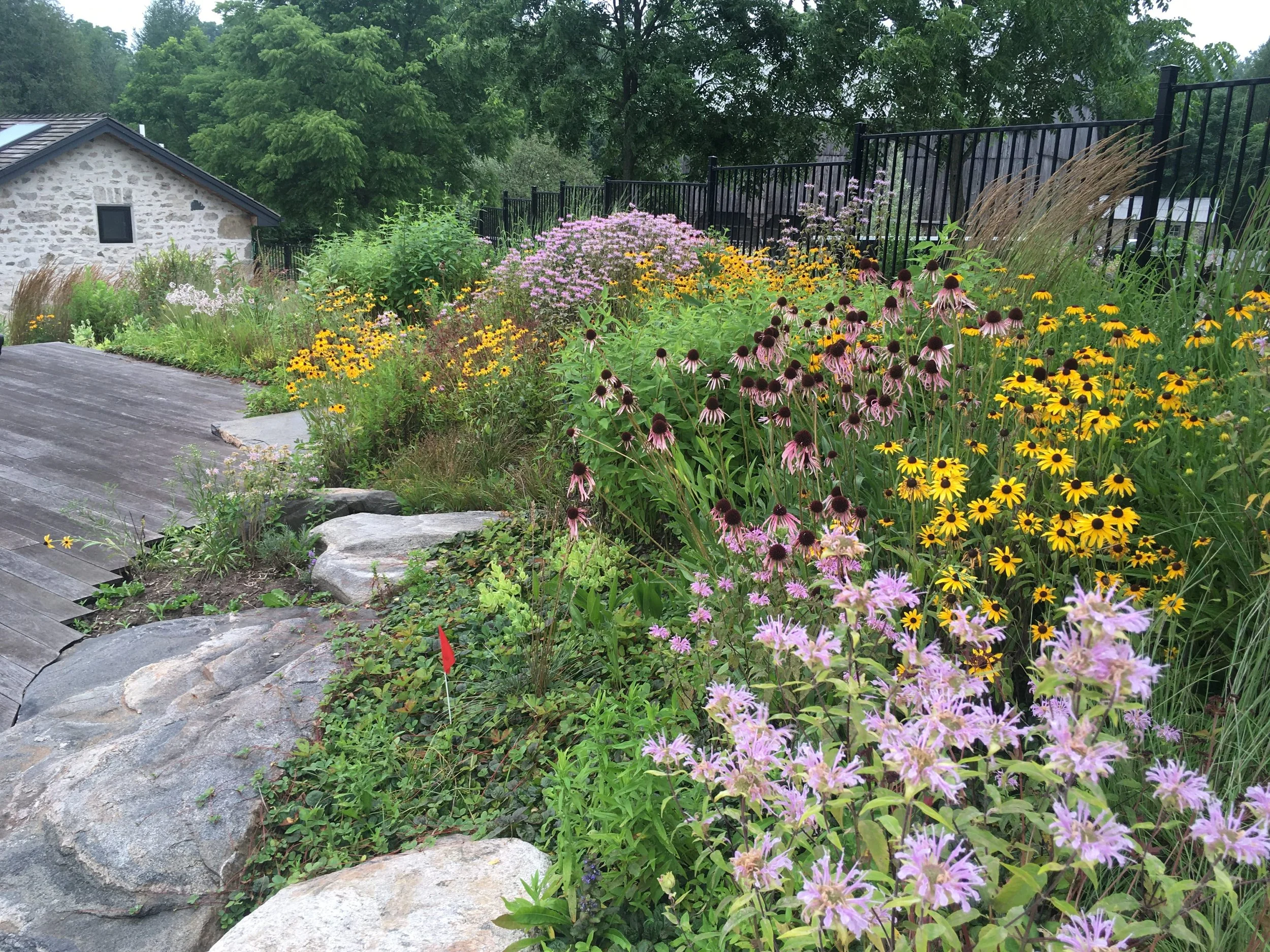
After
Plant Palette
All plant selections were based on stress tolerance, long-term structure, and ecological function.
Behind the Pool House included:
Pearly Everlasting
Nodding Onion
Smooth Aster
Wild Bergamot
Butterfly Milkweed
Poolside gardens included:
Wild Bergamot
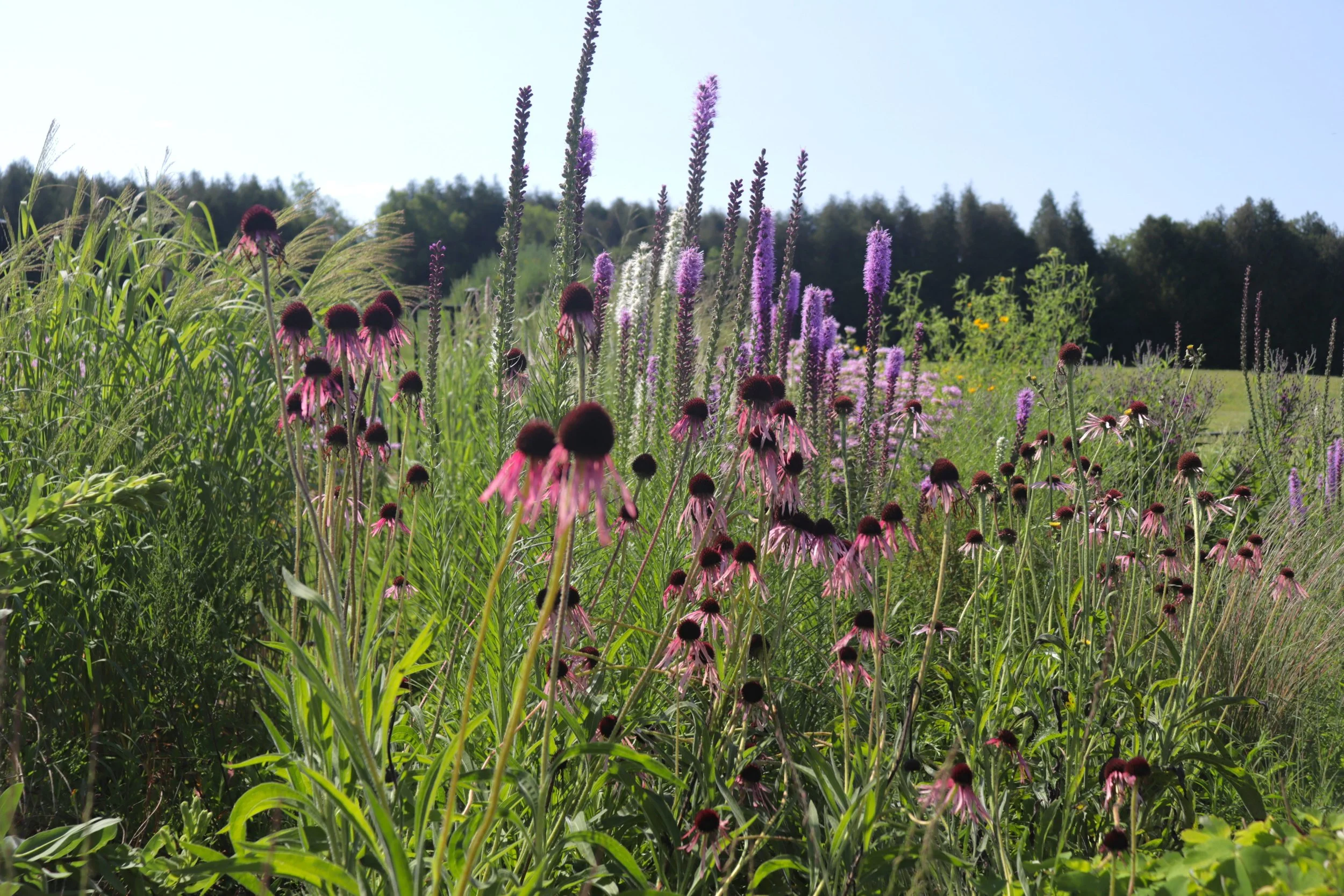
Pale Coneflower
Black-Eyed Susan
New England Aster
Golden Alexander
Little Bluestem
In the first year, faster-growing species such as black-eyed Susan, pale coneflower, and golden Alexander dominate. Over time, longer-lived structural species like little bluestem, asters, and milkweed will define the garden’s mature character — creating a dynamic but stable succession.
The Result
The garden now reads as intentional, calm, and natural — not messy or forced.
What was once compacted, weedy disturbance is now a resilient prairie-inspired landscape that:
Requires minimal soil amendment
Thrives in drought and heat
Supports pollinators and wildlife
Evolves beautifully through the seasons
Reduces long-term maintenance needs
Reflects the surrounding environment instead of fighting it
Most importantly, the garden now tells a story of place, not decoration.
Looking to Restore or Reimagine Your Landscape?
If your garden struggles with poor soil, harsh sun, slopes, or ongoing maintenance issues, the solution is not more fertilizer — it is better ecological design.
I specialize in translating real site conditions into resilient, beautiful plant communities that work with nature, not against it.