

Formal Front Yard Prairie Garden
Replacing a sun-baked front yard with a natural garden
Project Overview
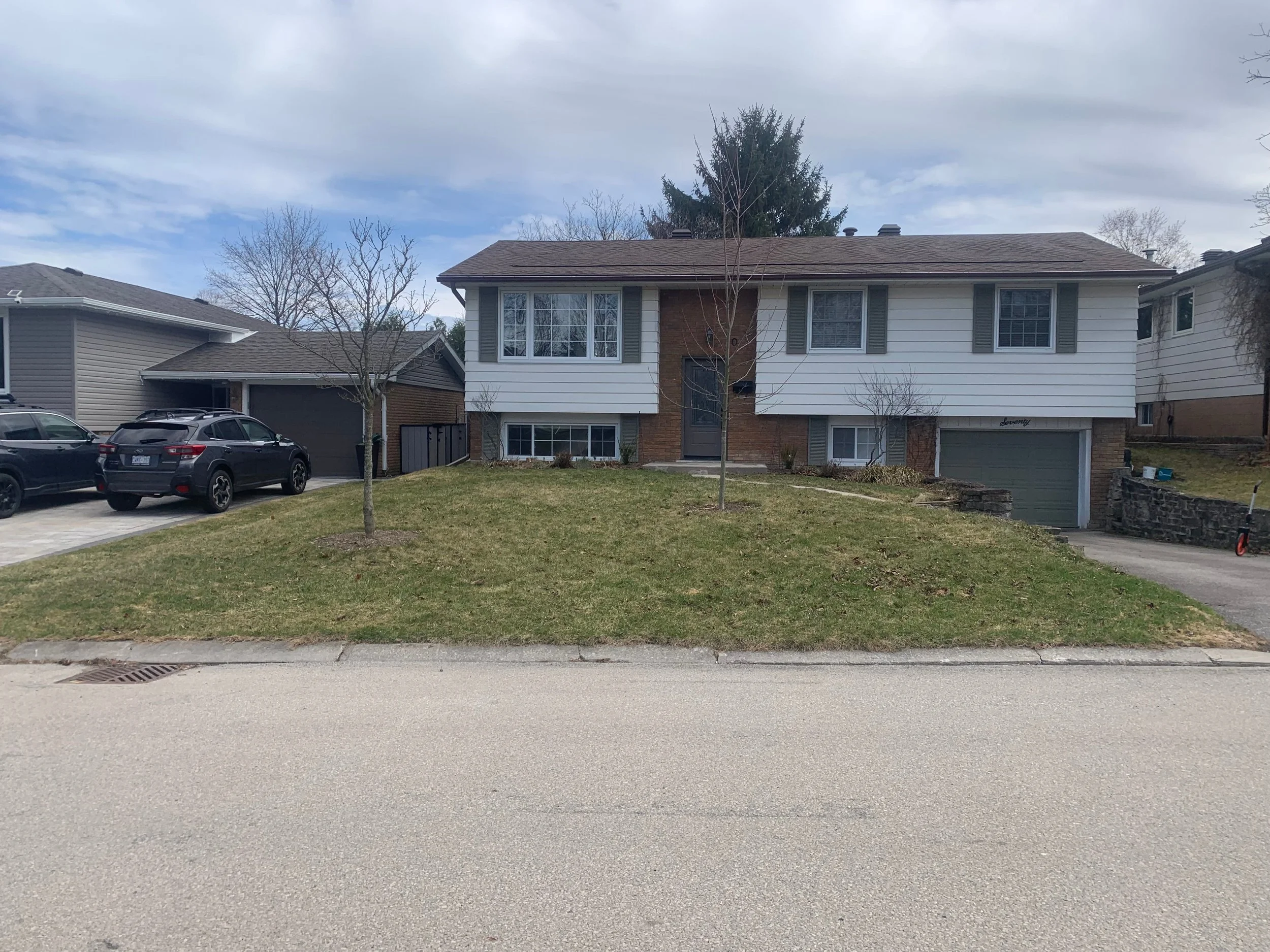
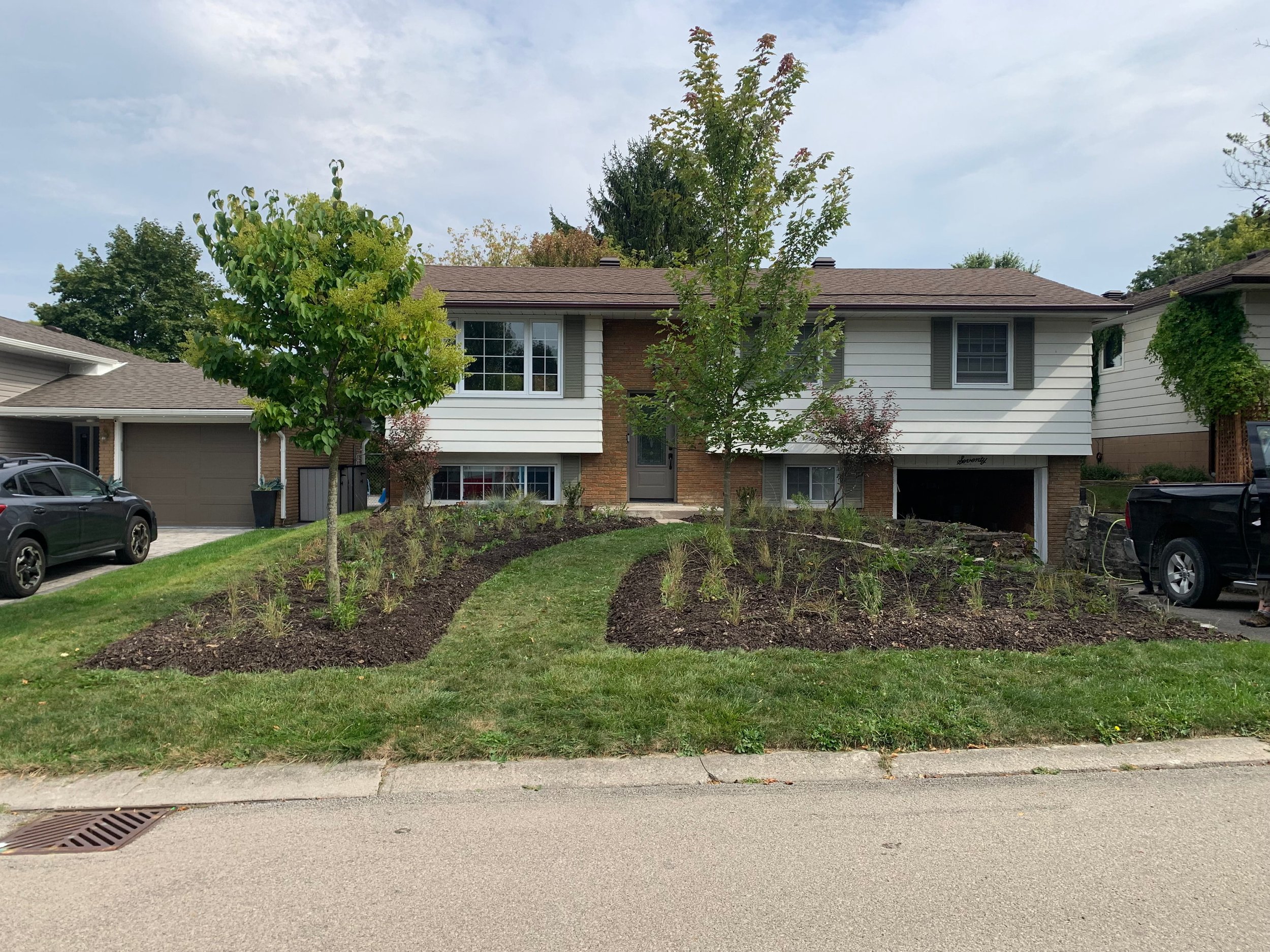
This project focused on transforming a traditional front lawn into a native plant garden that supports biodiversity while maintaining a neat, formal appearance suited to the surrounding neighbourhood.
The client wanted less lawn, more native plants, and a garden that reflected both ecological responsibility and refined design.
The Challenge
The client was motivated to reduce lawn and replace it with native plants as a way to give back to nature. At the same time, she wanted the garden to remain orderly, elegant, and visually consistent with the formal character of the street.
The site presented additional challenges: full sun exposure, compacted clay soil, and dry conditions during summer months — conditions that often cause conventional gardens to struggle or require extra work to keep alive.
The goal was to design a landscape that would thrive naturally while still feeling intentional and composed.
Design and Planting
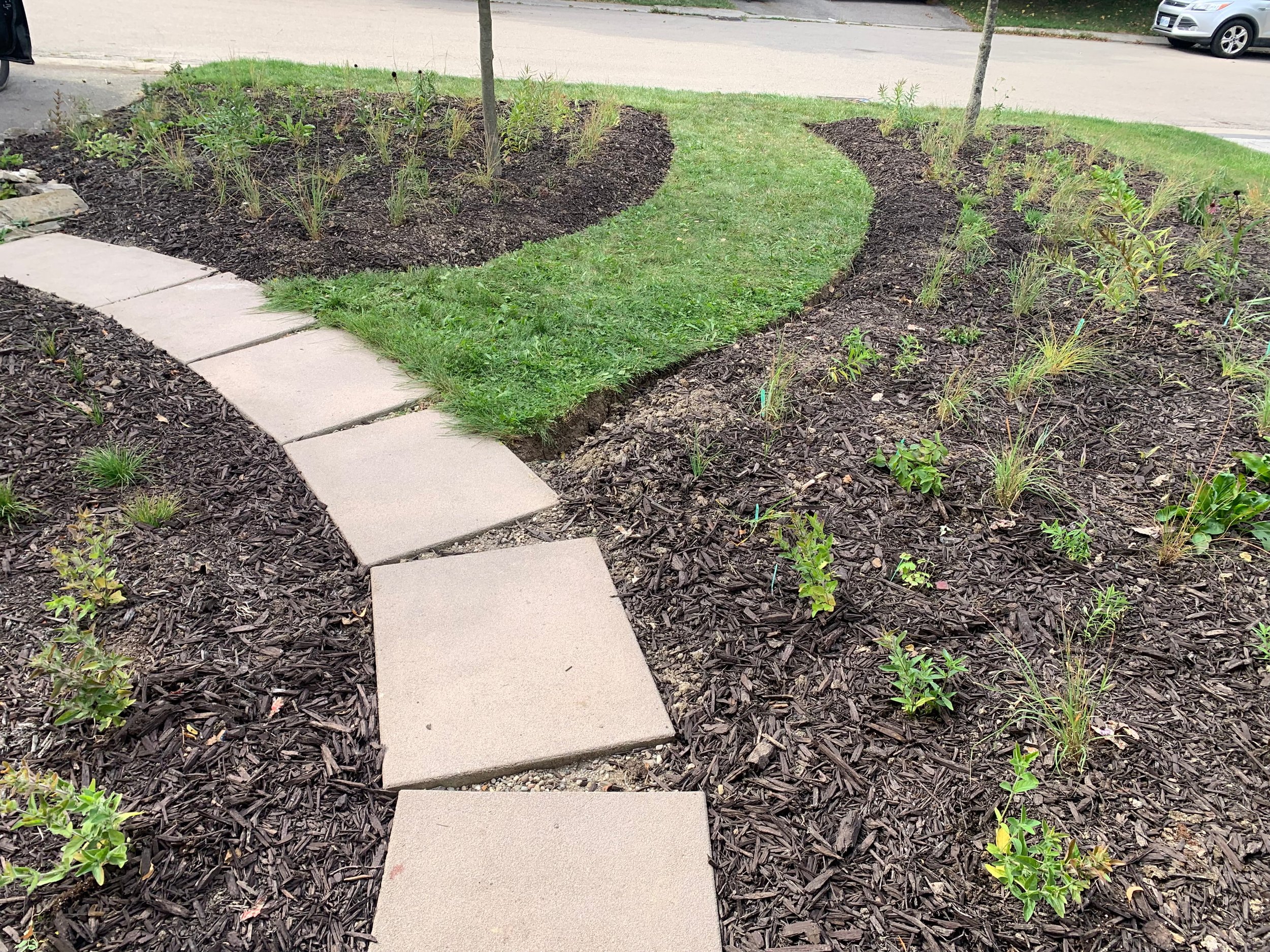
All plants were selected for their tidy, clump-forming growth habits and to remain under four feet in height, avoiding aggressive spread by rhizomes or excessive self-seeding. This ensured the garden would remain tidy, balanced, and easy to manage as it matures.
Bloom succession from spring through fall provides continuous colour, while seed heads and structure will carry visual interest into winter.
Blending the garden into the surrounding neighborhood was a key design priority. A wide grass pathway was retained through the garden, along with a six-foot lawn edge along the roadside. These features frame the planting and maintain a formal visual structure, allowing the natural garden to feel intentional rather than disruptive in a streetscape dominated by conventional lawns.
This balance between natural planting and formal framing allows the garden to feel both progressive and respectful of its setting. Learn the secrets to formal garden design with native plants here.
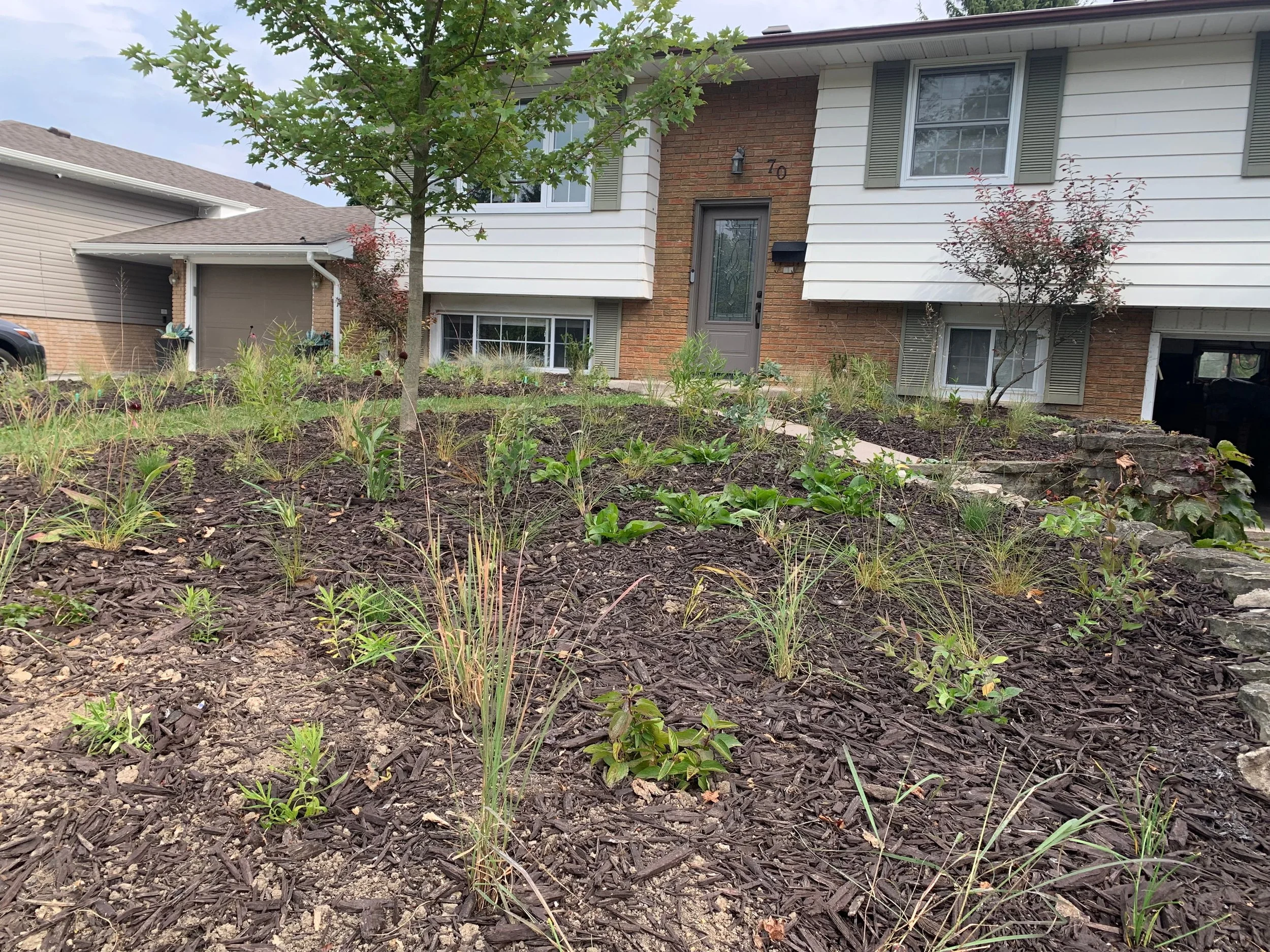
The Site
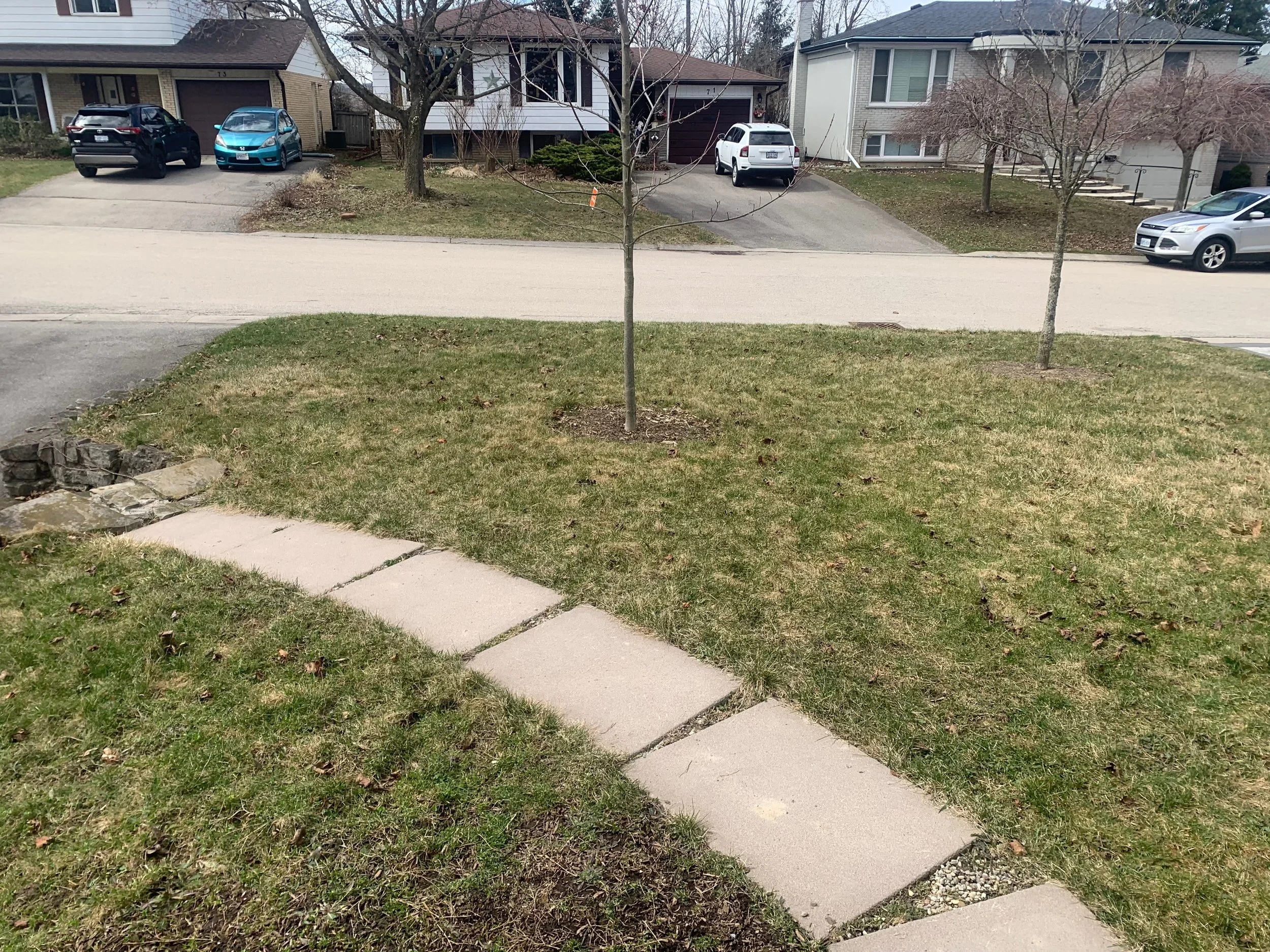
The front yard receives full sun throughout the day. The soil is heavy clay that becomes dry and hard in summer.
Rather than fighting these conditions by attempting to amend the soil, we chose a design that would embraced existing conditions. With natural garden design as our weapon, site conditions such as hard, dry clay are not hindrances but opportunities!
Our Design Approach
Plant selection was based on a dry-prairie plant community — a natural ecosystem with a long list of plants that are well adapted to full sun, clay soils, and seasonal dryness. Choosing plants based on what ecosystem your site resembles is the best way to approach plant selection. Prairie plants are resilient, long-lived, and capable of creating visually rich landscapes with minimal long-term input.
The site was prepared using a cardboard and wood-chip smothering method to suppress existing grass and weeds without disturbing soil structure. The area was left through the summer to allow the material to break down naturally, then planted in the fall under ideal conditions for root establishment.
This approach protected soil health while setting the stage for a low-maintenance, high-performance garden.
What This Garden Will Become
A front yard that was once a lifeless lawn has been set up for a trajectory of hope, resilience, and natural beauty. As the planting fills in, the garden will continue to strengthen as a resilient prairie-inspired plant community. Maintenance needs will decrease, seasonal expression will deepen, and wildlife activity will increase.
The structure and plant selection ensure that beauty, order, and ecological function will remain in balance for years to come.