

Dry Shade Garden Beneath A Maple
Project Overview
Beneath a mature Amur maple, we transformed a sparse, weedy, dry-shade space into a lush woodland-inspired garden using dense, layered planting and carefully selected understory species. By filling all available ground and working with the site’s natural conditions, we dramatically reduced weeding while creating an inviting garden that echoes a lush forest understory.
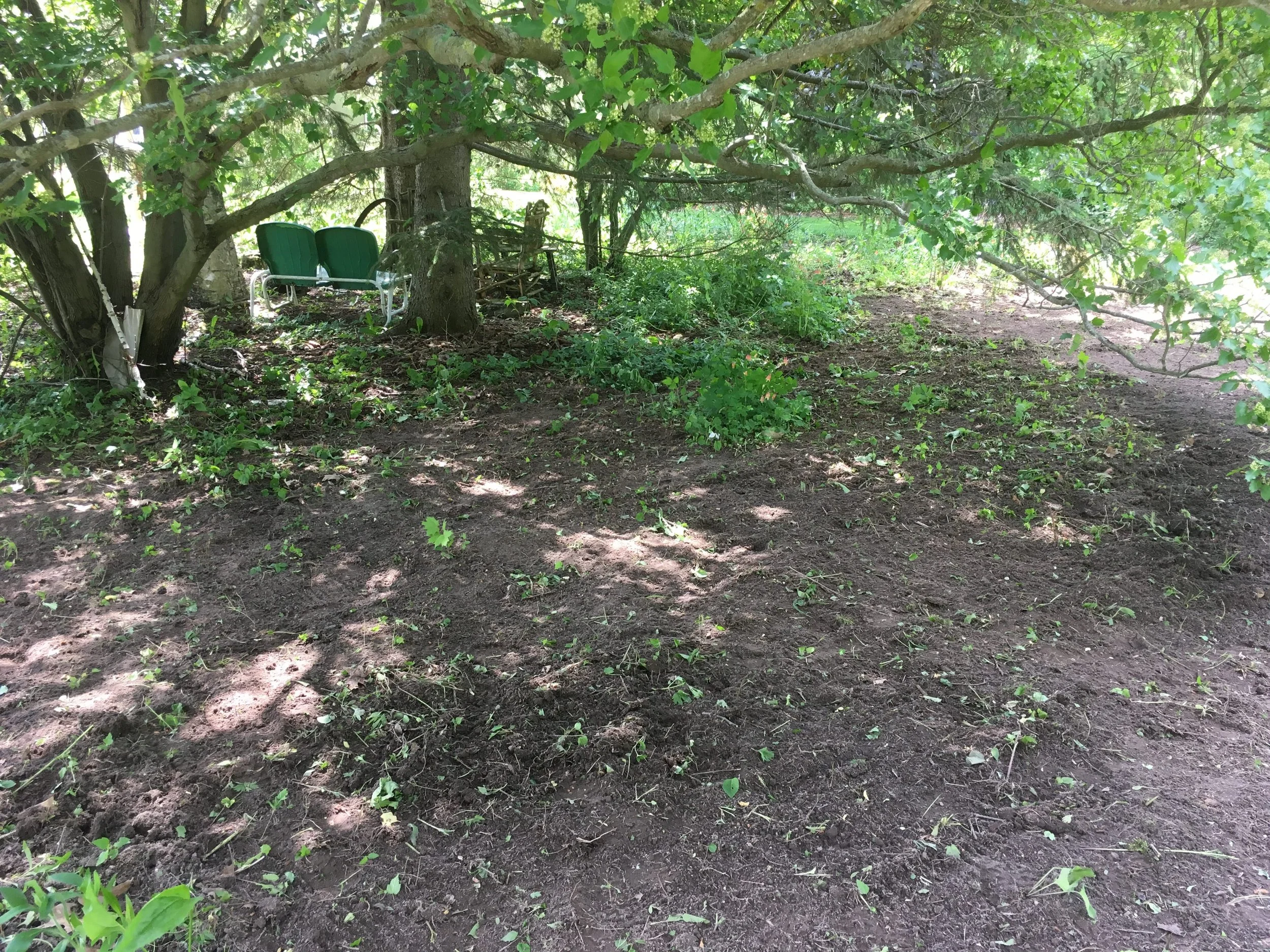
Before
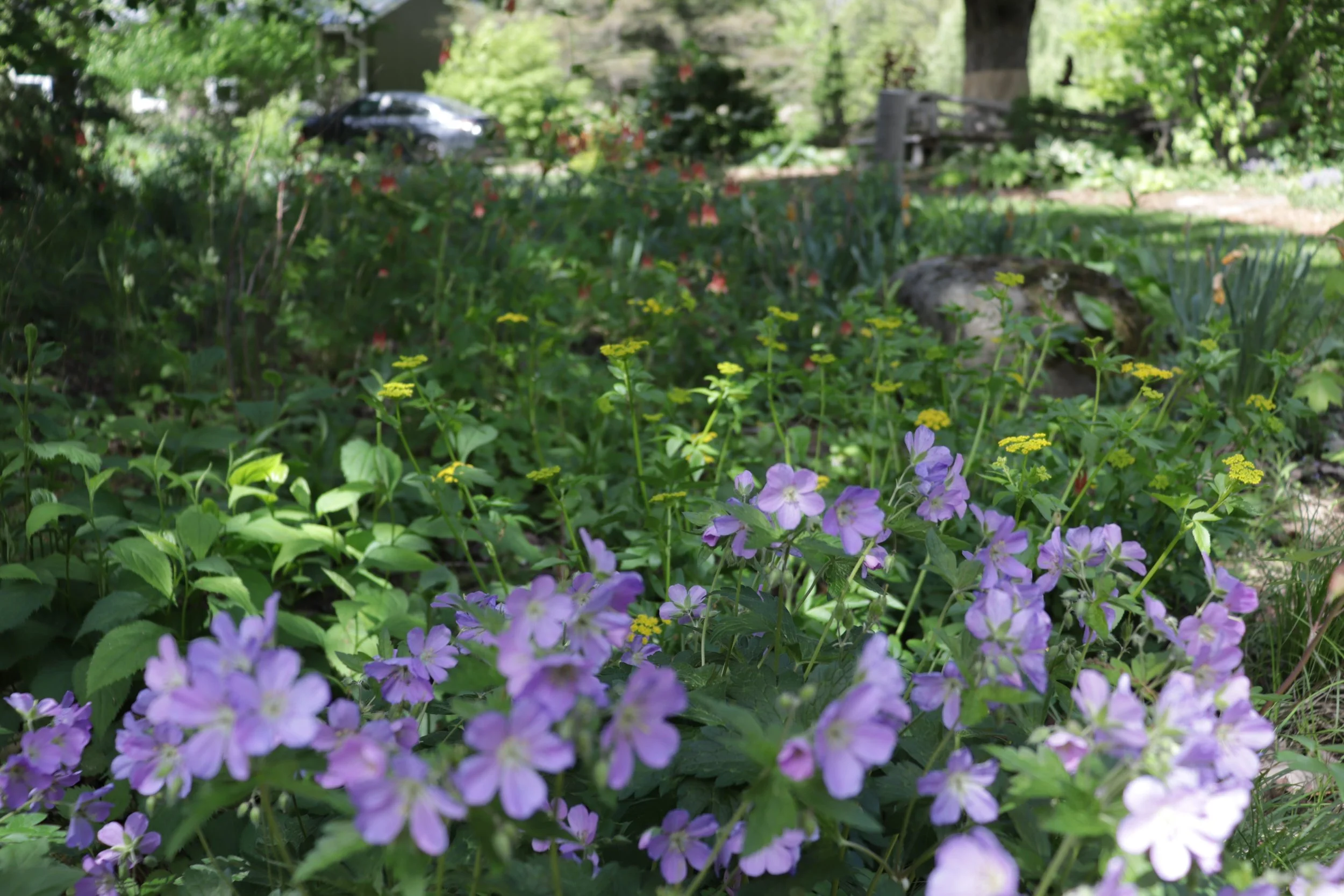
After
The Challenge
Beneath a mature Amur maple, the garden was sparse, weedy, and visually underwhelming. Dense shade, root competition, and dry soil created conditions where most traditional garden plants struggled to survive. The maple also self-seeded aggressively, turning the area into a constant maintenance burden.
The clients wanted a garden that felt natural, lush, and inviting, while significantly reducing ongoing weeding — a place they could enjoy while sitting beneath the tree rather than constantly tending.
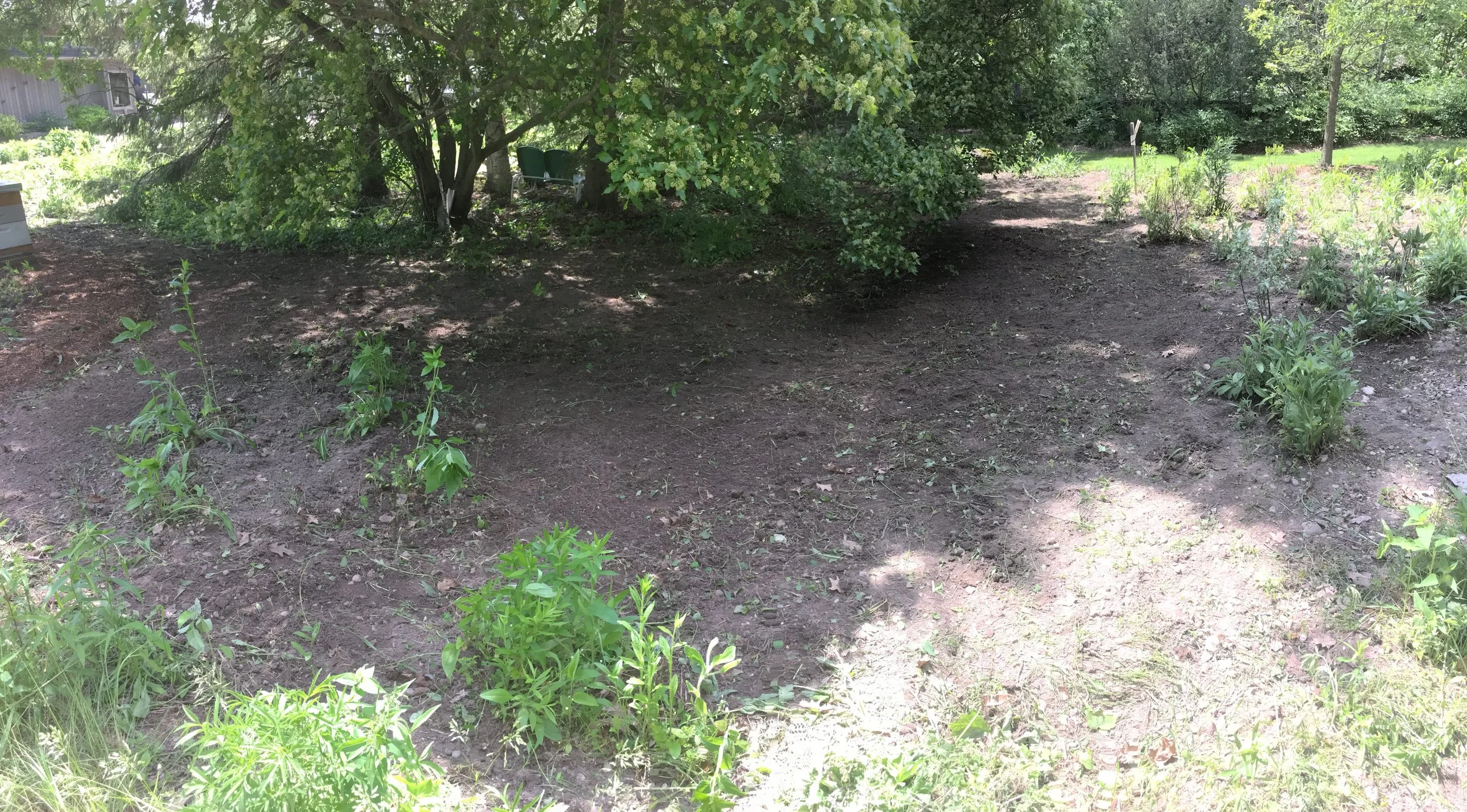
Before
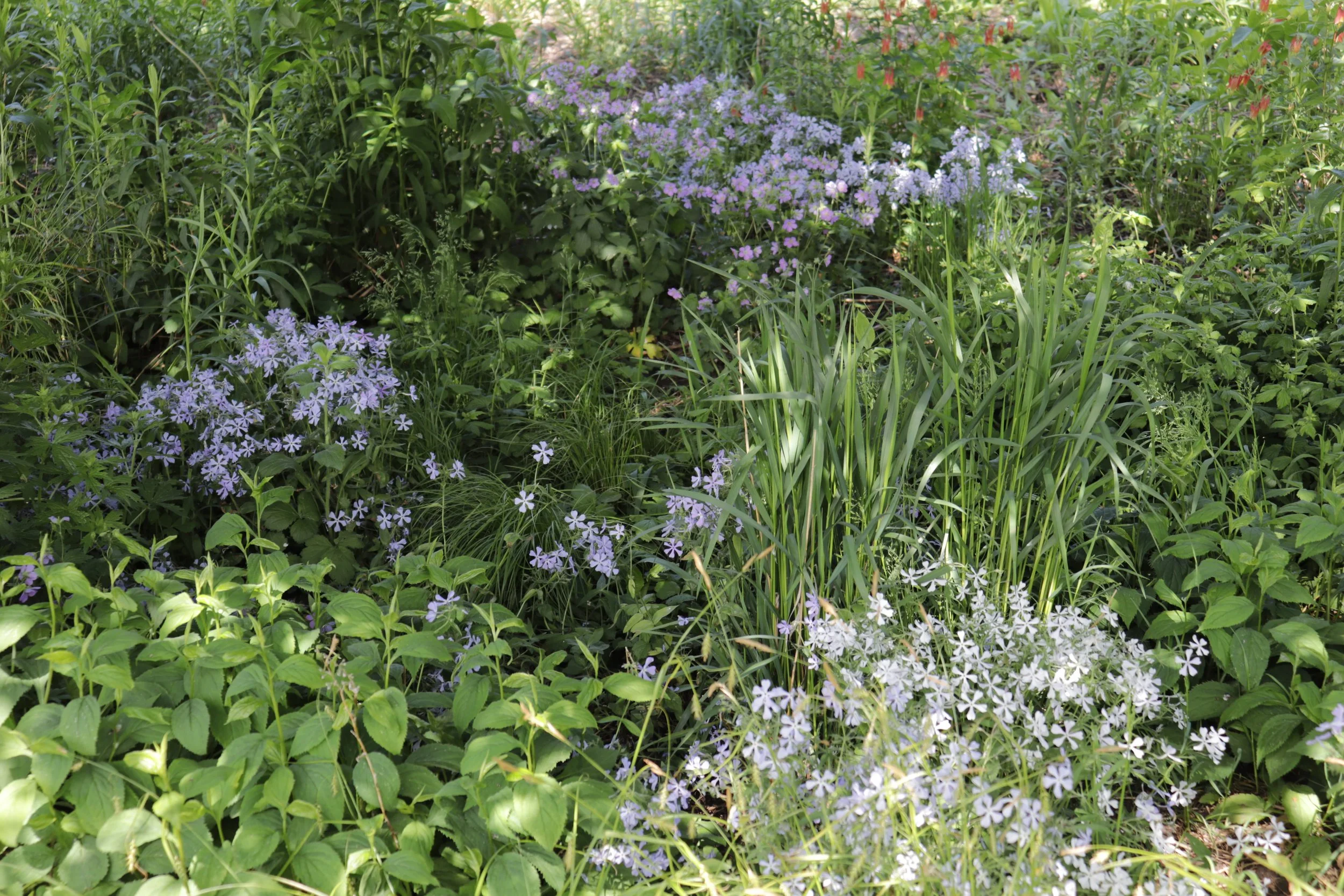
After
Design Strategy
Rather than fighting the tree, we designed the garden around it.
The site conditions were carefully assessed:
Shade to dappled shade, with part sun at the drip line
Dry, sandy loam soil with moderate organic matter
Heavy root competition from the maple
We selected a plant palette based on forest understory and woodland edge communities, prioritizing species that tolerate dry shade — one of the most challenging garden environments.
To control weeds long-term, the design relied on dense, layered planting:
Groundcovers to occupy soil surface
Mid-layer perennials for structure and texture
Taller accent plants for seasonal interest
The goal was clear: fill every ecological niche before weeds could.
Existing vegetation was removed by hand, while a few beneficial plants were retained and integrated into the new design.
The Result
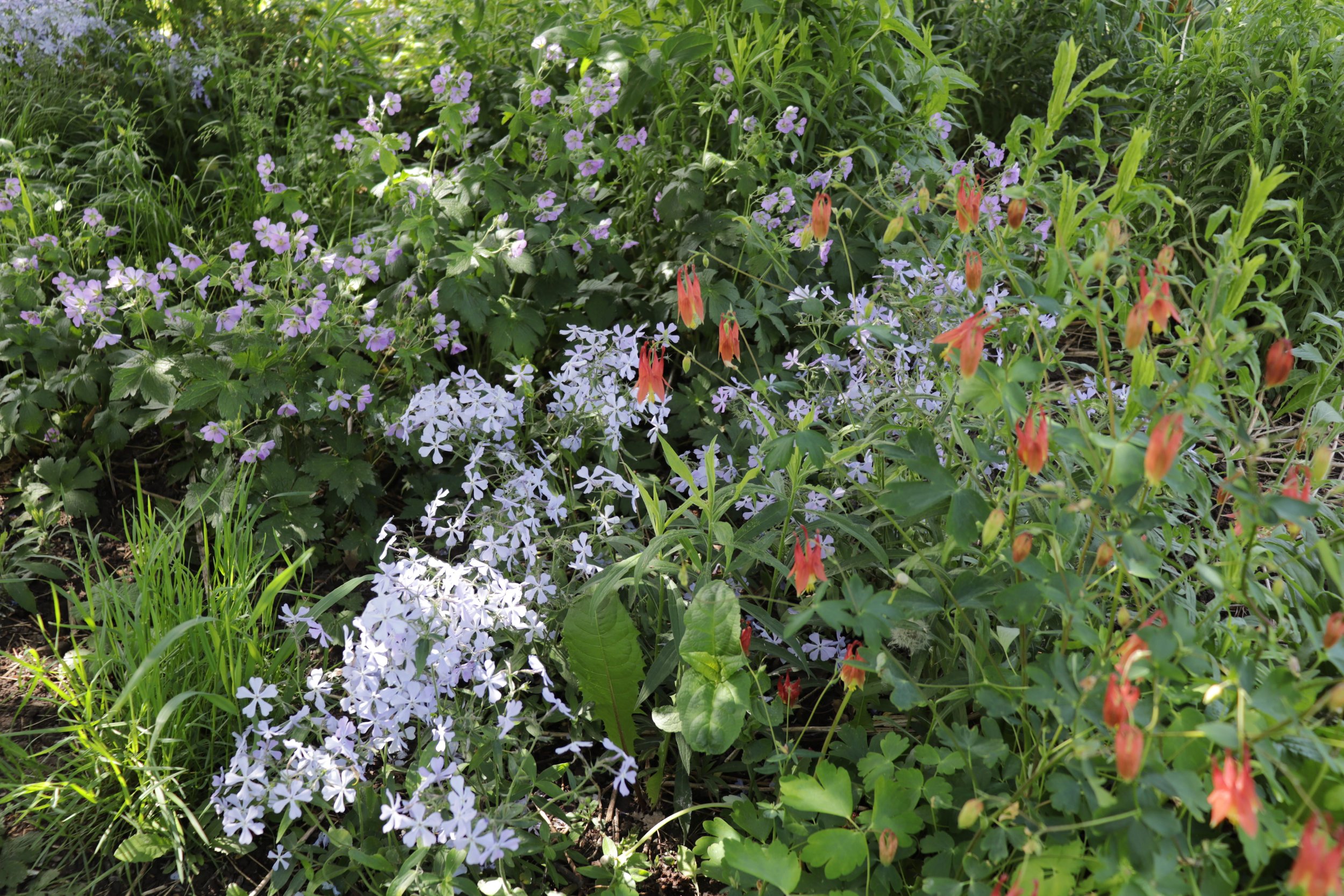
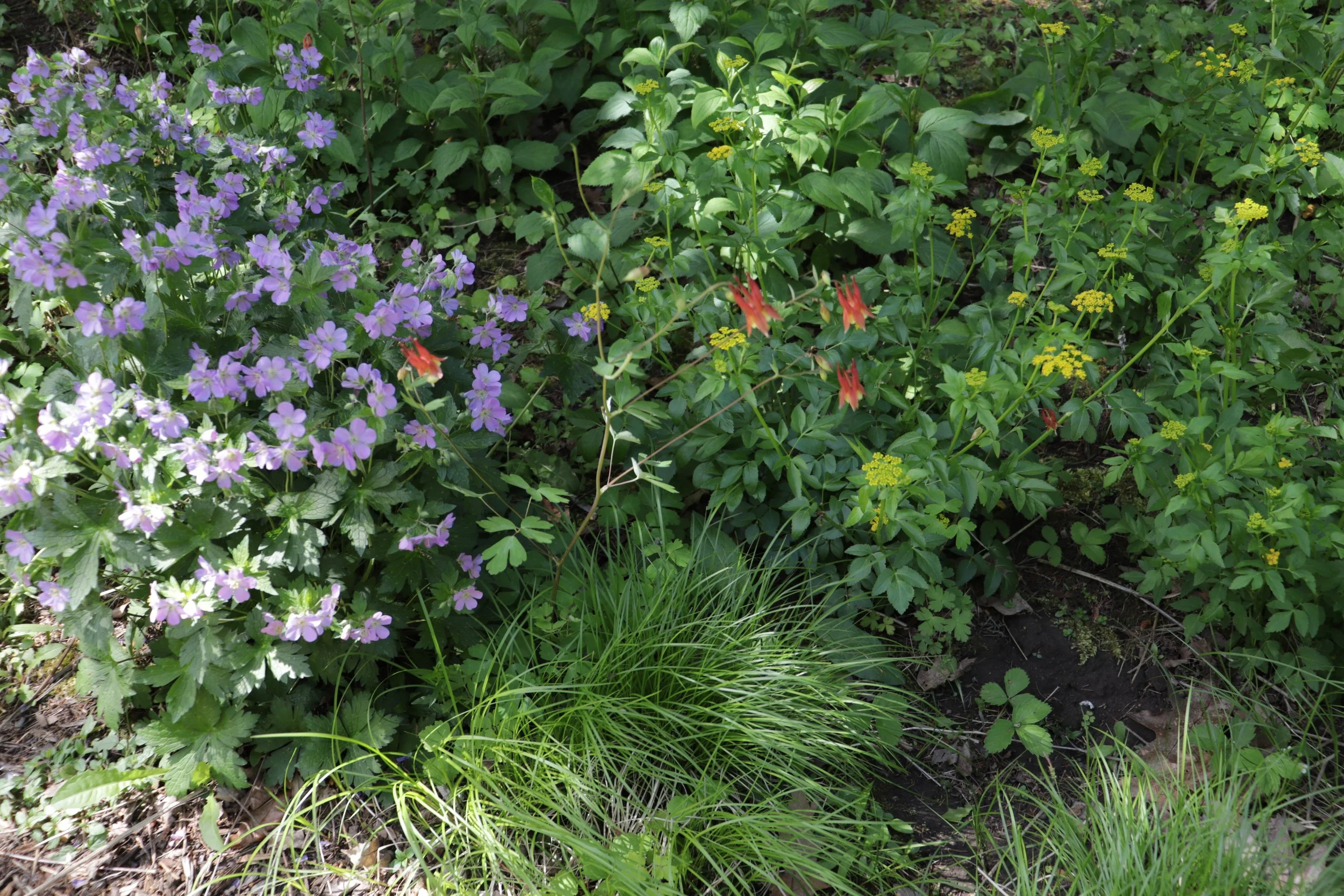
After one year, the garden had filled in beautifully. Thanks to appropriate plant choices, dense spacing, and attentive watering during establishment, the planting quickly formed a living mulch. Bare soil disappeared, weeds lost their foothold, and maintenance dropped dramatically. Today, the garden feels lush, calm, and cohesive — a true woodland refuge beneath the maple canopy.
Ongoing Management
This garden is designed to evolve as nature does. Future care will focus on: Filling occasional gaps where plants decline, adding diversity where conditions allow, observing which species thrive best in this microclimate, and refining the plant community based on real performance. Rather than forcing a static design, we allow the garden to teach us how it wants to grow.
Interested in Transforming a Difficult Garden Space?
Dry shade is not a limitation — it is a design direction. If you are struggling with dry shade, tree roots, or constant weeding, your garden doesn’t need more effort — it needs better ecological design.