

From Failing Lawn to Thriving Prairie Garden
The Problem: A Struggling Lawn
The client was exhausted from trying to maintain a lawn that simply wasn’t suited to the site. The south-facing hillside baked in summer, the soil was rocky and clay-based, and despite constant effort, the grass repeatedly died back each year.
Ironically, the only plants that thrived were deep-taprooted weeds — a clear sign that the site favored tough, drought-adapted species, not turf.
The client wanted a landscape that:
Didn’t require constant mowing
Looked natural and intentional
Supported pollinators and wildlife
Could thrive without imported soil or chemicals
NOTE: The house in the ‘before’ pictures was extensively renovated so it looks like a different house in some of the ‘after’ pictures.
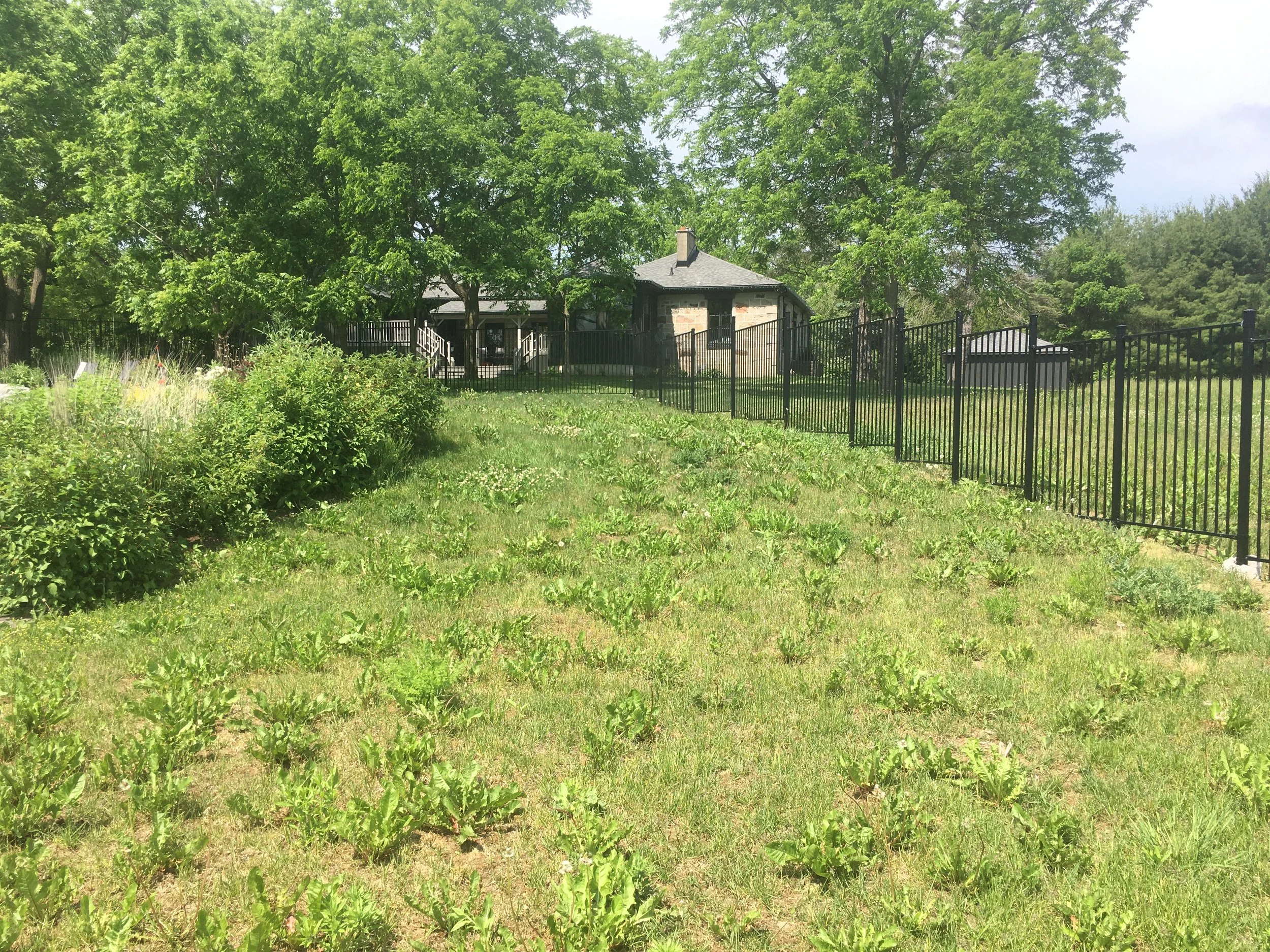
Before
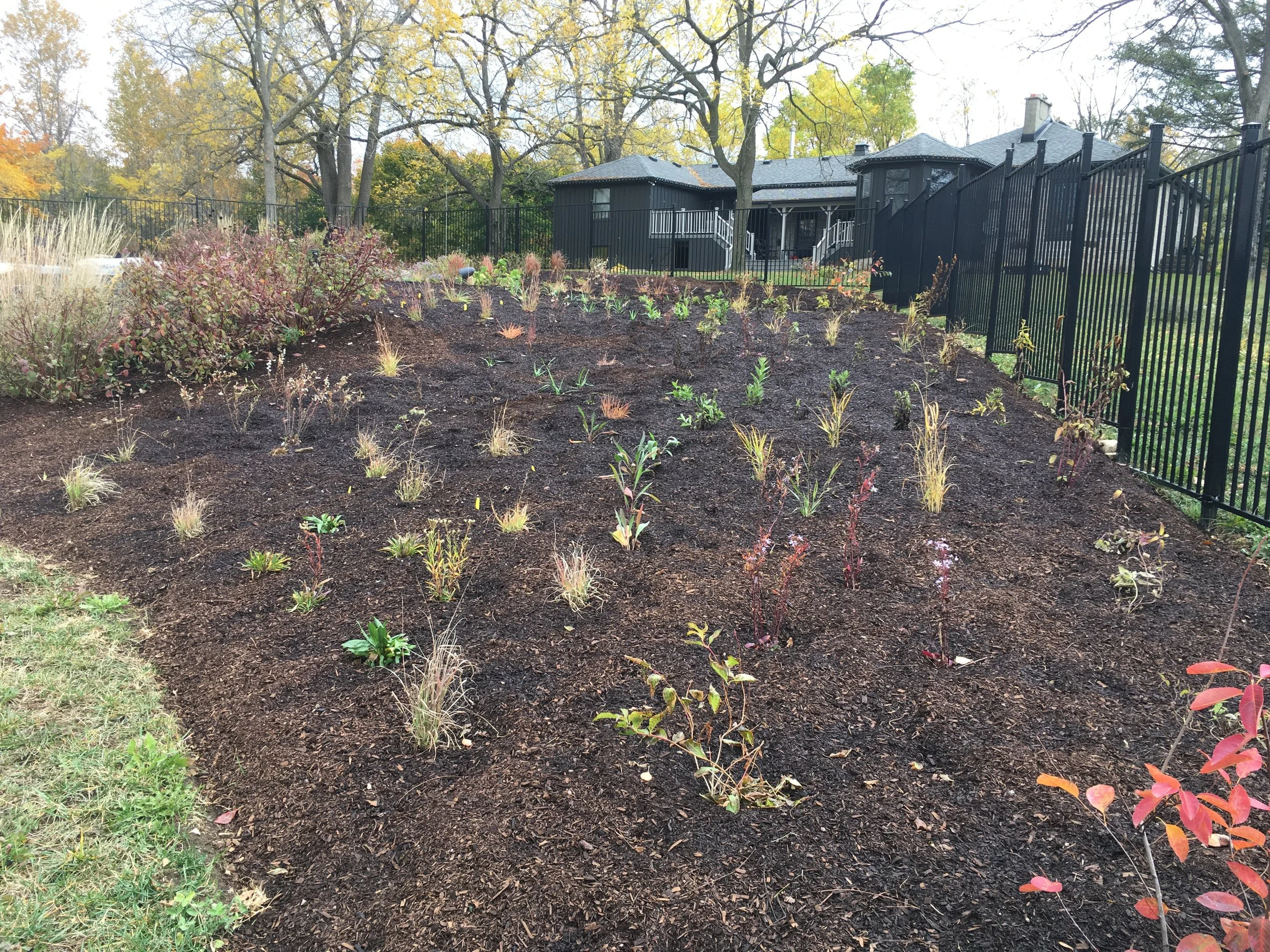
After
The Design Strategy: Work With the Site, Not Against It
Instead of trying to “fix” the soil, we designed the garden around what the site already offered.
Because the slope was south-facing, dry, and well-drained in summer, we selected a dry-mesic prairie plant community — a habitat perfectly adapted to hot sun, seasonal drought, and mineral soils.
With 2,000 square feet to work with, we had the opportunity to include taller prairie species and build true vertical structure.
Our guiding principles were:
Right plant, right place
Density to outcompete weeds
Diversity for resilience
Layering for stability and beauty
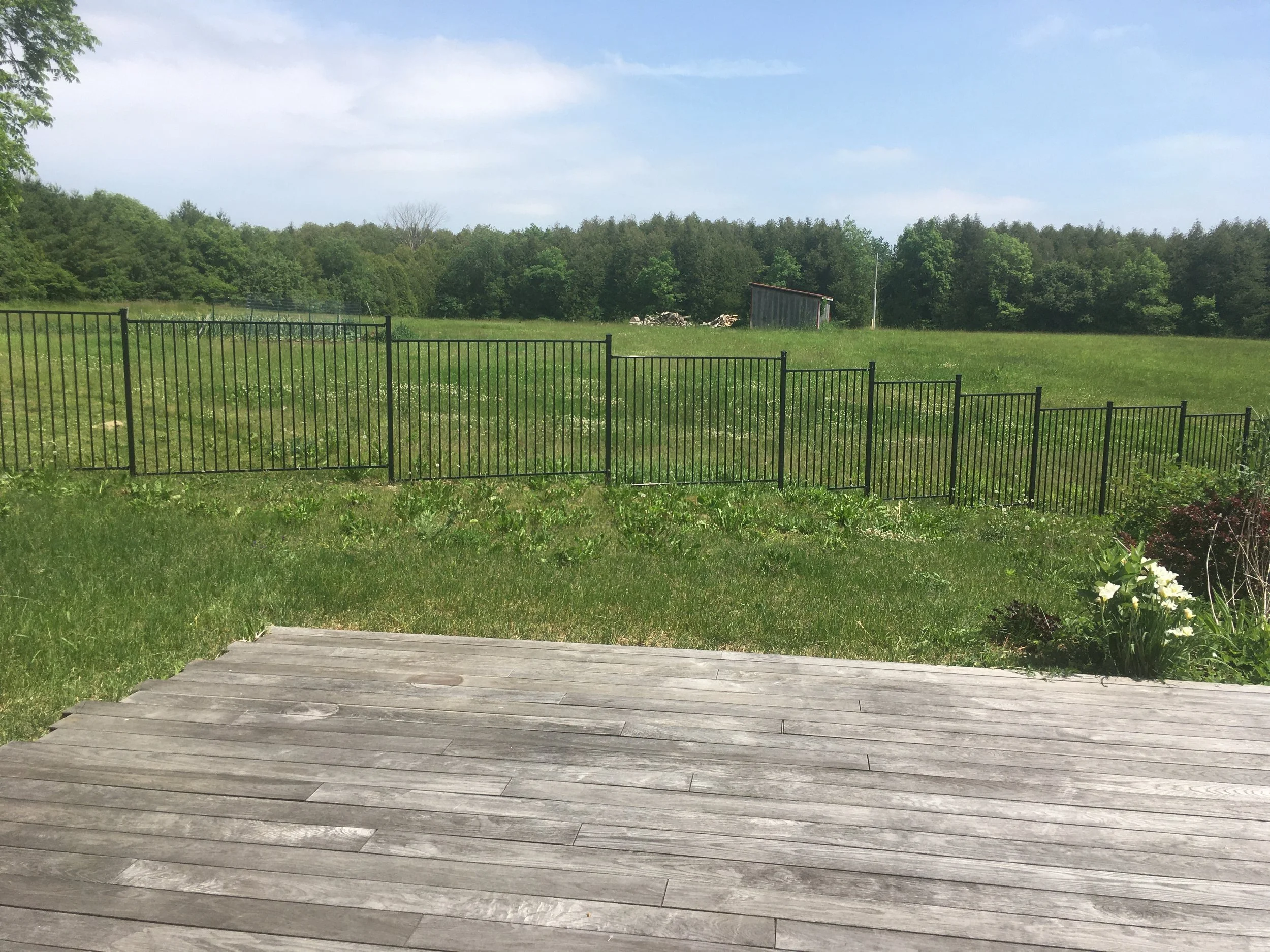
Before
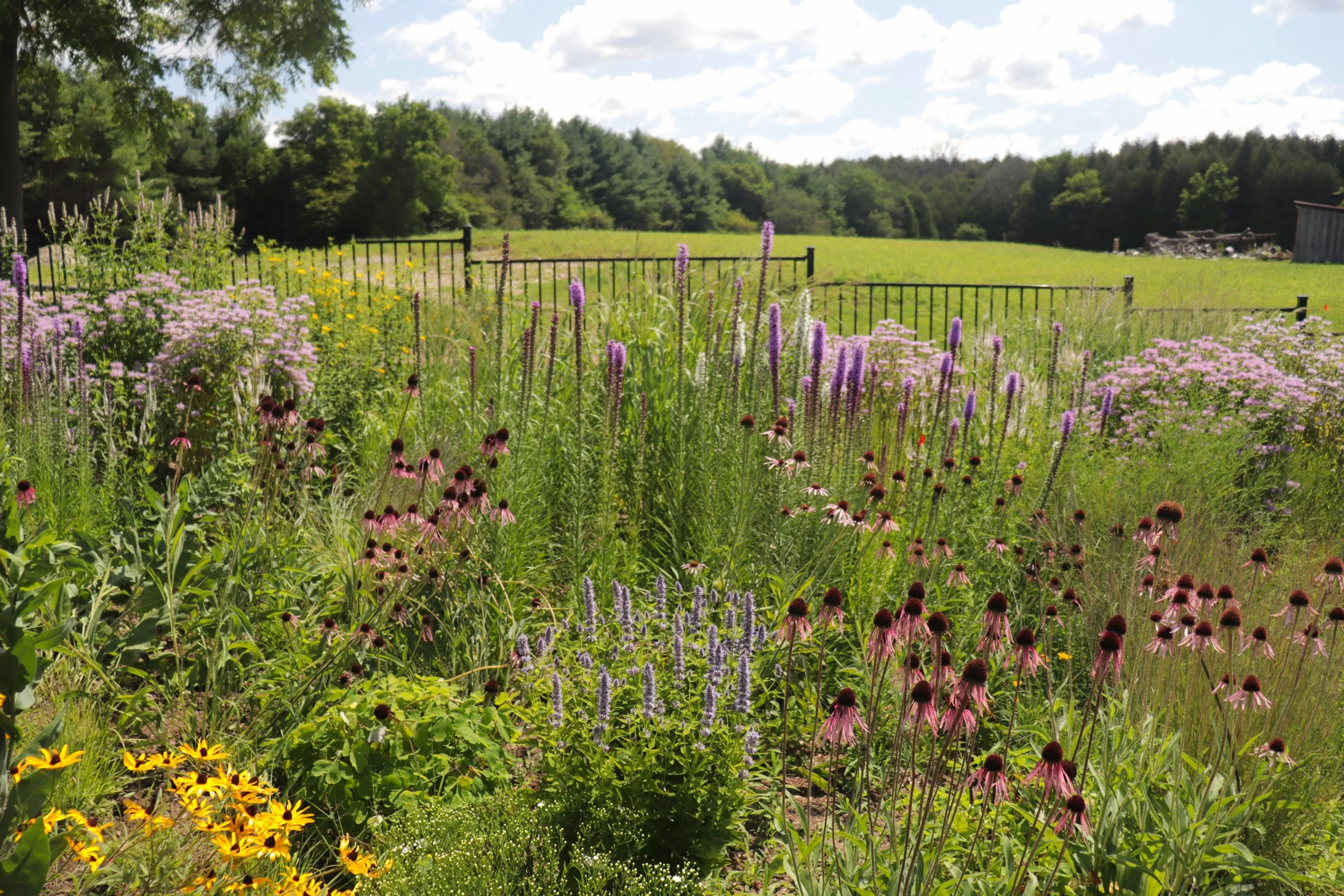
After
Site Preparation (No Chemicals)
At the client’s request, the entire site was prepared without herbicides.
Deep-rooted perennial weeds were hand-dug to prevent regrowth.
The site was lightly rototilled to weaken remaining vegetation.
Cardboard and mulch were applied to smother weed seeds.
The site rested through the summer.
Planting took place in fall, when plants establish best.
Planting Approach: Density + Community
Rather than spacing plants widely, we planted densely and in layers — just as prairies do in nature. This allowed:
Rapid soil coverage
Reduced weed germination
Natural plant support
Faster visual maturity
Grasses, forbs, and structural species were interwoven so each plant contributed to the whole system.
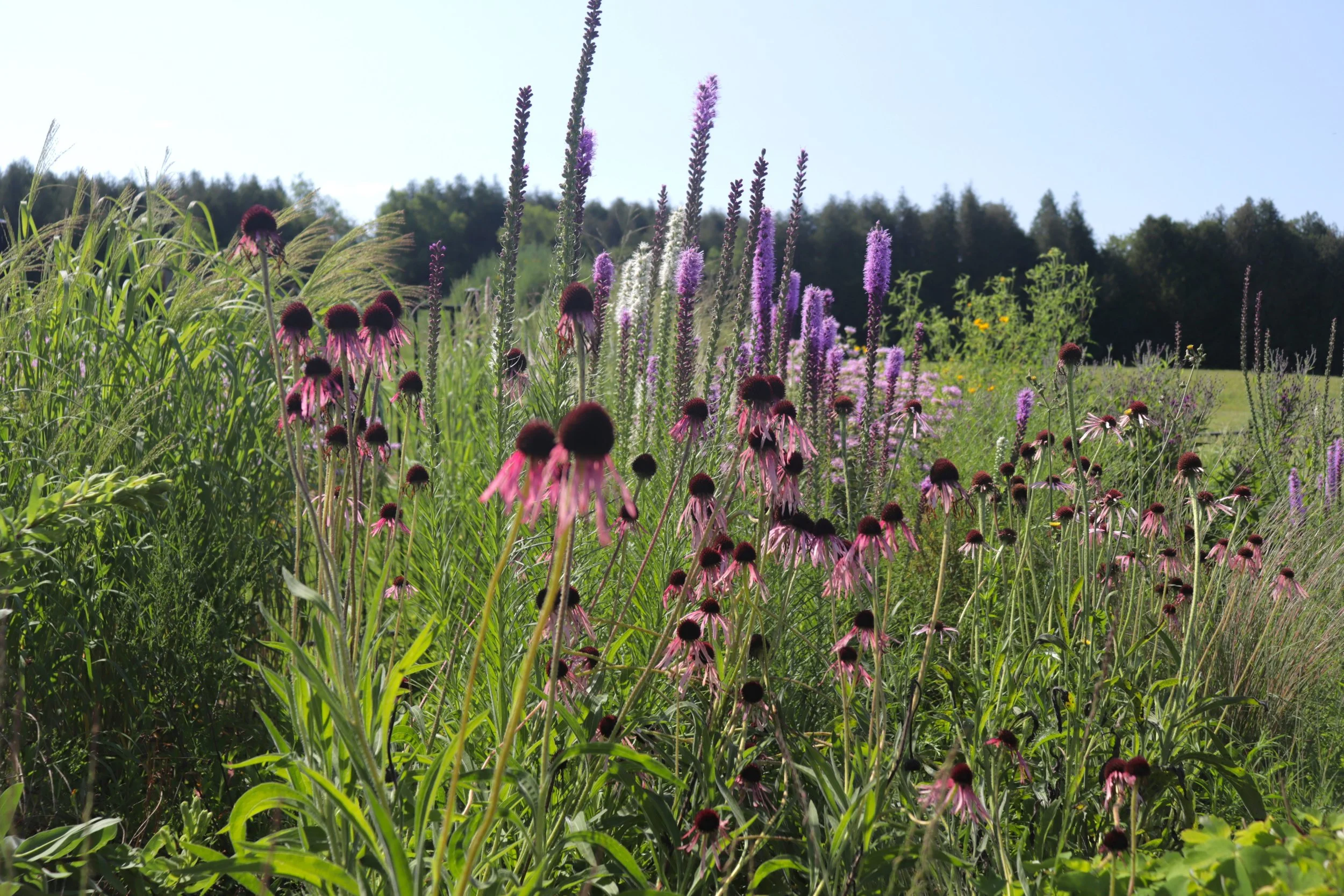
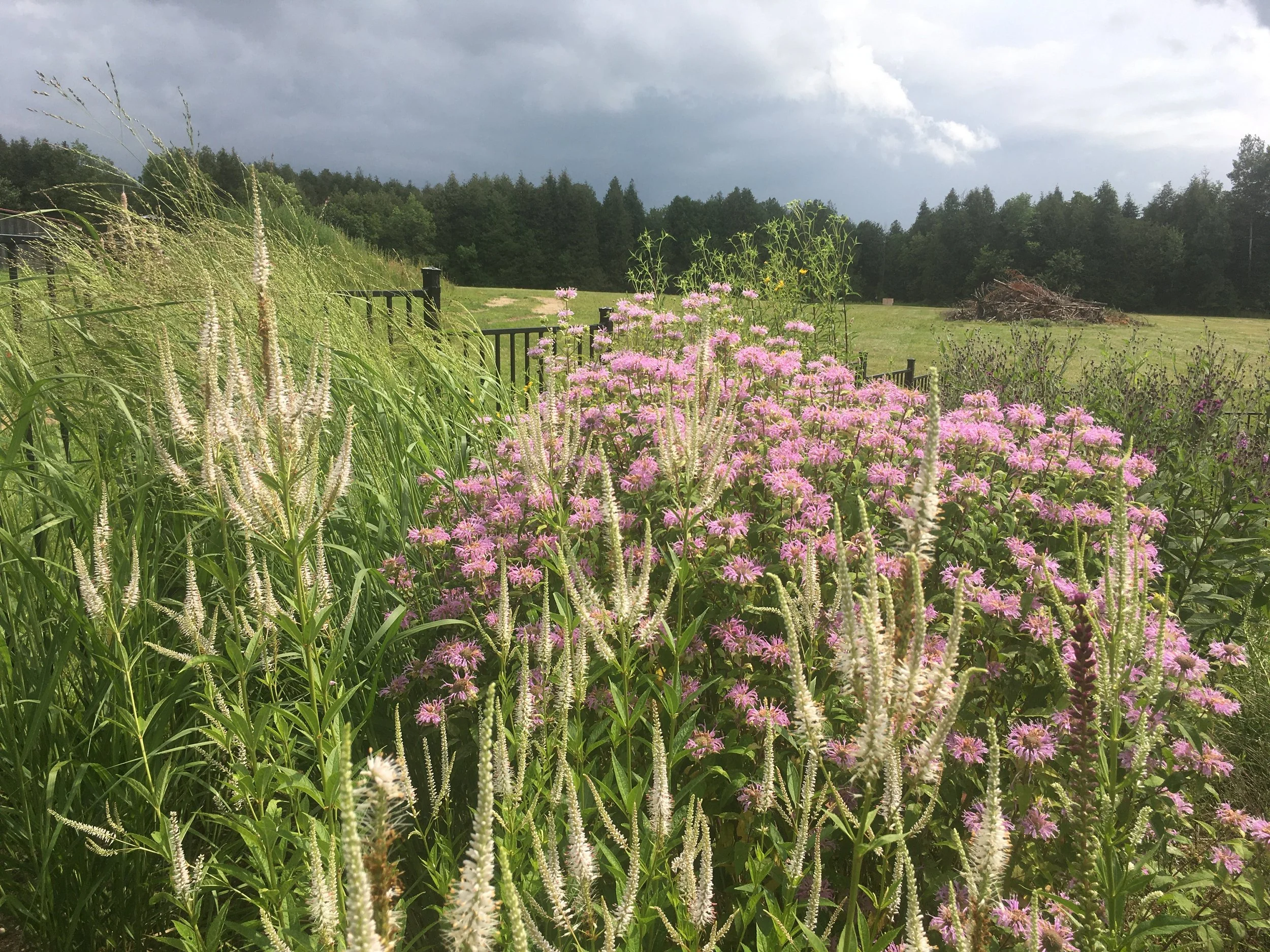
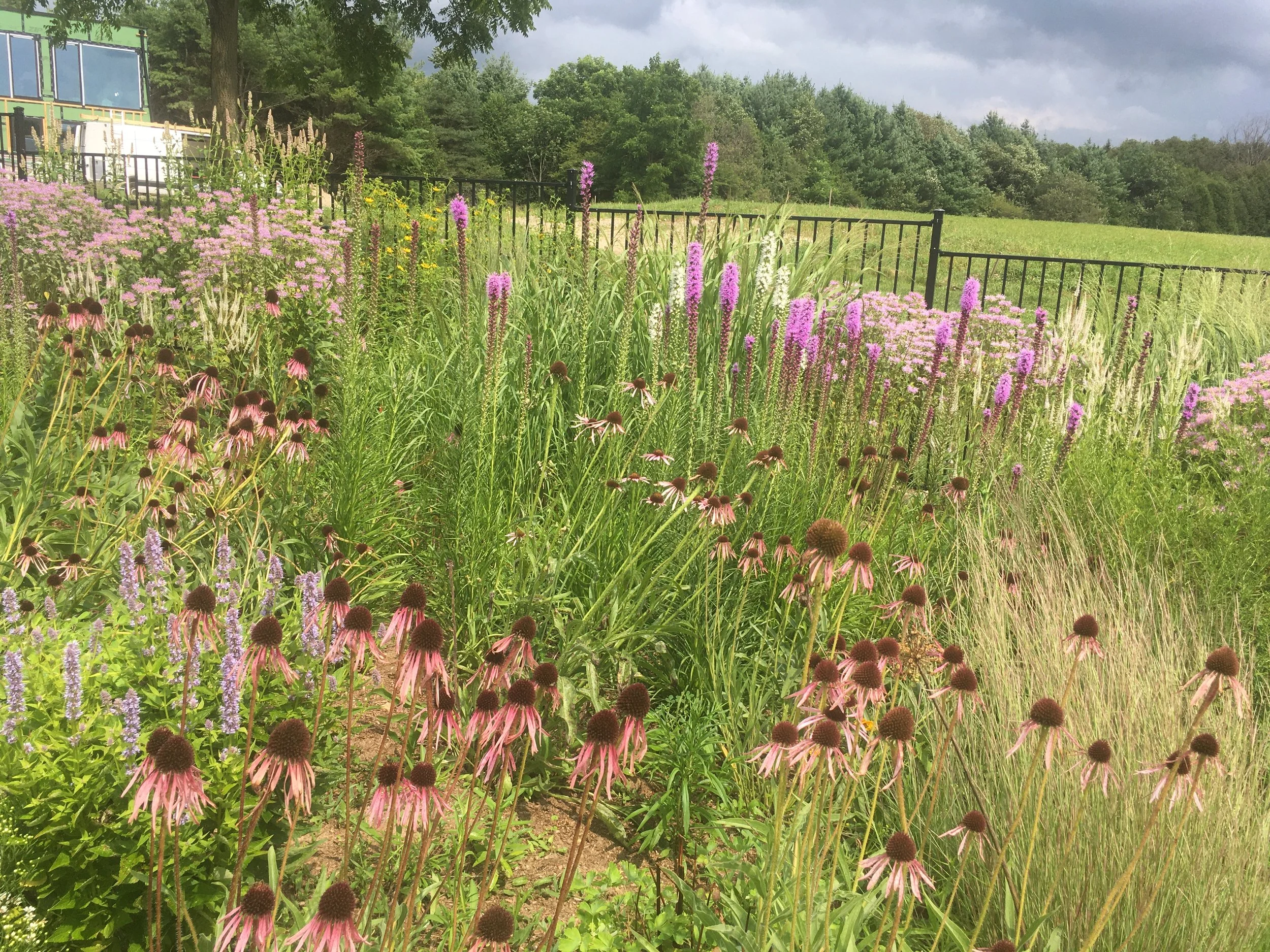
The Result: A Living Prairie System
Today, the garden reads as a mature prairie community, not a collection of individual plants.
Tall spires of blazing star rise through a matrix of grasses and forbs. Coneflowers, black-eyed Susans, and bergamot weave together into a dense, layered tapestry. Every vertical niche is occupied — from low groundcover to mid-height bloomers to tall accents — creating depth, movement, and long seasonal interest.
Rather than appearing manicured, the garden feels natural and alive. Plants lean into one another, share space, and form natural associations that suppress weeds and stabilize the planting. Rather than forcing plants to grow in a certain way, they are each allowed to express their own personalities. The landscape looks intentional, effortless, and deeply rooted in place.
Continuous bloom supports pollinators throughout the season, while seed heads and structure provide habitat for birds and beneficial insects. No single species dominates — a sign of strong competitive balance and long-term stability.
Thinking About Replacing Your Lawn?
If your yard is dry, sunny, sloped, or difficult to maintain, a prairie-inspired natural garden may be the most beautiful and sustainable solution.
We specialize in designing plant communities that belong to your site — so your garden can finally work with nature instead of against it.