

A Native Front Yard for a Historic Home
Project Overview
This front yard was once a struggling, patchy lawn beneath large mature trees. It was difficult to maintain, low in life, boring, and disconnected from the character of the home. The goal was to transform it into a natural garden filled with biodiversity, seasonal interest, and long-term resilience.
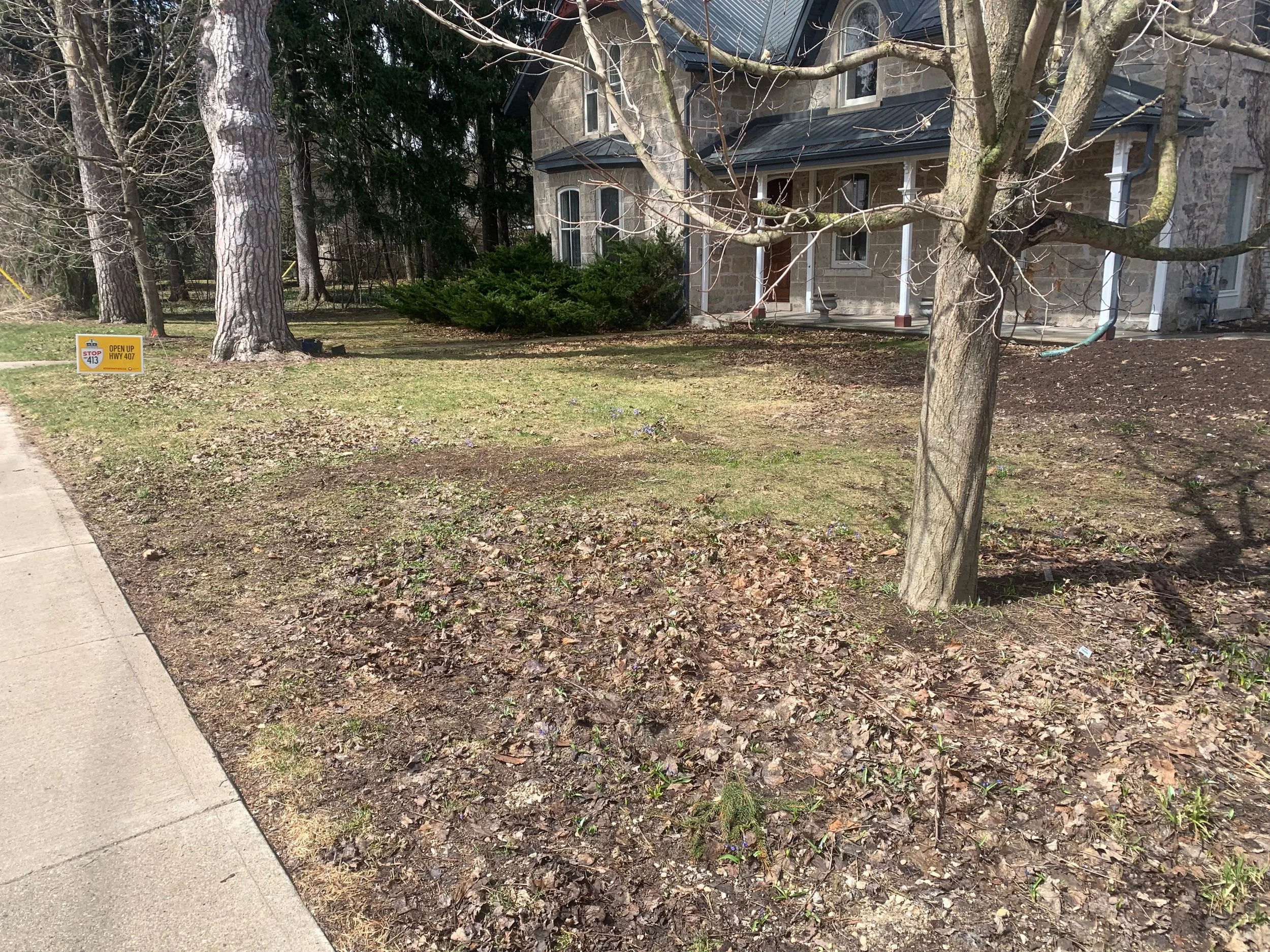
Before
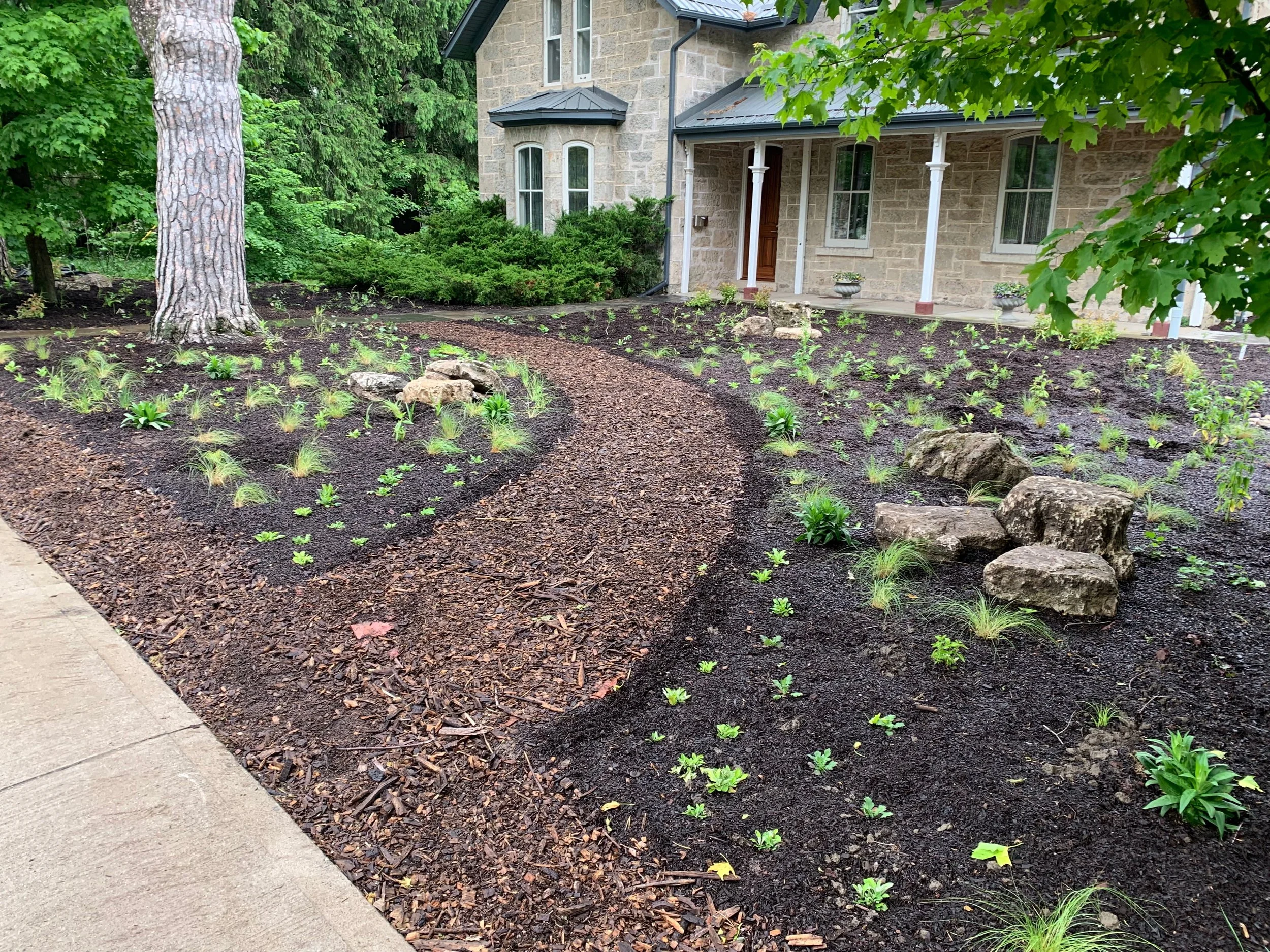
After
The Site
Roughly 2,000 square feet of turf struggled to survive in the shade of large trees. Despite ongoing effort, the lawn remained thin, patchy, and increasingly difficult to maintain.
The client was tired of keeping the lawn on life support and instead wanted a low maintenance garden that felt alive with seasonal change, and ecological value.
Mature trees surround the property, creating part sun to dappled shade conditions and relatively dry soil. Protecting tree roots was a priority, so traditional site preparation methods such as rototilling, sod cutting, or other forms of soil disturbance were avoided.
Instead of forcing the site to grow a lawn, the design worked with the conditions already present.
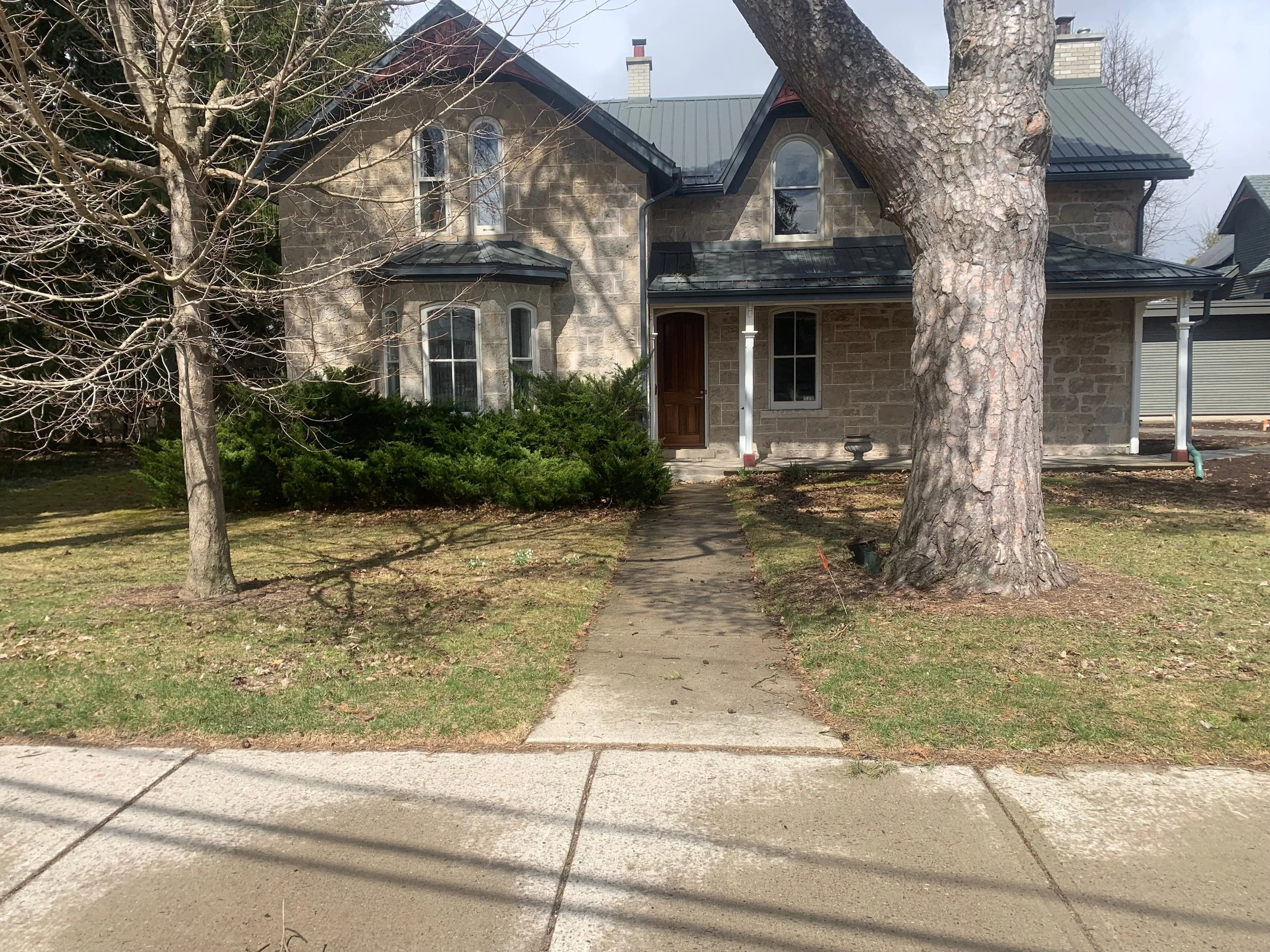
Before
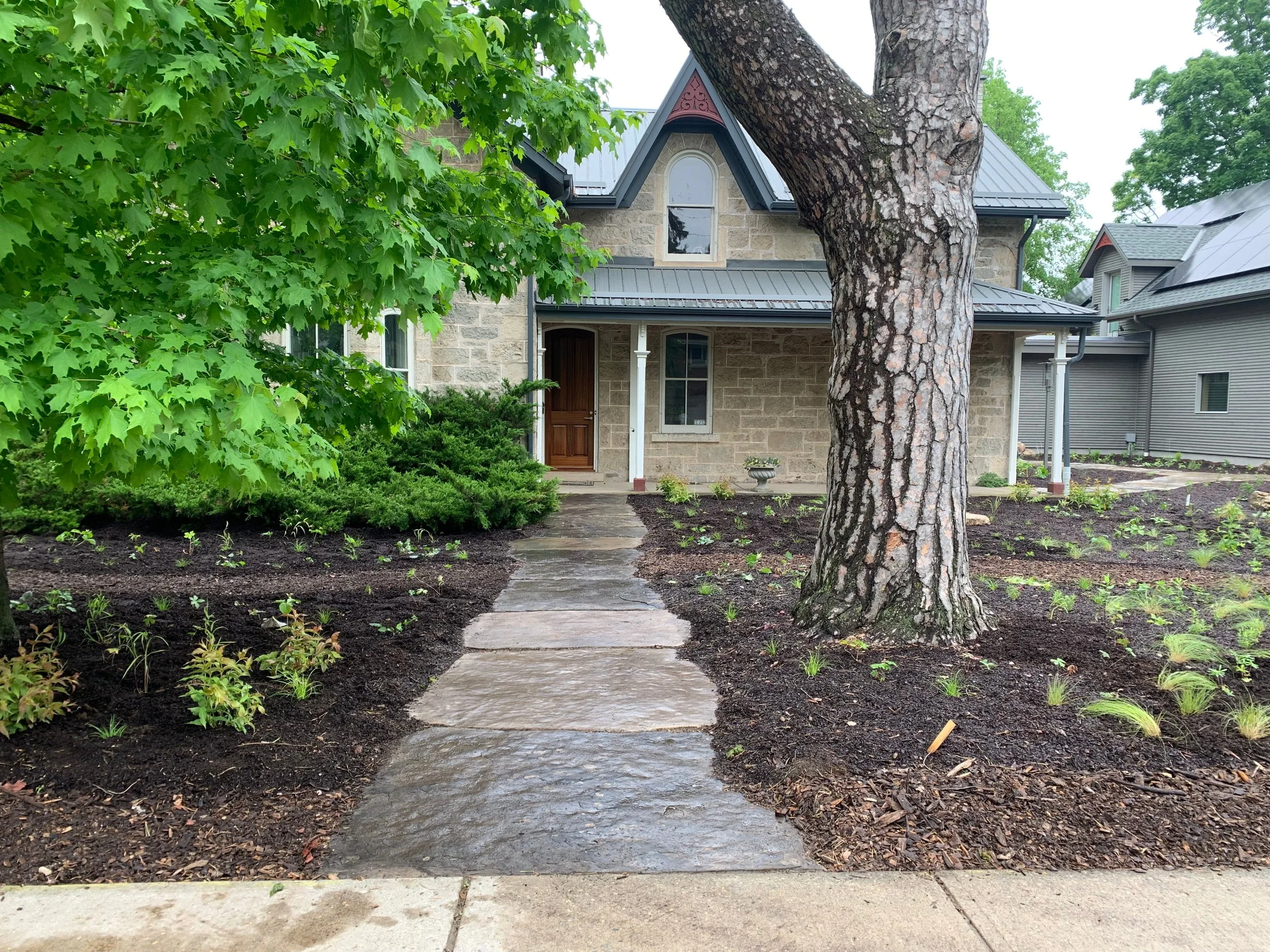
After
Our Design Approach
To protect soil structure and tree roots, the existing lawn was removed using a cardboard smothering method. Because the turf was already in poor condition, very little intervention was needed for successful conversion.
The client prepared the site themselves by laying cardboard and mulch. We encourage collaborative approaches that allow our clients to be part of the transformation while keeping the project budget-friendly.
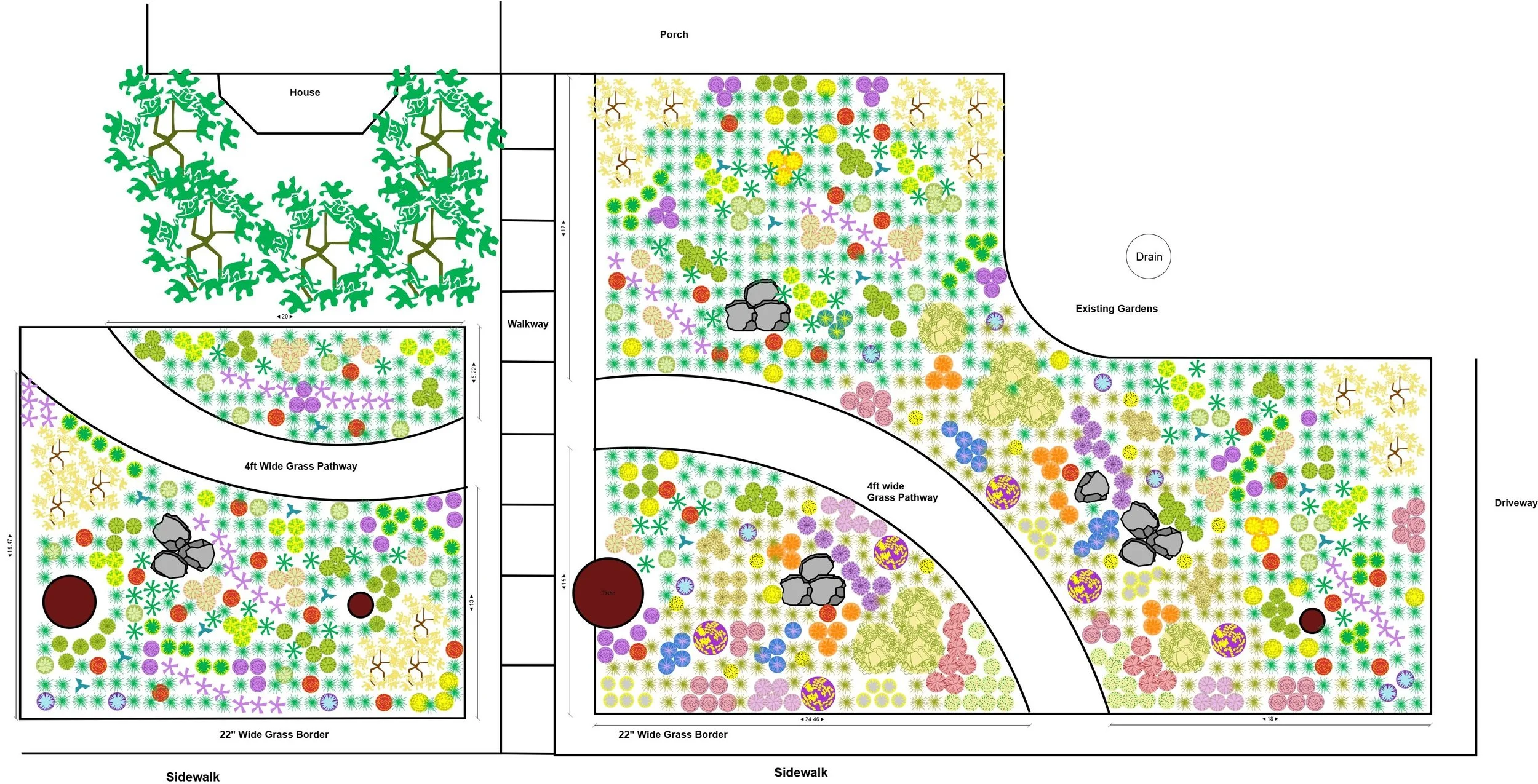
Plant selection was based on a savanna and woodland edge plant community, reflecting the site’s similarity to these natural plant communities. These transition communities naturally support high biodiversity and are well suited to part-sun, dry conditions.
A wide mulch pathway was included to divide the space and provide a sense of intention and flow. A one-foot perimeter along the sidewalk was intentionally left unplanted to improve safety, protect plants from foot traffic and winter ploughing, and maintain a clean visual frame.
Plants were installed at a density of one plant per square foot, allowing the garden to fill in quickly, suppress weeds naturally, and develop a resilient layered structure.
Looking Forward
The newly planted garden now contains 27 species of native plants — transforming what was once a lifeless lawn into a diverse, functioning plant community.
By using species drawn from both prairie and forest ecosystems, the garden supports a wide range of pollinators, birds, and beneficial insects while offering varied structure, bloom times, and textures throughout the growing season.
As the garden matures, plants will continue to knit together into a dense, layered landscape that requires less intervention over time. Weeds will be naturally suppressed, seasonal interest will increase, and wildlife presence will continue to grow.
This garden will not simply look better with age — it will function better, becoming a resilient, self-supporting plant community rooted in its site.
This front yard is now a living landscape that will continue to evolve, deepen, and enrich both the home and the ecosystem around it.