

21 Native Groundcovers
for Ontario Gardens
Groundcover plants have a lot of uses in gardens, from reducing maintenance, preventing weeds or mitigating erosion. Unfortunately, many groundcovers sold in traditional nurseries, such as Vinca or Lilly of the Valley, are very invasive and often spread to natural areas, out-competing native plants. By using native groundcovers instead, we can provide all the same benefits while improving our environment.
Struggling to make native plant work in your garden?
We offer natural garden design consultations that focus on matching plants to real site conditions, so your garden can thrive with less work.
Benefits of native groundcovers
In natural landscapes, plants don’t grow as isolated individuals surrounded by empty space. They grow within a continuous fabric of vegetation that protects the soil, supports biodiversity, and allows the system to regulate itself.
When groundcovers form the base layer of a planting, the garden begins to behave more like a living landscape than a collection of plants, bringing many benefits to the garden:
Reduce weed pressure by limiting open soil
Conserve moisture and moderate soil temperatures
Protect soil structure from erosion and compaction
Support pollinators and wildlife
Create visual continuity, helping gardens look intentional and full rather than patchy
The Most Common Groundcover Mistake
The most frequent reason native plantings fail is poor site matching.
A groundcover that thrives in dry shade under mature trees may collapse in full sun. A plant suited to moist soils will struggle on a slope or sandy site. When conditions are ignored, even excellent native plants become high-maintenance.
To choose the right groundcover, consider:
Sun exposure (full sun, part shade, deep shade)
Soil moisture (dry, average, moist)
Soil texture and compaction
How competitive or aggressive, is the plant?
Plants that grow together in nature make good companions in your garden too
When the match is right, native groundcovers establish steadily and require very little long-term care.
Native Groundcovers:

Height: 60cm
Sun: Full sun to shade
Moisture: Moist to average
Best use: Rain gardens, moist shade, consistently wet ground
Ecological value: Small bees and Syrphid flies feed on pollen. Erosion control.
An adaptable, fast growing, low maintenance ground cover. It spreads vigorously by rhizomes to create a solid carpet of leaves. In late spring, showy white flowers with yellow centers rise above the leaves and have a long bloom time. It can overwhelm smaller plants, but can tolerate drier conditions where its spread is reduced. However, it’s the perfect ground cover for areas where it can run wild. Does not tolerate foot traffic.

Height: < 15cm
Sun: Full sun
Moisture: Dry to average
Best use: Boulevard gardens, xericscaping, sunny borders
Ecological value: Host plant for the American Painted Lady butterfly
A ground-hugging, super drought tolerant, evergreen groundcover with silvery-green foliage. Spreads quickly by runners. Attractive spring blooms that become fluffy seed heads. Host plant for painted lady butterflies. Great for erosion control in the driest of sites. Easily overwhelmed by taller plants. Salt tolerant and tolerates medium foot traffic.
Bearberry (Arctostaphylos uva-ursi)

Height: 10–30 cm
Sun: Full sun to part shade
Moisture: Dry to average, very well-drained
Best use: Dry, sandy or rocky soils; slopes; rock gardens; erosion-prone sites; sunny edges
Ecological value: Early spring nectar source for native bees; berries eaten by birds and mammals; host plant for elfin butterflies; evergreen cover stabilizes soil.
A ground-hugging, evergreen shrub with glossy, leathery leaves. In mid spring it features nodding pink flowers that turn into red berries in the fall. The foliage turns burgundy in the fall, lasts through winter, then greens up again in the spring. Tolerant of urban pollution. Slow growing.
Silverweed (Argentina anserina)

Height: 10–30 cm
Sun: Full sun to part shade
Moisture: Moist to wet (tolerates periodic flooding)
Best use: Moist meadows, rain gardens, ditches, shorelines, low areas with consistent moisture
Ecological value: Flowers provide pollen and nectar for small native bees and flies; spreading roots help stabilize wet soils and reduce erosion.
If you need a fast-growing, drought tolerant ground cover for sun then Silverweed is for you! Stunning silvery-green foliage and long blooming yellow flowers. Grows vigorously by runners that root as they go. It may overwhelm smaller plants so it’s best suited to large gardens or as an under-story for taller plants. Excellent for erosion control, especially for sandy sites. Tolerates occasional foot traffic.

Height: 15–20 cm
Sun: Shade to part shade
Moisture: Average to moist, well-drained
Best use: Native woodland groundcover for shaded gardens, under trees, forest edges, and north-facing foundations
Ecological value: Early spring flowers support native pollinators; dense foliage shades soil, conserves moisture, and suppresses weeds in woodland gardens
A classic groundcover for shade gardens! Wild Ginger shows off lush, heart-shaped leaves and does an excellent job at covering the ground. The unique, burgundy flower rests on the ground and is not visible unless you lift a leaf. Ginger spreads slowly but steadily to form colonies. It spreads by rhizomes and , to a lesser extent, seed. Fragrant stems.

Height: 15–30 cm
Sun: Part shade to full shade
Moisture: Dry to average, well-drained
Best use: Native sedge groundcover for dry shade, under trees, and woodland gardens. Lawn alternative
Ecological value: Host plant for butterflies and moths; stabilizes soil and reduces erosion
A great grass-like, evergreen groundcover or lawn alternative! Use as a stand-alone ground cover or around taller species. Great for stabalizing slopes. Host plant for a variety of skippers. Interesting spring blooms. Tolerates medium foot traffic.
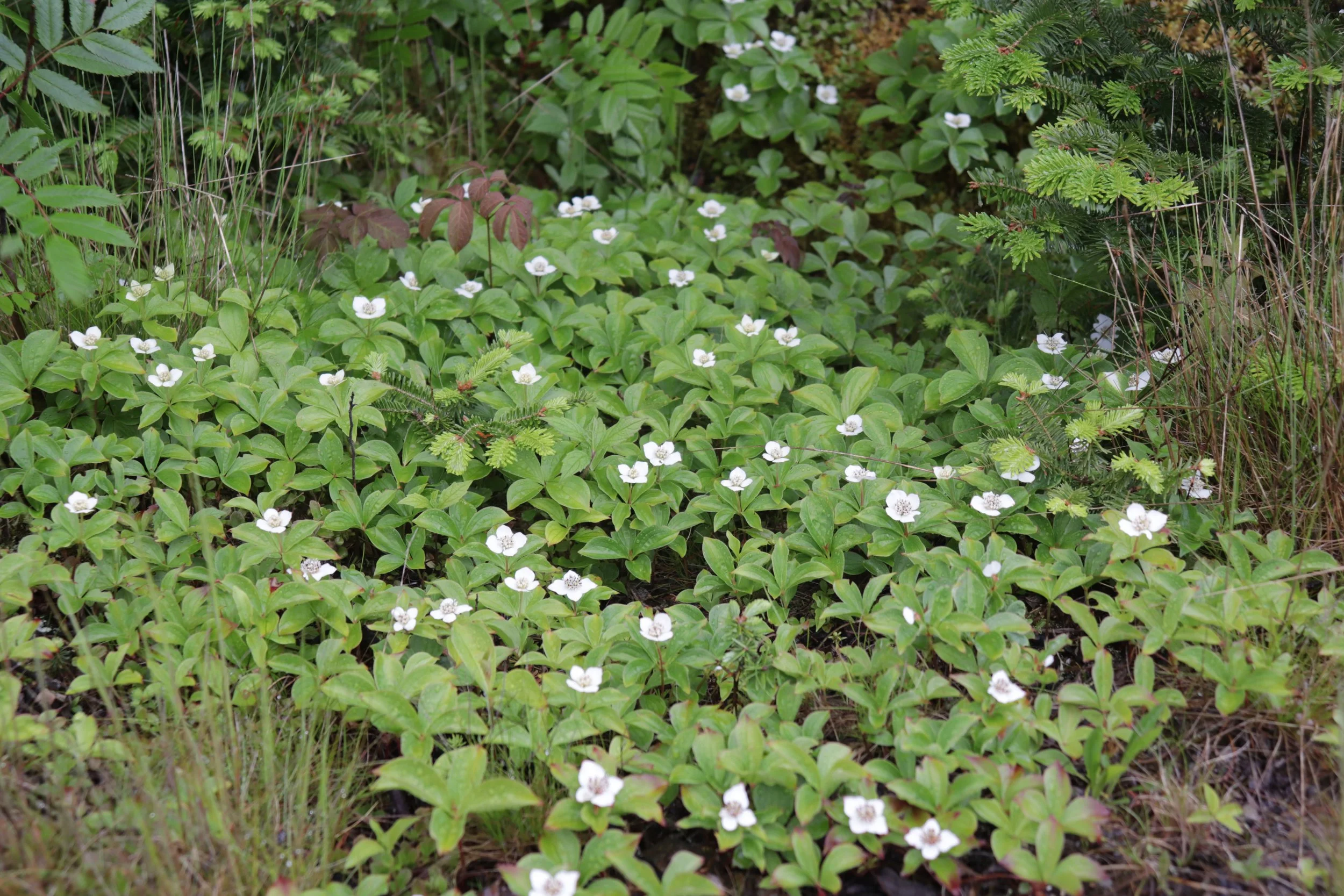
Bunchberry Dogwood (Cornus canadensis)

Height: 10–20 cm
Sun: Part shade to full shade
Moisture: Moist, well-drained; prefers acidic soils
Best use: Native woodland groundcover for shaded gardens, under trees, and forest edges with cool, moist conditions
Ecological value: Flowers support pollinators; berries provide food for birds and small mammals
A lush ground cover in shady, moist areas. It spreads at a moderate pace by rhizomes to form a lush carpet of leaves which turn a vibrant red colour in the fall. In late-spring, star-like flowers appear above the leaves and fade to bright red berries by late summer. This is a very low maintenance ground cover but it will not tolerate foot traffic at all!
Robin’s Plantain (Erigeron pulchellus)

Height: 30–60 cm (when flowering)
Sun: Full sun to part shade
Moisture: Dry to average, well-drained
Best use: Native groundcover for dry shade, woodland edges, open woods, and naturalistic garden beds
Ecological value: Early spring flowers provide nectar and pollen for native bees and beneficial insects
Robins Plantain forms a dense carpet of low-growing, paddle-shaped, hairy leaves. In spring, it send up delicate, aster-like flowers atop slender stems. It preforms best in nutrient poor soils, making it good for rock gardens, and is very drought tolerant. It spreads at a moderate pace by stolons and self-seeding. Very attractive en masse! Doesn’t like competition from more aggressive plants
Running Strawberry (Euonymus obovatus)

Height: 15–30 cm
Sun: Part shade to full shade
Moisture: Average to moist, well-drained
Best use: Native woodland groundcover for shaded gardens, under trees, and forest edges
Ecological value: Flowers support pollinators; berries provide food for birds; low, spreading habit helps cover soil in woodland plantings
A seldom-used ground cover but definitely deserves time in the spotlight. It has a low, trailing habit and greens up early in the spring. The small, green flowers are not much to look at, however, the real attraction is the spiky, pink seed pods. As they mature, bright red seeds are revealed which add dots of red to the late summer garden. In addition, the foliage turns beautiful shades of red in the fall. Does not tolerate foot traffic!

Height: 30–60 cm
Sun: Part shade to full shade
Moisture: Average to moist, well-drained
Best use: Native woodland groundcover for shade gardens, under trees, and forest edges where bold foliage is desired
Ecological value: Late-season flowers provide nectar and pollen for native bees and pollinators; large leaves shade soil and reduce weed pressure
Broad, heart-shaped leaves spread by rhizomes to form a carpet of leaves. Individual plants don’t bloom every year but, when they do, they show off with flat-topped clusters of lavender blooms. Tolerates dry shade.

Height: 10–20 cm
Sun: Full sun to part shade
Moisture: Average to dry, well-drained
Best use: Native groundcover for sunny gardens, slopes, path edges, and open woodland margins
Ecological value: Spring flowers support native pollinators; fruits feed birds and small mammals; spreading habit helps stabilize soil
A fast-spreading, salt tolerant, adaptable ground cover with pleasing spring blooms. Tolerates road salt, compaction, drought and light foot traffic. Forms a dense carpet in full sun but will tolerate light shade. It is very competitive in sunny areas and will smother plants smaller than itself.

Height: 30–60 cm
Sun: Part shade to full shade
Moisture: Average to moist, well-drained
Best use: Native woodland groundcover for shade gardens, under trees, and moist forest edges
Ecological value: Early spring flowers provide nectar and pollen for native bees; dense spring growth shades soil and helps suppress weeds
A wonderful, medium height ground cover with deep green leaves and a mounding form. The bell-shaped spring blooms range in colour from white to purple to lavender. Spreads quickly by self-seeding so its a good choice for erosion control or covering a large space. May go dormant in mid summer if it experiences a drought.
Overwhelmed by plant choices?
I help homeowners create site-specific planting plans so their gardens work from the beginning—not after years of trial and error.
Creeping Juniper (Juniperus horizontalis)

Height: 15–30 cm
Sun: Full sun
Moisture: Dry to average, well-drained
Best use: Native groundcover for sunny slopes, rock gardens, borders, and erosion-prone areas
Ecological value: Provides evergreen cover year-round; berries feed birds; dense mats stabilize soil and suppress weeds
A ground-hugging, drought tolerant spreading juniper with blue-green foliage. Often spreading upwards of 20ft out (you can prune it smaller). It thrives in dry, open areas with sandy or rocky soils. Intolerant of shade and poor drainage.
Ostrich Fern (Matteuccia struthiopteris)

Height: 90–120 cm
Sun: Part shade to full shade
Moisture: Moist to wet, consistently damp soil
Best use: Native groundcover for woodland gardens, shaded stream banks, and moist garden edges
Ecological value: Fronds provide shelter for small wildlife; early spring growth supports emerging insects; stabilizes moist soils and reduces erosion
An elegant fern with ostrich plume foliage and a vigorous growth habit. It really needs consistent moisture to thrive and will go brown by mid summer if moisture requirements are not met. A great choice for quickly covering a moist shady spot!
Partridgeberry (Mitchella repens)

Height: 5–15 cm
Sun: Shade to part shade
Moisture: Average to moist, well-drained
Best use: Native woodland groundcover for shaded gardens, under trees, and forest edges
Ecological value: Flowers support native pollinators; red berries feed birds
A low, trailing, evergreen groundcover that can handle acidic soils. Tiny, pinkish white flowers bloom in spring and give-way to small red berries that persist into winter months. Both berries and flowers are small but contrast nicely with the evergreen foliage. Slow growing. Tolerates occasional foot traffic but generally doesn’t like to be disturbed.
Canada Mayflower (Maianthemum canadense)

Height: 10–20 cm
Sun: Part shade to full shade
Moisture: Average to moist, well-drained
Best use: Native woodland groundcover for shaded gardens, under trees, and forest floors, under pine trees
Ecological value: Flowers provide nectar for native bees and insects; berries feed birds; spreads to form a dense, low-maintenance living carpet
A low growing ground cover with broad, glossy leaves and frothy white flower clusters in late spring. The flowers turn into red berries by the fall. In ideal conditions it will spread non-aggressively by rhizomes to form lush carpets of foliage. A great alternative to the invasive Lily of the Valley.
Golden Ragwort (Packera aurea)

Height: 15–60 cm
Sun: Full sun to part shade
Moisture: Moist, well-drained; tolerates consistently damp soil
Best use: Native groundcover for rain gardens, moist shade, shaded borders, and naturalized areas
Ecological value: Early spring flowers provide nectar and pollen for native bees and pollinators; spreads to form dense mats that stabilize soil and suppress weeds
Golden Ragwort is an easy to grow, adaptable groundcover. In late summer it features a profusion of vibrant yellow blooms that stand out in the shady landscape. It spreads easily by rhizomes to form dense, weed-suppressing carpets of foliage. Self seeds into bare spots. An absolute stunner when planted en masse! Tolerates dry shade but the foliage may suffer.
Bloodroot (Sanguinaria canadensis)

Height: 15–30 cm
Sun: Part shade to full shade
Moisture: Moist, well-drained
Best use: Native woodland groundcover for shaded gardens, forest edges, and understory plantings
Ecological value: Early spring flowers provide nectar and pollen for native bees; spreading rhizomes form low mats that stabilize soil and suppress weeds
Bloodroot blooms very early in the spring, before its leaves even unfurl. The pure-white flowers with yellow centers only last a day or two but they are truly an impressive sight. Large, heart-shaped leaves unfurl shortly after the flowers fade and remain attractive into the fall months. They will spread at a moderate pace by rhizomes to form a lush carpeting ground cover.

Height: 15–30 cm (lower when not blooming)
Sun: Part shade to full shade
Moisture: Average to moist, well-drained
Best use: Native woodland groundcover for shaded gardens, woodland edges, and naturalized beds
Ecological value: Spring flowers provide nectar for native bees and pollinators; dense foliage shades soil, reduces weeds, and forms a low-maintenance living
A ground-hugging ground cover with evergreen, heart-shaped leaves. In spring, small spires of creamy white flowers rice above the foliage. Expect it to spread via runners to form a dense, weed suppressing carpet. Plays well with other plants. Does not tolerate foot traffic.
Blue Violet (Viola sororia)
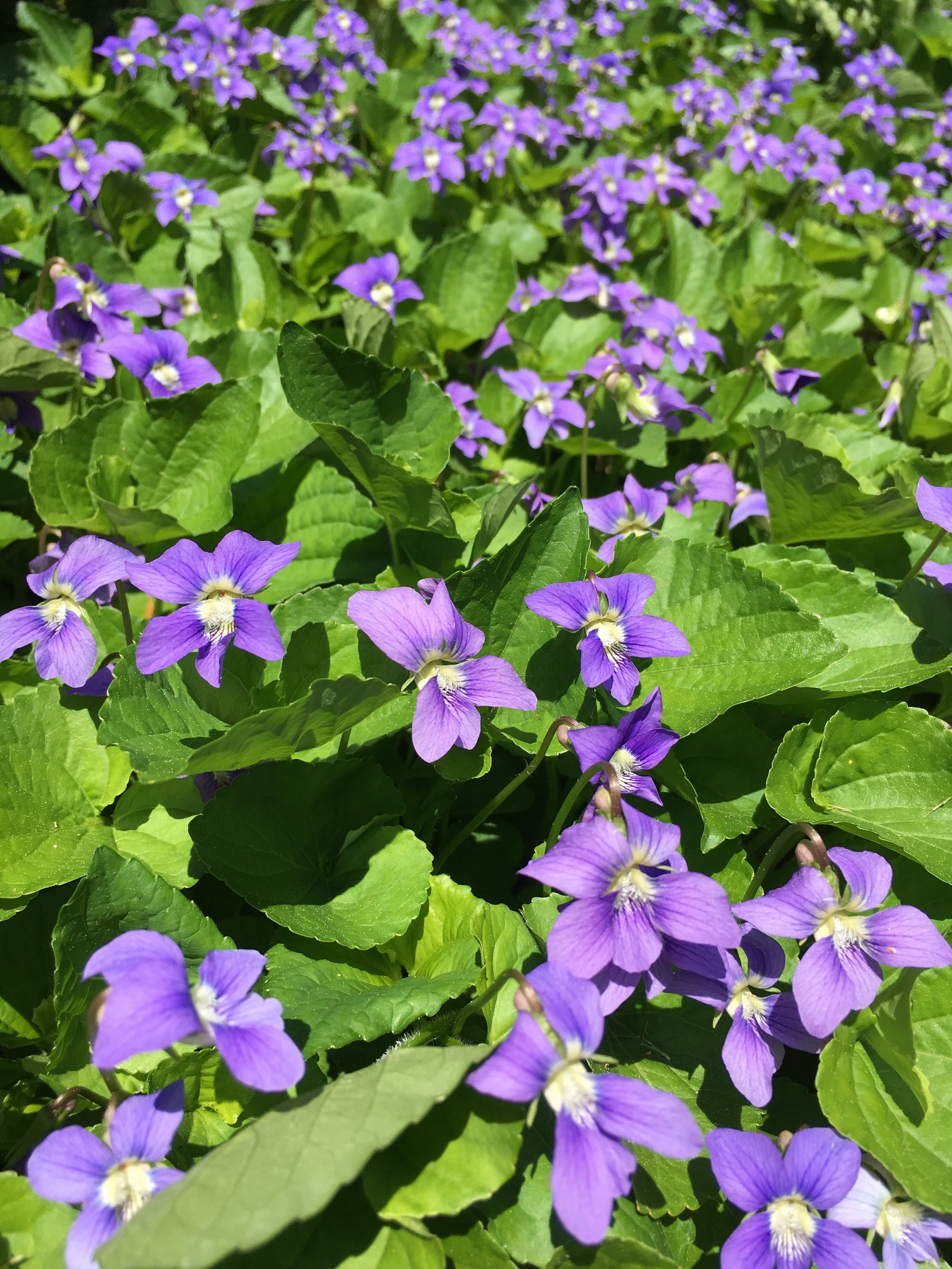
Height: 10–20 cm
Sun: Part shade to full shade
Moisture: Moist, well-drained
Best use: Native woodland groundcover for shaded gardens, borders, and naturalized areas
Ecological value: Early spring flowers provide nectar for native bees and butterflies; leaves serve as host for fritillary butterfly larvae; spreads to form dense, low-maintenance mats
highly adaptable, fast growing groundcover. It often gets a bad reputation because of this, however it is a very versatile plant if used correctly. best used as a groundcover under taller plants as it can overwhelm small plants. It greens up and flowers very early in the spring. Use it as a solitary groundcover or pair it with Wild Strawberry. If grown in-between turf grass it can tolerate medium foot traffic while increasing the biodiversity of your lawn.
Barren Strawberry (Waldsteinia fragarioides)

Height: 10–15 cm
Sun: Part shade to full shade
Moisture: Average, well-drained
Best use: Native groundcover for shaded gardens, woodland edges, and understory plantings
Ecological value: Small flowers provide nectar for native pollinators; evergreen foliage forms low mats that stabilize soil and suppress weeds
An adaptable, evergreen groundcover with glossy green leaves and yellow spring blooms. Spreads quickly by rhizomes to push out weeds, even in shade. Good for covering slopes to prevent erosion. Attractive fall foliage! Tolerates light foot traffic.
Frequently Asked Questions
Q: What is the best native groundcover for Ontario gardens?
A: There isn’t a single “best” groundcover. Success depends on your site’s sun, soil, and moisture conditions. Choosing plants that match your garden while combining a diversity of compatible groundcovers ensures a low-maintenance, resilient planting. If you’re unsure, a site-specific planting plan can help your garden thrive.
Q: Are native groundcovers low maintenance?
A: Yes—when planted in conditions they prefer. Properly matched groundcovers establish quickly, suppress weeds, conserve soil moisture, and reduce the need for fertilizers or frequent care.
Q: Can native groundcovers replace lawn grass?
A: In shaded areas, under trees, or on slopes where turf struggles, native groundcovers are often a more sustainable and ecologically valuable alternative. They provide habitat for pollinators, stabilize soil, and require far less upkeep but may not be able to tolerate the same amount of foot traffic as lawn.
Q: How do I choose the right groundcover for my site?
A: Consider sun exposure, soil type, and moisture levels, as well as how much spreading you want. Some species form dense mats, while others grow in clumps. A professional consultation can help you select plants that work together to form a stable, low-maintenance matrix.
Q: Do native groundcovers support wildlife?
A: Absolutely. Many produce flowers for native bees, butterflies, and flies, while berries and seeds feed birds and small mammals. They also provide shelter and contribute to a living, interconnected garden ecosystem.
Take the guesswork out of your garden. I design low-maintenance, ecologically grounded gardens using native plants that thrive in your exact conditions.
Featured Articles

