

If you look closely at natural plant communities, you’ll notice that plants rarely grow separated by mulch or bare soil. Instead, they are densely packed, occupying every available niche—from low-growing groundcovers to towering canopy trees. This layered complexity is what gives natural ecosystems their resilience, biodiversity, and year-round beauty.
Matrix garden design translates this natural principle into a practical, digestible system. By arranging plants in layers of different heights, bloom times, and ecological roles, matrix planting allows gardeners to create landscapes that are visually rich, ecologically functional, and low-maintenance.
Matrix Gardening:
Translating natural plant communities into a design process
What Is Matrix Planting?
Matrix planting is a method of arranging plants so that multiple species share the same space at different vertical and seasonal levels. Low-growing plants cover the ground, mid-height species provide seasonal interest, and taller plants form structural focal points.
This approach mirrors natural plant communities, where each species occupies a niche—above, below, or in between—to make the most of sunlight, water, and nutrients. In garden design, we simplify these layers to make them visually appealing and manageable while retaining the ecological benefits of nature’s system.
The result is a garden that:
Reduces bare soil and naturally suppresses weeds
Supports wildlife and pollinators year-round
Maximizes seasonal color and structure
Requires less routine maintenance
Matrix planting lets your garden function like a self-sustaining ecosystem, while remaining beautiful, structured, and easy to enjoy.
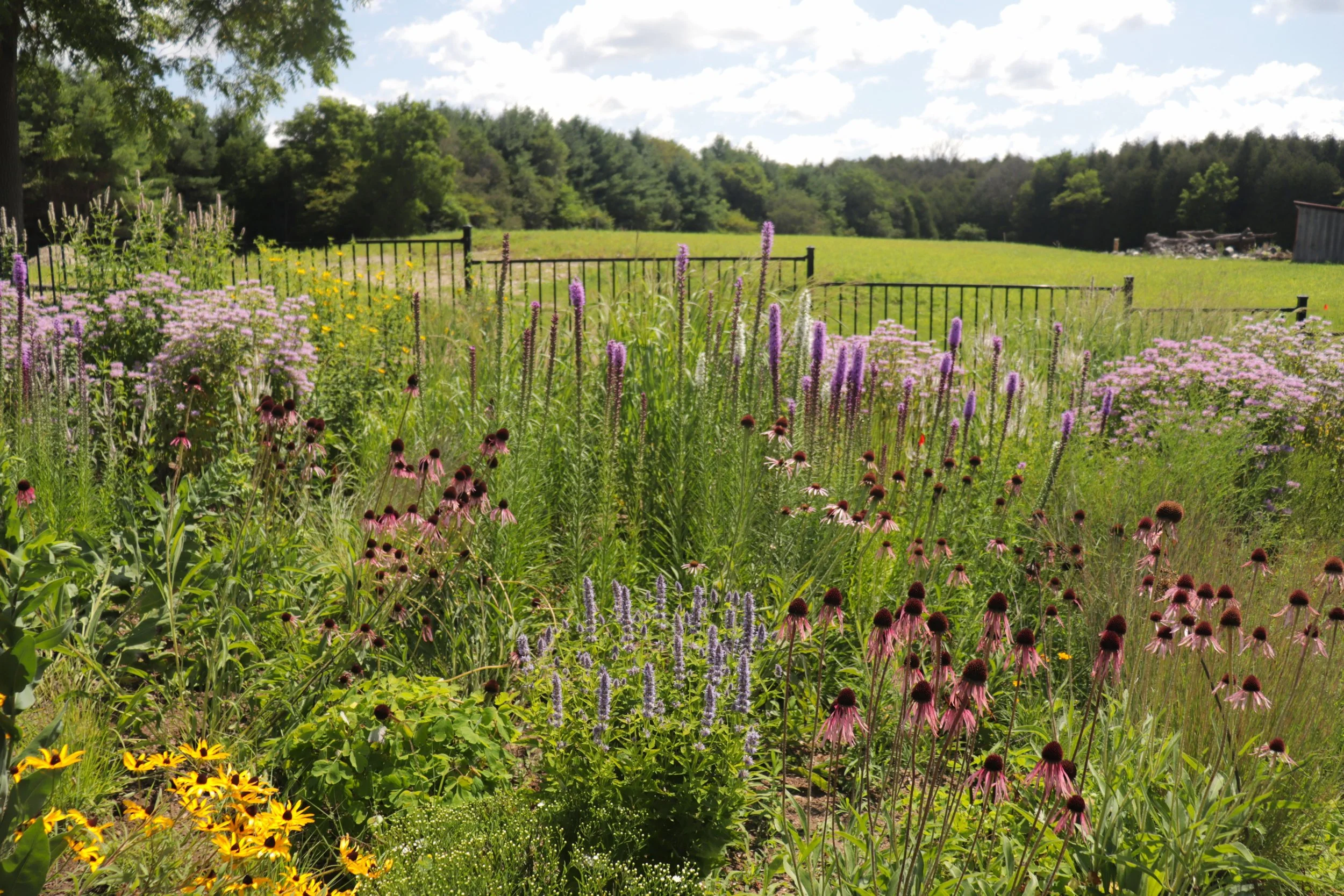
The Four Layers of Matrix Planting
1. Architectural Layer
This layer is made up of the tallest plants in the planting. They will work to become the backbone of your planting and provide important focal points at all times of the year.
Purpose: Tall plants that serve as the backbone and focal points throughout the year
Traits: Strong stems, appealing silhouette, persistent seed heads, clumping habit, long-lived so they can perform for years to come
Composition: Trees or shrubs in forest gardens; taller forbs or grasses in meadows or prairies
Planting Tips: Make up ~10% of your planting. Place in odd-numbered clumps (1, 3, 5) to create natural focal points. Add hardscape elements like birdbaths or statues to complement these focal points.
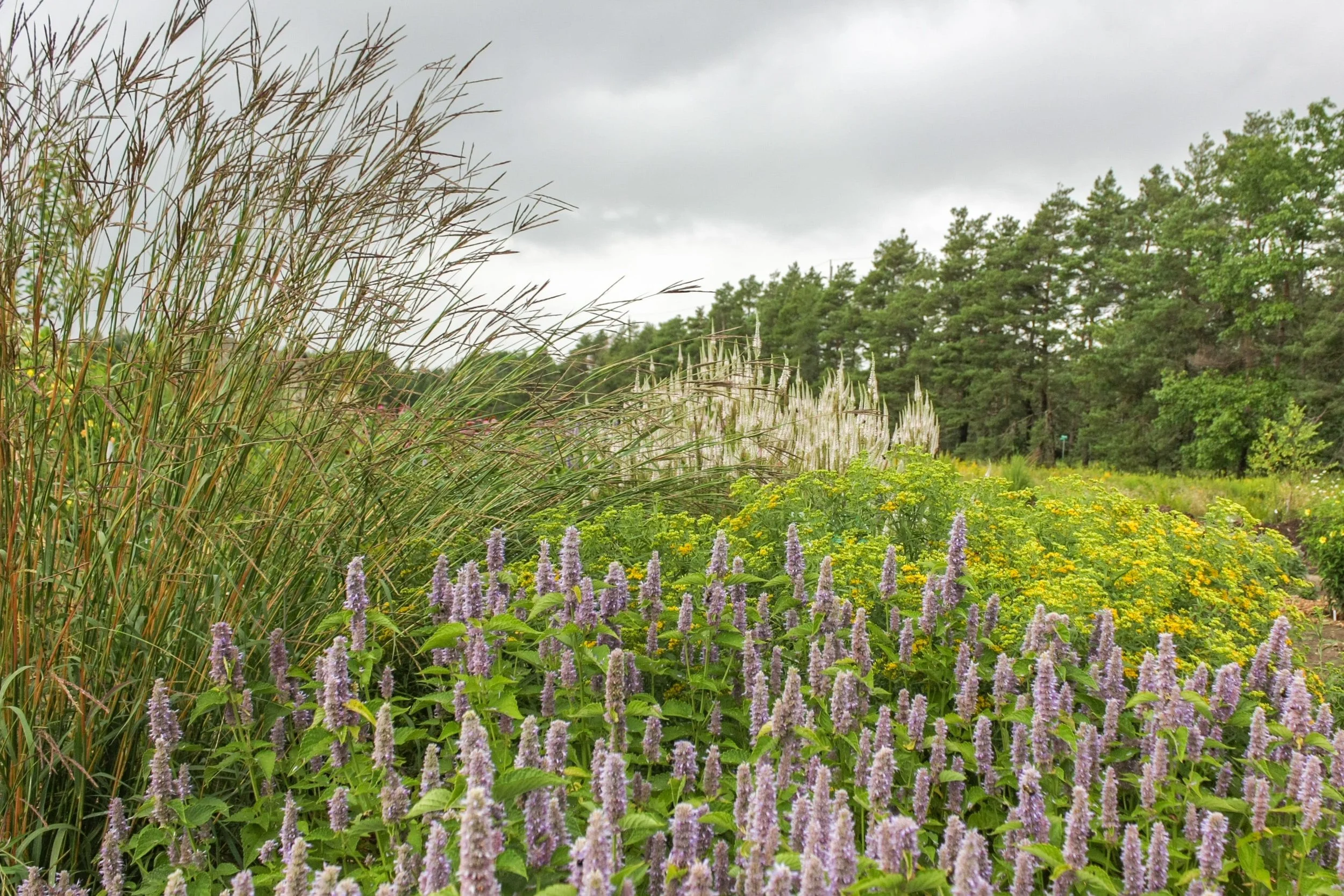
In this planting, Big Bluestem(left) and Culvers Root (white flowers in rear) make up the architectural layer
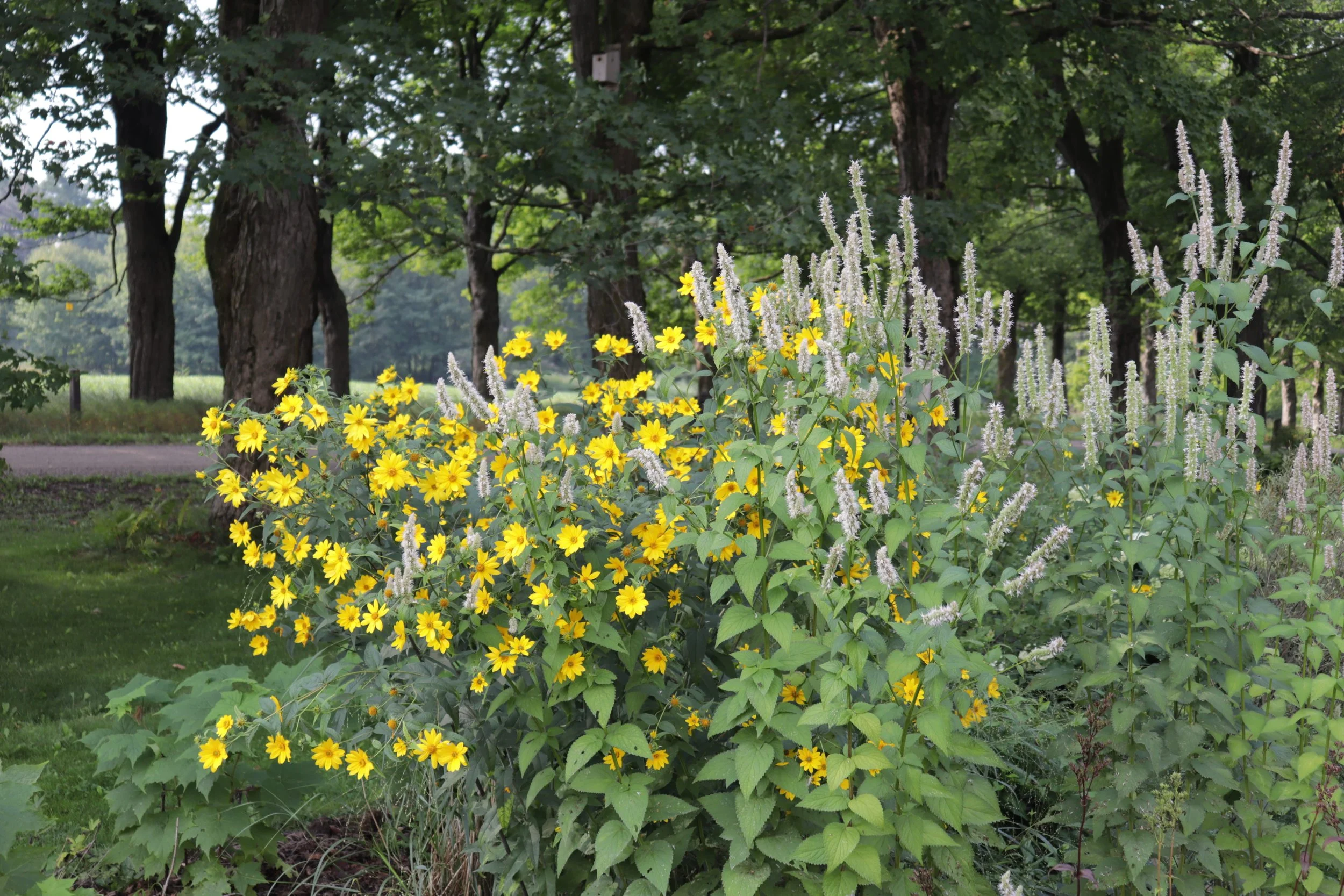
The best architectural plants are upright plants with strong stems and attractive form
2. Seasonal Layer
This layer brings color, texture, and seasonal interest to your garden.
Purpose: Signal seasonal progression, provide blooms, and contextualize plant communities
Traits: Long bloom periods, vibrant textures, persistent seed heads, multi-year lifespan, interesting foliage. Clump forming species are ideal.
Composition: Mid-height perennials and forbs that complement the architectural layer
Planting Tips: Make up 30–40% of your planting. Plant in clumps or drifts to mimic natural growth patterns. Include species that bloom in spring, summer, and fall, and consider plants that maintain interest in winter.
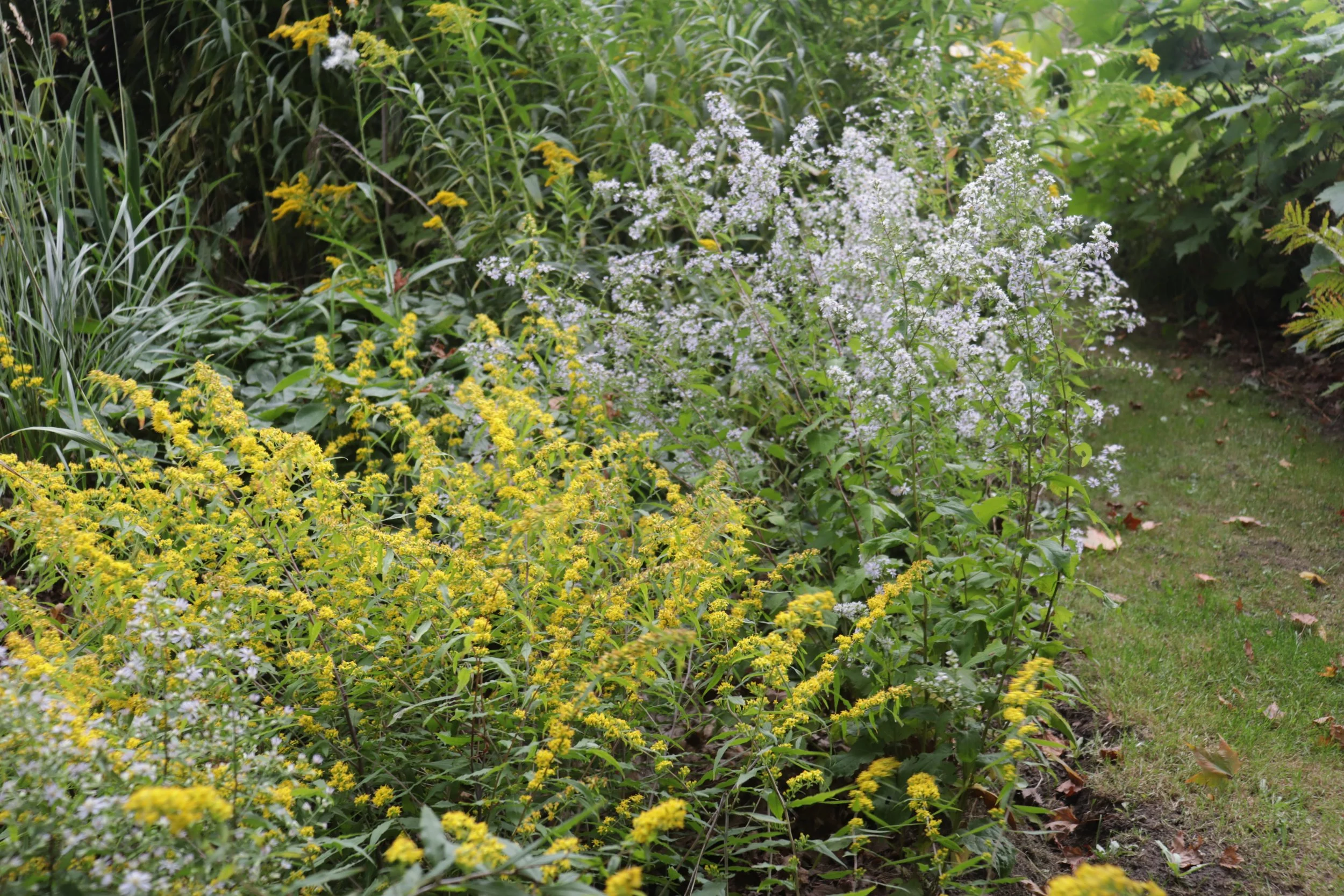
Heartleaf Aster & Bluestem Goldenrod bring showy blooms to this seasonal layer
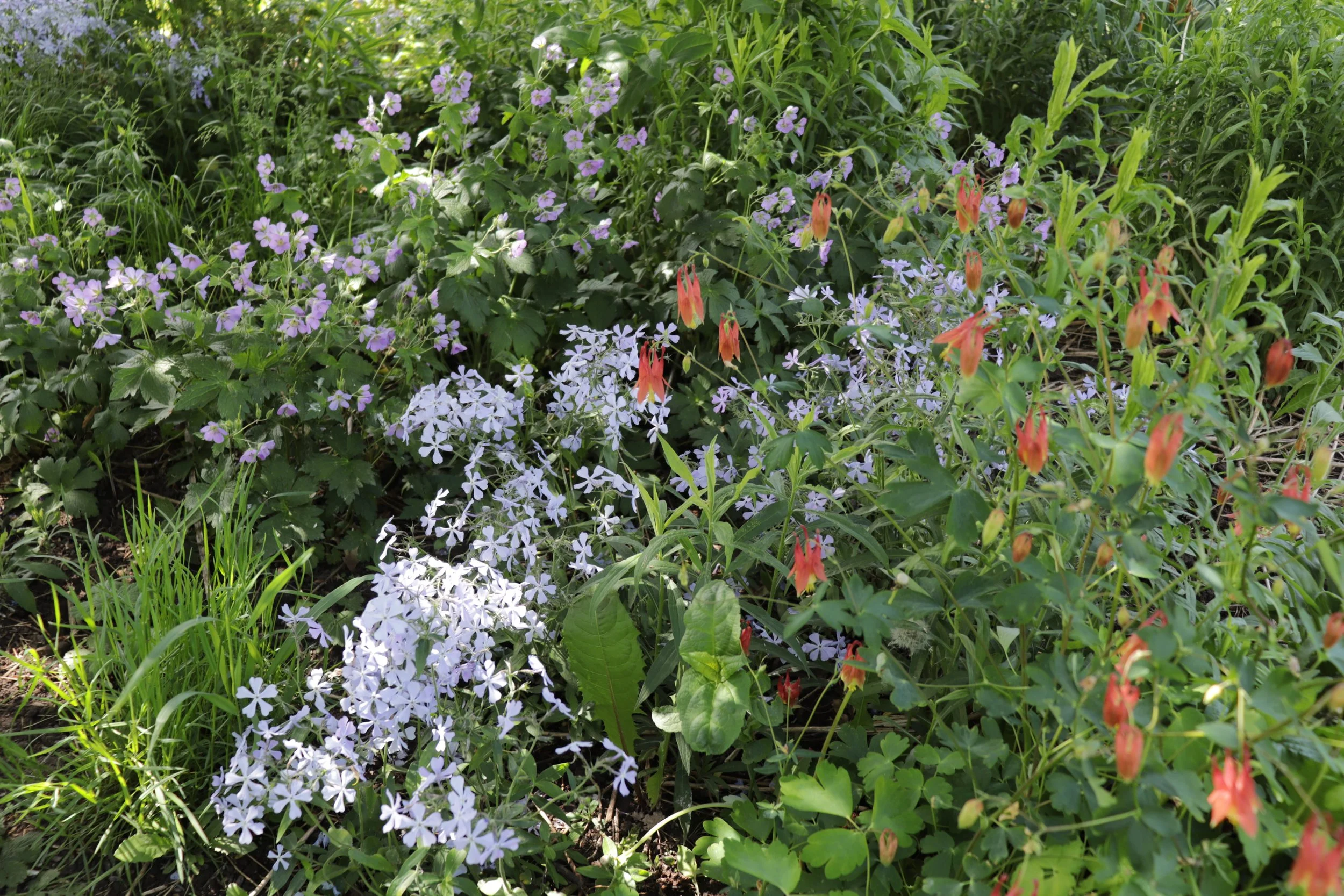
The seasonal layer should have something blooming from spring to fall.
3. Groundcover Layer
The groundcover layer is the natural garden designers answer to wood mulch. Where conventional garden design would cover the empty spaces with mulch, we are going to cover it with groundcover plants!
Purpose: Suppress weeds, protect soil, provide year-round greenery, and offer habitat for wildlife. Aesthetically, the groundcover layer provides a “green canvas” or backdrop in which all other plants are planted into, creating cohesion in the design.
Traits: Low-growing, dense, spreading, capable of filling gaps under taller layers
Composition: Grasses, sedges, ferns, and low rhizomatous forbs. Examples: wild strawberry, silverweed, little bluestem, oak sedge
Planting Tips: Make up 40–50% of your planting. Interplant under and around taller layers for continuous coverage. Replace mulch with living plants for a self-sustaining garden. Groundcover plants can be placed every 30cm (1ft) in a grid-like pattern then the other layers can be planted between these plants (the plants won’t mind being so close together). Alternatively, the groundcover layer can be placed after the architectural and seasonal plants to fill in all remaining space.
Why grasses and sedges matter: They host caterpillars, provide winter bird food, and add subtle texture and movement. Cool-season grasses provide early spring greenery, while warm-season grasses fill summer months.
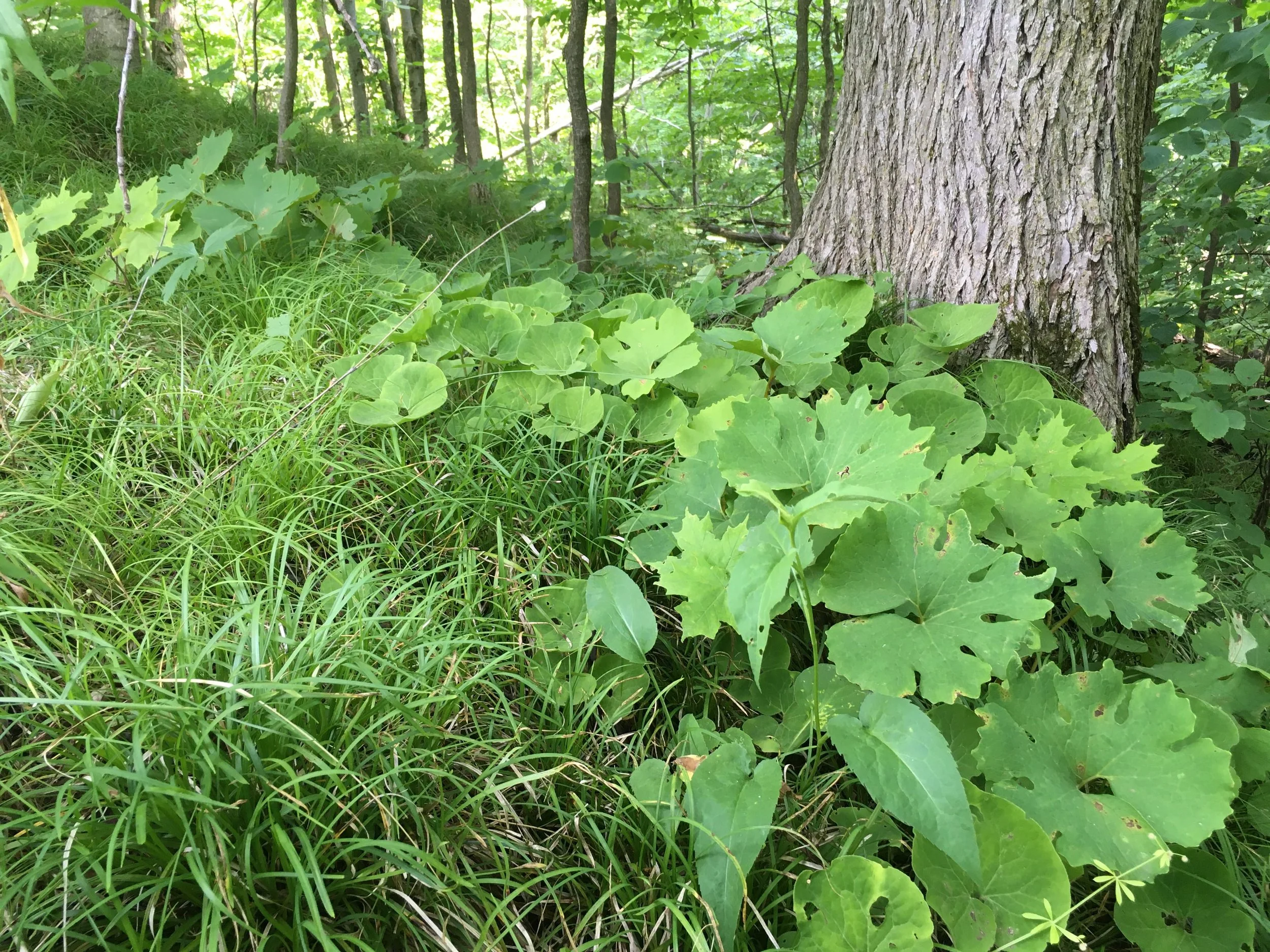
Note how nature covers the ground with plants - not mulch. Gardeners should do the same.
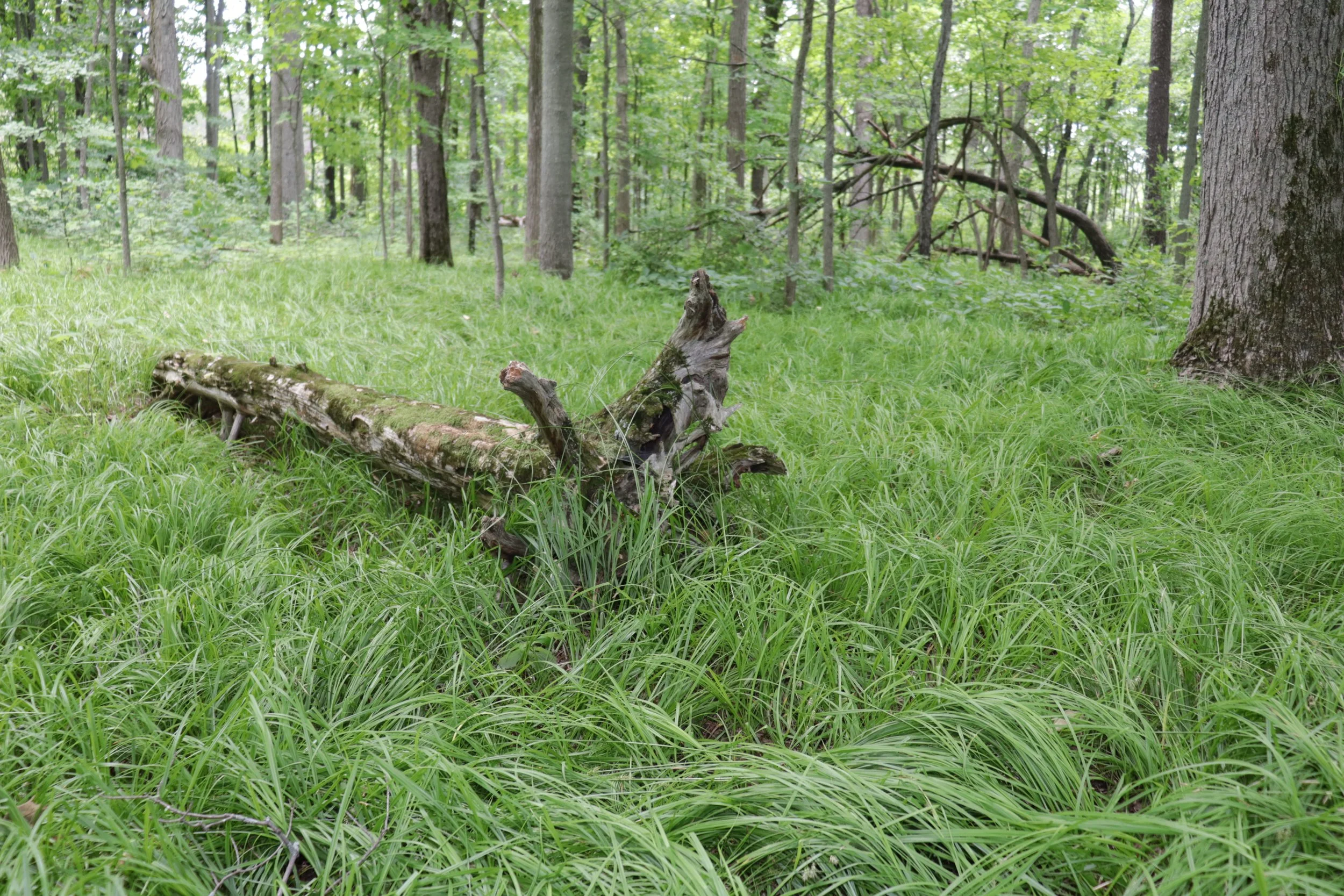
Your groundcover layer is the ‘green canvas’ that your other plants will emerge from
4. Filler Layer
Filler plants quickly occupy gaps, preventing weeds and supporting natural succession.
Purpose: Provide immediate cover and establish a seed bank for future growth
Traits: Short-lived annuals, biennials, or perennials (3–4 years), fast-growing, seed-prolific
Planting Tips: Spread in small clumps (1–3 plants) across the site. Plant as plugs or sow seeds after site preparation.
The filler layer will be dominant during the first few years of a gardens establishment then the annuals and biennials will slowly fade away as the longer lived plants fill in. Over time, they will re-emerge where the soil is disturbed (either intentionally or not).

The role of filler plants is to fill in any gaps that may arise from disturbance. The black-eyed-susan in this photo self-seeded into a gap created from a plant death.

Filler plants are most prominent in the early years of a garden and will only appear again when a gap opens up in the garden.
4 steps to assemble your matrix garden
1. Architectural Layer (Tallest Plants / Focal Points)
Place your tallest plants (trees, shrubs, or tall perennials) toward the middle or back of your planting area.
Use odd-numbered clumps (1, 3, 5, etc.) spaced to allow full mature growth.
Keep this layer to roughly 10% of your plants to avoid overwhelming the space
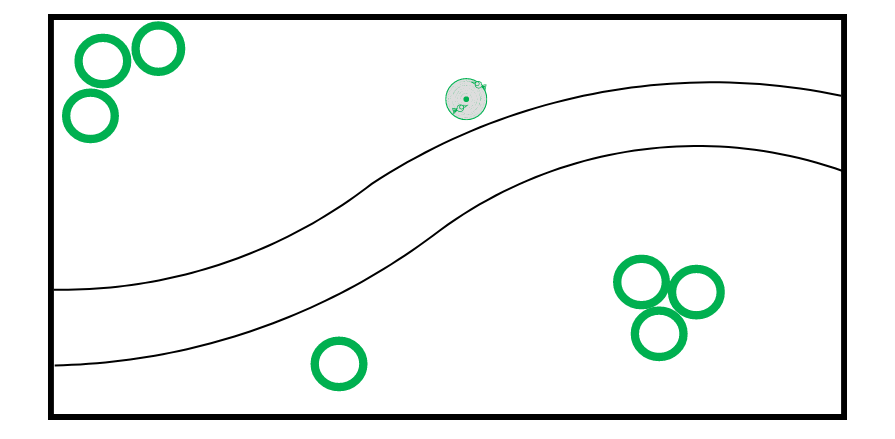
Place your architectural plants first. They are represented with green dots in this picture.
2. Seasonal Layer (Mid-Height / Bloom Interest)
Plant mid-height, showy species in clumps and drifts to create seasonal color and texture.
Include at least three species per season to ensure blooms spring through fall.
Space plants about 1 ft (30 cm) apart where possible, adjusting for mature size.
This layer should make up 30–40% of the planting, and can overlap with the architectural layer where height allows.
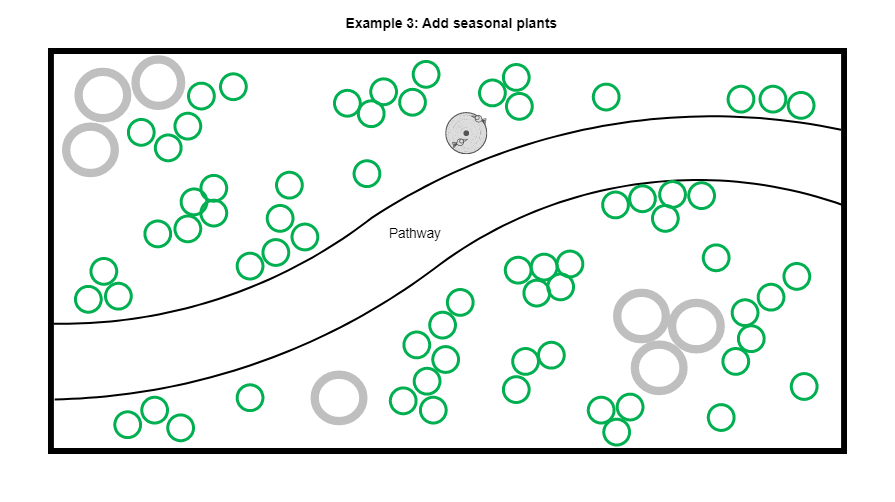
Place your seasonal plants second. They are represented with green dots in this picture.
3. Groundcover Layer (Low / Dense Cover)
Fill all remaining gaps with low-growing plants, grasses, sedges, or ferns to act as living mulch.
Plant densely (every square foot counts) to suppress weeds, control erosion, and provide wildlife habitat.
Groundcovers can also double as seasonal plants in spring blooms.
This layer should be 40–50% of your planting and can be planted close to or under taller plants.
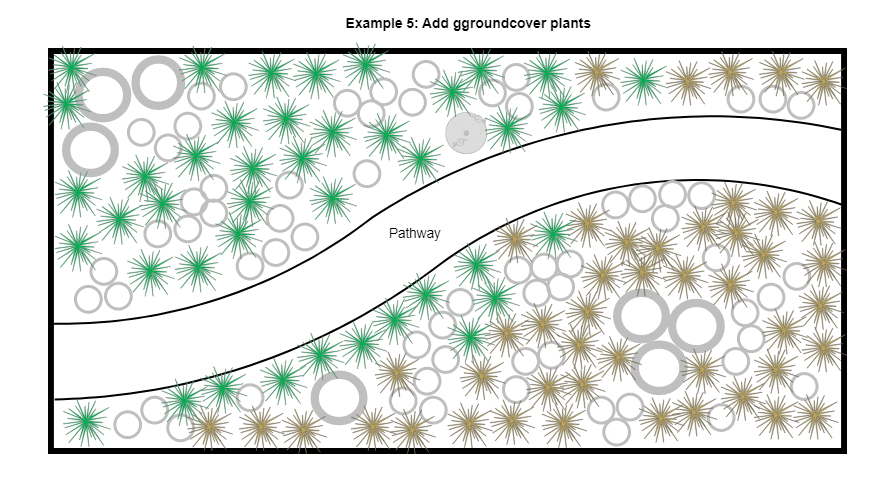
Place your groundcover plants next to fill in all remaining space. They are represented with green and brown grasses in this picture
4. Filler Layer (Fast-Growing / Gap Fillers)
Add annuals, biennials, or short-lived perennials in small clumps of 1–3 plants to fill gaps left by disturbances (plant death, pet activity, etc.).
Place them throughout the site to establish a seed bank and maintain continuous cover.
These are temporary plants that will naturally be outcompeted over time, allowing your long-lived matrix to dominate.
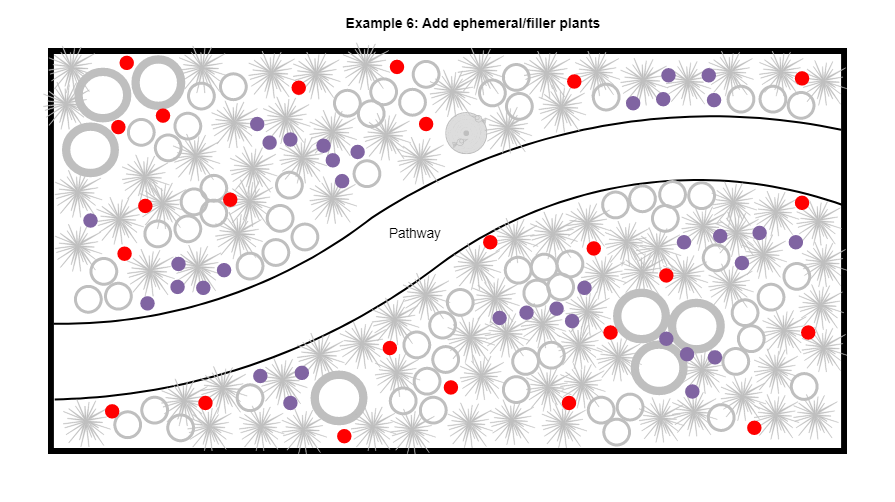
Place your filler plants last to fill in all remaining space (cram them in there!). They are represented with red and purple dots in this picture.
Plant Spacing Guidance
In matrix planting, one of the most important factors is how closely you plant species. Dense plantings allow each plant to fill its niche and suppress weeds naturally, but spacing still matters for long-term health.
General rule of thumb: Many matrix species, especially mid-height perennials and groundcovers, can be planted as close as 12 inches (1 foot) apart.
Why this works: Close spacing allows plants to interlock as they grow, creating a continuous living mulch that minimizes bare soil and keeps weeds from taking hold.
Exceptions: Taller architectural plants or slower-growing species may need more room for mature height and spread. Use their natural clumping habits as a guide, and always consider mature size when spacing.
Clumps and drifts: Even when planting densely, group plants in uneven numbers (1, 3, 5, or 7) to mimic natural patterns and create a more organic, flowing look.
Spacing plants about 1 foot apart strikes a balance between dense coverage for ecological and aesthetic benefits and enough room for plants to thrive without competition stress.
Tips for a Successful Matrix Garden
Start small: Begin with a small patch or section of your garden to experiment with matrix planting. Another approach is to incorporate a groundcover layer into an existing planting to replace wood mulch and cover all bare ground.
Prepare the site: Ensure all existing weeds are properly removed before installation.
Use mulch wisely: Apply a thin layer during the first year to protect young plugs without smothering them.
Choose reliable plants: Learn what native plants grow in your ecoregion and make them the foundation of your design
Phase your planting: Establish the matrix first, then layer in feature plants once it’s thriving.
Keep it simple: In the beginning, get the groundcover layer right and then build up the mid-height and tall layers over time.
Plant Size: Small potted plants are more economical to use for the groundcover layer which makes up a large percentage of plants in the design. Slower growing architectural plants are typically best sourced in larger pots.
Transform Your Garden with Expert Guidance
Matrix planting can feel complex—but you don’t have to do it alone. I work directly with gardeners to design beautiful, resilient, and naturally layered gardens that thrive year-round.
Let’s create a garden that’s alive, low-maintenance, and ecologically rich.